
Intro
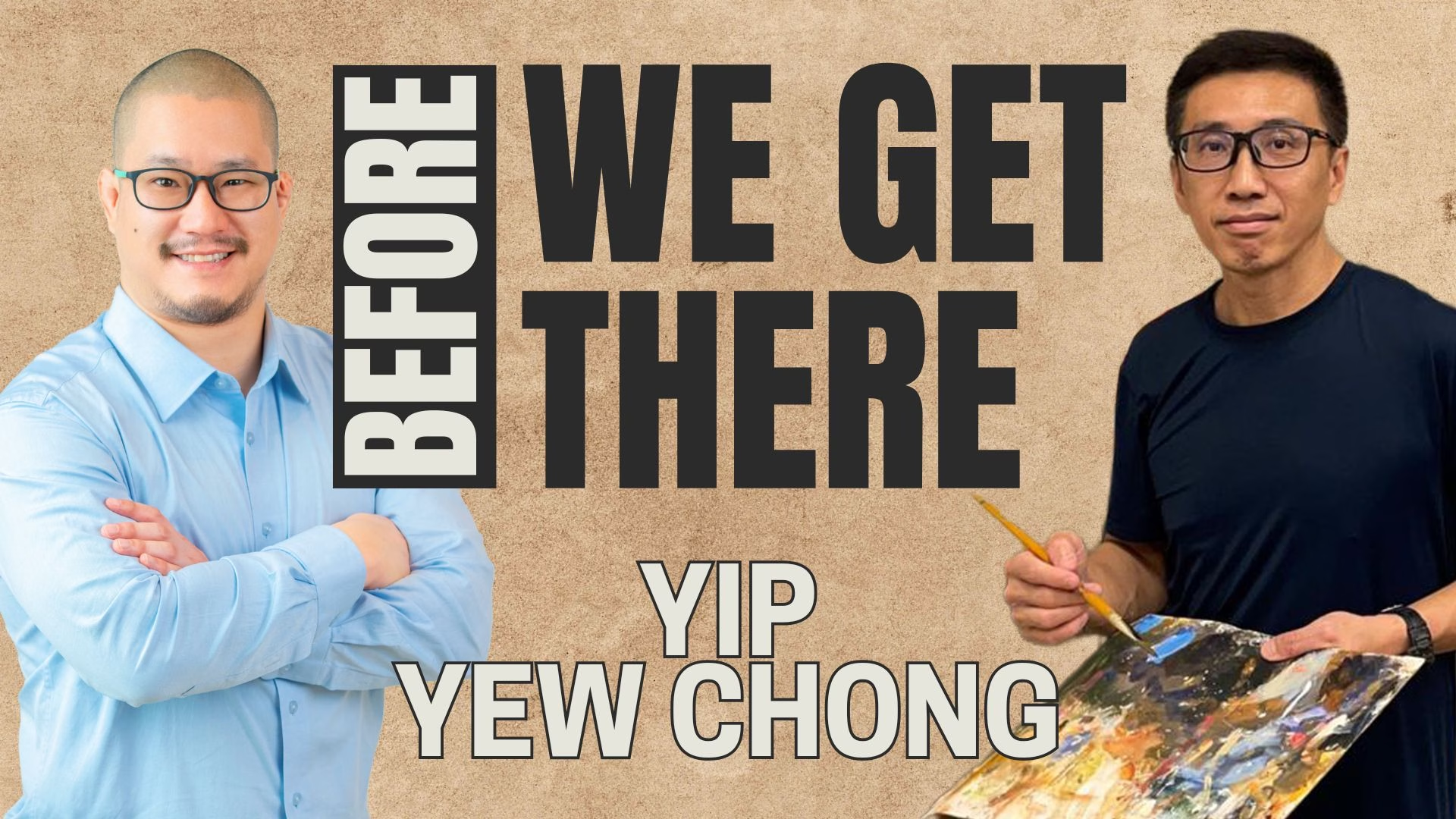
Yip Yew Chong is the artist behind the sprawling, nostalgic murals that have become a defining feature of Singapore’s urban landscape across neighborhoods like Chinatown and Tiong Bahru.
In this episode, we move past the aesthetics of his work to explore the reality of his transition and mid-career reinvention. Yew Chong walks us through spending a successful 25 years in finance before becoming a full-time artist at the age of 49. We get into his pragmatic approach to following a passion, the three-year “parallel run” where he balanced international business trips with weekend painting, and why he believes his art is more about the fiction of memory than preserving strict history. This is a conversation about the stamina required to pursue a dream without ignoring the reality of keeping food on the table.
Story Highlights
- Spending 25 years in accountancy and finance as his main career before transitioning to a full-time artist in 2018.
- Enduring a grueling three-year “parallel run” from 2015 to 2018, balancing his role as a finance director in an MNC with painting on the streets during his weekends.
- Knocking on doors in Chinatown to get permission from shop house owners and facing rejections due to privacy concerns before finally getting his big break through private connections.
- Discovering his signature nostalgic style organically, simply because his first public murals at Everton Road happened to be in a historical conservation area.
- Balancing passion projects that allow for free-flowing ideas without deadlines against commissioned works that bring food to the table faster.
- Overcoming the “cringe” factor when looking at older works, viewing it instead as a necessary sign of artistic progress and evolution.
Quote
“My works… 50% are my imagination. 25% are research. And 25% I lived as memory. So that 50% of imagination dominates the whole thing… which is why I say fiction. Fiction of my imagination. Fiction of my lived memories.”
About Yip Yew Chong
Yip Yew Chong is a Singaporean artist widely known for his nostalgic public murals located in areas like Chinatown and Tiong Bahru. After a 25-year successful career in finance, he transitioned to full-time artistry at age 49. Rather than strictly preserving history, his work aims to capture the vibes and expressions of his lived experiences. He works across a diversity of formats, including canvases, digital drawings, and filmmaking, and is currently embarking on a multi-year project painting places around the world.
Why This Conversation Matters
Yew Chong’s story challenges the “starving artist” stereotype and the idea that chasing a dream requires a reckless leap. His transition was natural and built on years of pragmatic planning, waiting until he had fulfilled family obligations and secured public recognition before leaving his corporate job. For anyone contemplating a second act mid-career, this episode provides a grounded, realistic framework for turning a lifelong passion into a sustainable reality without sacrificing financial security.
Turning Points
- Taking a break from his accountancy work in 2015 to try painting a mural on the street for the first time, inspired by public works in Malaysia and Singapore.
- The immediate public recognition of his first murals at Everton Road, which proved there was an audience for his art.
- Reaching a point after 25 years of work where his children were grown, his financial obligations were met, and his wife encouraged him to finally dedicate time to himself.
Key Lessons
- If you have obligations to fulfill, avoid idealistic leaps; try a parallel run and transition naturally once the timing is right.
- Passion must be the foundation of your pursuit; chasing something just because it seems glamorous will not sustain you.
- To connect with an audience, capture the “vibe” and feeling of a place rather than focusing strictly on geographical or historical accuracy.
- It is essential to continually evolve, reinvent yourself, and diversify your skills to stay relevant in a fast-changing world.
If You Enjoyed This Episode
You might also like: