Tag: Careers

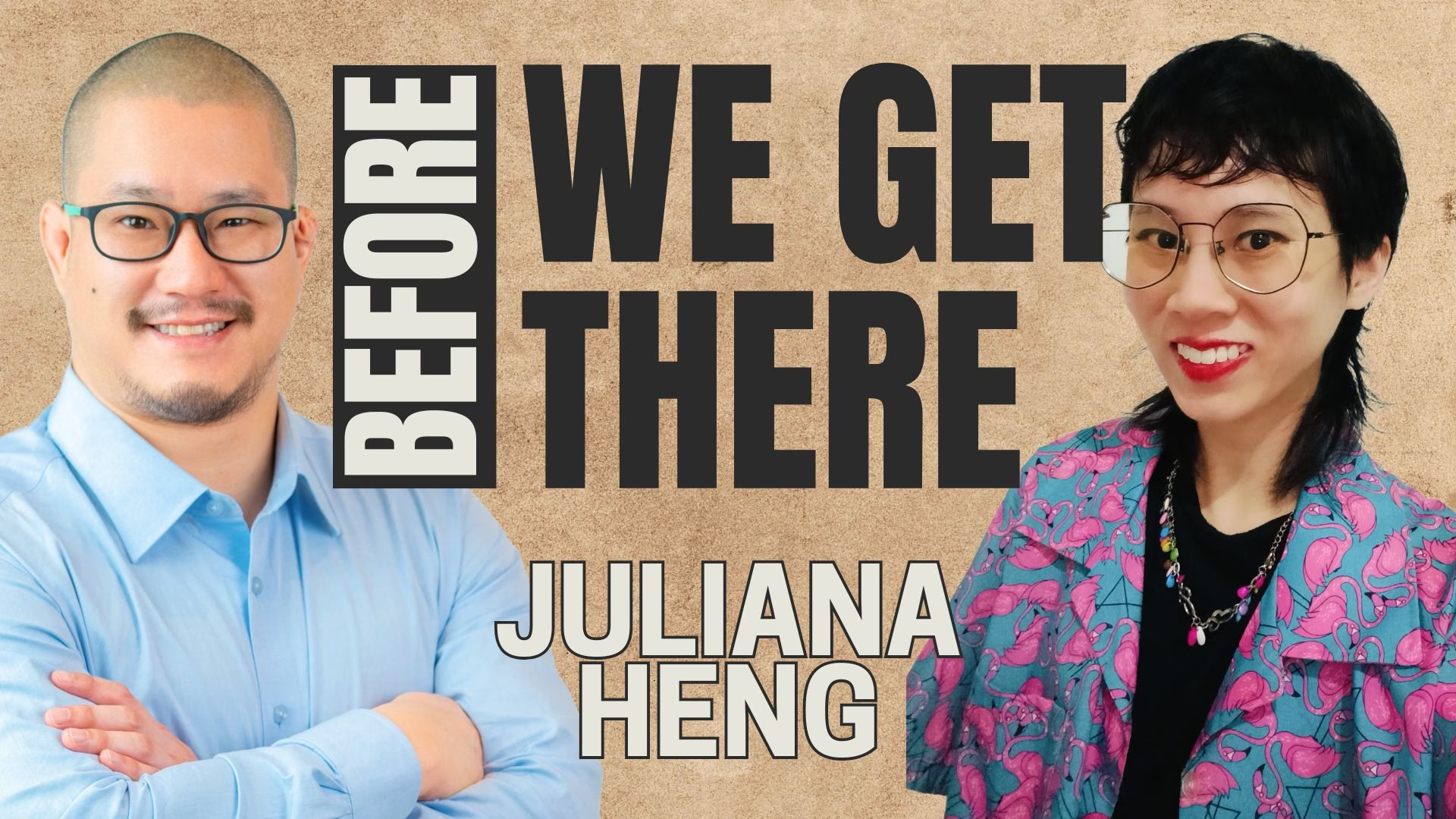
  • Juliana Heng on Stand-Up Comedy, Neurodivergence, Queerness, and the Cost of Being Yourself

    Juliana Heng on Stand-Up Comedy, Neurodivergence, Queerness, and the Cost of Being Yourself

    Here is the revised post, incorporating those key themes directly into the content so it matches the SEO strategy and accurately reflects their story:

    Juliana Heng on Stand-Up Comedy, Neurodivergence, Queerness, and the Cost of Being Yourself

    Intro

    Juliana Heng left a stable career in accounting to become a stand-up comedian, and somewhere along the way, the stage became the place they figured out who they actually were.

    In this episode, we explore what happens when a career pivot uncovers parts of yourself you have spent years keeping quiet. Juliana walks us through the terrifying experience of leaving the safe path, bombing on stage during the early days of their comedy career in Malaysia, and dealing with critics who told them they didn’t belong. We get into the difficult choices they made to ignore the “easy road” of family expectations, how they incorporated their autism and neurodivergent experiences into their act, and the journey of navigating queerness and gender identity in the public eye. This is a conversation about the courage it takes to venture into the unknown and the price you pay for living authentically.

    Story Highlights

    • Leaving behind a stable and traditional career in accounting to face the uncertainty of stand-up comedy in Malaysia.
    • Using the stage to surface hidden parts of their identity, openly sharing their autism diagnosis and neurodivergent experiences with audiences.
    • Exploring queerness and the journey to self-acceptance while navigating a culture that often expects conformity.
    • Enduring the brutal early days of comedy, including bombing frequently and facing harsh criticism from peers who said they didn’t deserve to be on stage.
    • The emotional cost of being true to yourself when the people closest to you—like family—want a different, safer version of your life.
    • Redefining success away from monetary value to focus entirely on health, happiness, and finding spaces where they are fully embraced.

    Quote

    “There are two choice I have. One, to take the easy road is to actually just listen to what your mom say. The second route is to actually venture out, figuring out who you are, and then there’s a lot of unknown, and it’s actually much scarier.”

    About Juliana Heng

    Juliana Heng is a stand-up comedian and former accountant from Malaysia who uses the stage to explore identity, authenticity, queerness, and life on the autism spectrum. By stepping away from the corporate world, Juliana embraced the challenging path of live performance to figure out who they truly are. They are a passionate advocate for neurodivergence, LGBTQ+ visibility, and living a life centered on mental and physical health and unapologetic self-acceptance. You can find their quirky and authentic content on Instagram under the handle @mxjulianaheng.

    Why This Conversation Matters

    Juliana’s story goes far beyond a standard career pivot; it is a raw look at self-discovery through art. Choosing a path filled with unknowns and enduring harsh early criticism requires immense courage, especially when navigating the intersections of autism and queerness in a traditional society. For anyone who feels trapped by conventional expectations, or is afraid to share their true self with the world, Juliana’s journey is a powerful reminder that authenticity, though difficult and scary, is ultimately worth the cost.

    Turning Points

    • Making the decision to leave the safe, prescribed route of accounting to try stand-up comedy.
    • Pushing through the terrible early shows and negative feedback from fellow comedians instead of giving up.
    • Realizing that true fulfillment required abandoning traditional societal checklists in favor of prioritizing personal wellness, neurodivergent needs, and queer acceptance.

    Key Lessons

    • Taking the easy road often means ignoring who you really are; venturing into the unknown is scarier but necessary for self-discovery.
    • Owning your neurodivergent and queer identity on a public platform can be terrifying, but it also creates the space you need to truly thrive.
    • Failure and criticism are inevitable when you start something new, but they do not define your worth or your right to take up space.
    • Success shouldn’t be defined by external metrics or financial value, but by whether your life makes you happy, healthy, and allows you to be embraced for who you are.

    If You Enjoyed This Episode

    You might also like:

  • Michelle Lee on Retiring in Your 30s, the Cost of the Grind, and Why Money Isn’t Security

    Michelle Lee on Retiring in Your 30s, the Cost of the Grind, and Why Money Isn’t Security

    Intro

    Michelle Lee did what most people only dream about: she planned her retirement at 18, hit her financial number in her early 30s, and stepped away from her corporate career to never have to work for money again.

    In this episode, we explore what actually happens after you reach the finish line you spent your whole life running toward. Michelle shares the unexpected identity crisis that came with leaving the career that defined her, the relational costs of spending years grinding in “survival mode,” and why she now chooses to spend her time as a part-time private hire driver. This is a conversation about redefining security, planning for the unpredictable, and learning that reaching your financial goals means very little if you arrive there alone.

    Story Highlights

    • Setting a strict goal at 18 to retire early, and successfully hitting her target in her early 30s through intense financial planning and discipline.
    • Navigating the sudden void and identity crisis that hit after stepping away from the career path that had defined her entire adult life.
    • The realization that the relentless pursuit of wealth and grinding in “survival mode” had cost her heavily in her personal relationships.
    • Becoming a part-time private hire driver despite having no financial need to work, simply to find connection and listen to people who just need someone to talk to.
    • Using her financial background to methodically plan for the true unpredictabilities of early retirement, like disability and health issues.

    Quote

    “What’s the point of having all the money in the world but you have no one to celebrate with, no one to share the joy with you? And you are all alone by yourself.”

    About Michelle Lee

    Michelle Lee is an early retiree and content creator who achieved financial independence in her early 30s. After successfully navigating the transition away from the corporate ladder, she now spends her time as a part-time private hire driver, enjoying the human connection and stories of her passengers. She actively shares her journey, financial literacy tips, and life philosophies on Instagram and Threads under the handle “Ask Michelle Lee,” helping others figure out how to plan for a secure future without sacrificing their present.

    Why This Conversation Matters

    Michelle’s story is the reality check to the popular FIRE (Financial Independence, Retire Early) movement. She achieved the ultimate financial dream but is radically honest about the emotional and relational toll it took to get there. What makes this conversation so compelling is her discovery that true security isn’t a number in a bank account, but rather the connections you build and the community you have around you. For anyone constantly chasing the next promotion or financial milestone, this episode is a crucial reminder to pause and evaluate what you might be sacrificing along the way.

    Turning Points

    • Realizing that the belief she held since childhood—that “money means security”—was fundamentally flawed once she actually had the money.
    • Experiencing the profound loneliness of reaching the top of her mountain, prompting a deep shift in how she valued relationships versus financial success.
    • Discovering a renewed sense of purpose and joy in the simple act of driving and listening to the stories of her passengers, many of whom just wanted to be heard.

    Key Lessons

    • Money can buy freedom, but it cannot buy true security or fulfillment if you isolate yourself in the process.
    • If you plan to take an unconventional path like retiring in your 30s, you must rigorously plan for unpredictable variables like long-term health and disability.
    • Your career should not be your entire identity; if it is, leaving it will trigger a crisis.
    • Taking time to connect with everyday people—and simply being willing to listen to them—can provide more joy than any corporate accolade.

    If You Enjoyed This Episode

    You might also like:

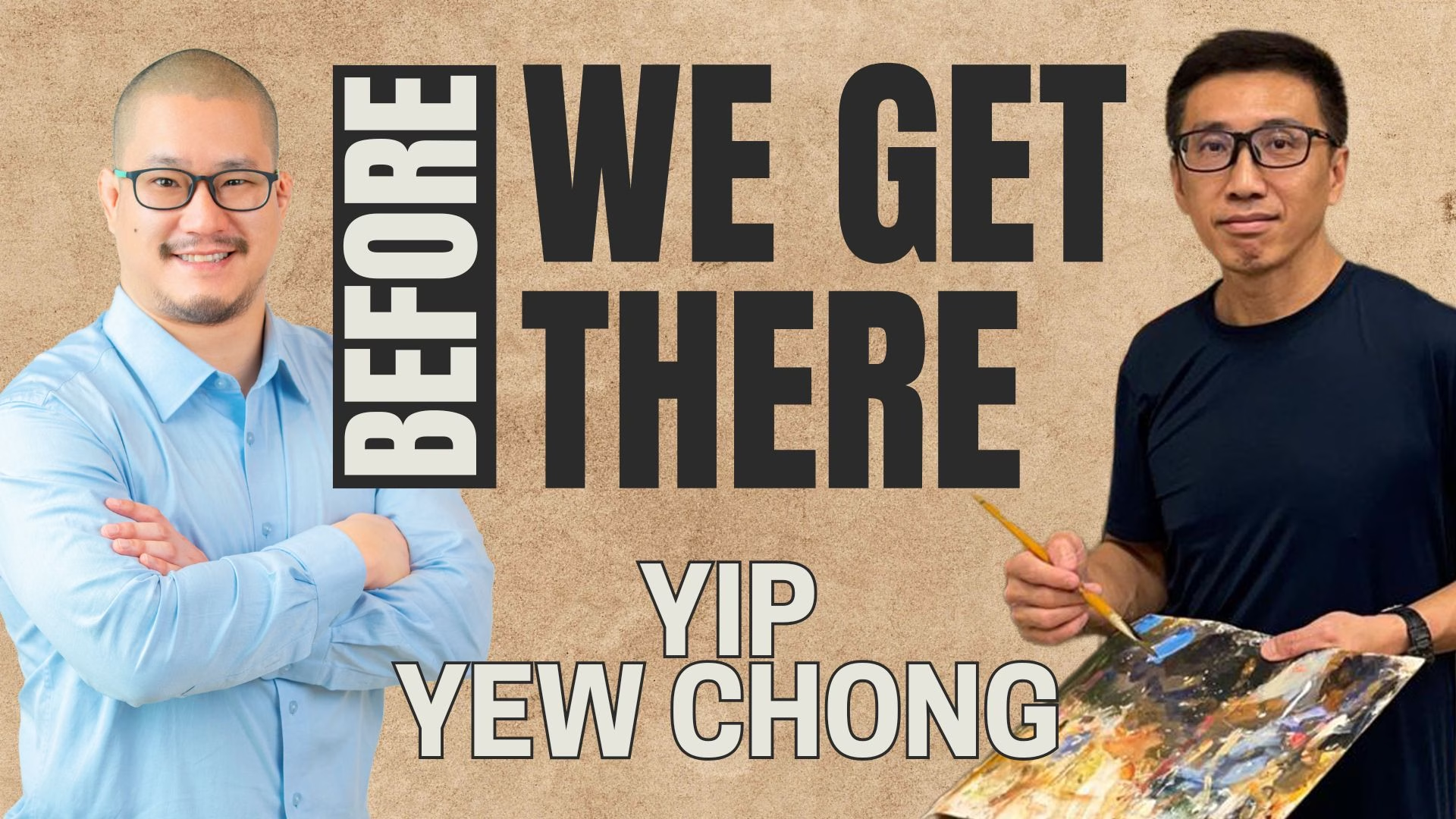
  • Yip Yew Chong on the Fiction of Memory, Mid-Career Pivots, and Painting Singapore’s Heritage

    Yip Yew Chong on the Fiction of Memory, Mid-Career Pivots, and Painting Singapore’s Heritage

    Intro

    Yip Yew Chong is the artist behind the sprawling, nostalgic murals that have become a defining feature of Singapore’s urban landscape across neighborhoods like Chinatown and Tiong Bahru.

    In this episode, we move past the aesthetics of his work to explore the reality of his transition and mid-career reinvention. Yew Chong walks us through spending a successful 25 years in finance before becoming a full-time artist at the age of 49. We get into his pragmatic approach to following a passion, the three-year “parallel run” where he balanced international business trips with weekend painting, and why he believes his art is more about the fiction of memory than preserving strict history. This is a conversation about the stamina required to pursue a dream without ignoring the reality of keeping food on the table.

    Story Highlights

    • Spending 25 years in accountancy and finance as his main career before transitioning to a full-time artist in 2018.
    • Enduring a grueling three-year “parallel run” from 2015 to 2018, balancing his role as a finance director in an MNC with painting on the streets during his weekends.
    • Knocking on doors in Chinatown to get permission from shop house owners and facing rejections due to privacy concerns before finally getting his big break through private connections.
    • Discovering his signature nostalgic style organically, simply because his first public murals at Everton Road happened to be in a historical conservation area.
    • Balancing passion projects that allow for free-flowing ideas without deadlines against commissioned works that bring food to the table faster.
    • Overcoming the “cringe” factor when looking at older works, viewing it instead as a necessary sign of artistic progress and evolution.

    Quote

    “My works… 50% are my imagination. 25% are research. And 25% I lived as memory. So that 50% of imagination dominates the whole thing… which is why I say fiction. Fiction of my imagination. Fiction of my lived memories.”

    About Yip Yew Chong

    Yip Yew Chong is a Singaporean artist widely known for his nostalgic public murals located in areas like Chinatown and Tiong Bahru. After a 25-year successful career in finance, he transitioned to full-time artistry at age 49. Rather than strictly preserving history, his work aims to capture the vibes and expressions of his lived experiences. He works across a diversity of formats, including canvases, digital drawings, and filmmaking, and is currently embarking on a multi-year project painting places around the world.

    Why This Conversation Matters

    Yew Chong’s story challenges the “starving artist” stereotype and the idea that chasing a dream requires a reckless leap. His transition was natural and built on years of pragmatic planning, waiting until he had fulfilled family obligations and secured public recognition before leaving his corporate job. For anyone contemplating a second act mid-career, this episode provides a grounded, realistic framework for turning a lifelong passion into a sustainable reality without sacrificing financial security.

    Turning Points

    • Taking a break from his accountancy work in 2015 to try painting a mural on the street for the first time, inspired by public works in Malaysia and Singapore.
    • The immediate public recognition of his first murals at Everton Road, which proved there was an audience for his art.
    • Reaching a point after 25 years of work where his children were grown, his financial obligations were met, and his wife encouraged him to finally dedicate time to himself.

    Key Lessons

    • If you have obligations to fulfill, avoid idealistic leaps; try a parallel run and transition naturally once the timing is right.
    • Passion must be the foundation of your pursuit; chasing something just because it seems glamorous will not sustain you.
    • To connect with an audience, capture the “vibe” and feeling of a place rather than focusing strictly on geographical or historical accuracy.
    • It is essential to continually evolve, reinvent yourself, and diversify your skills to stay relevant in a fast-changing world.

    If You Enjoyed This Episode

    You might also like:

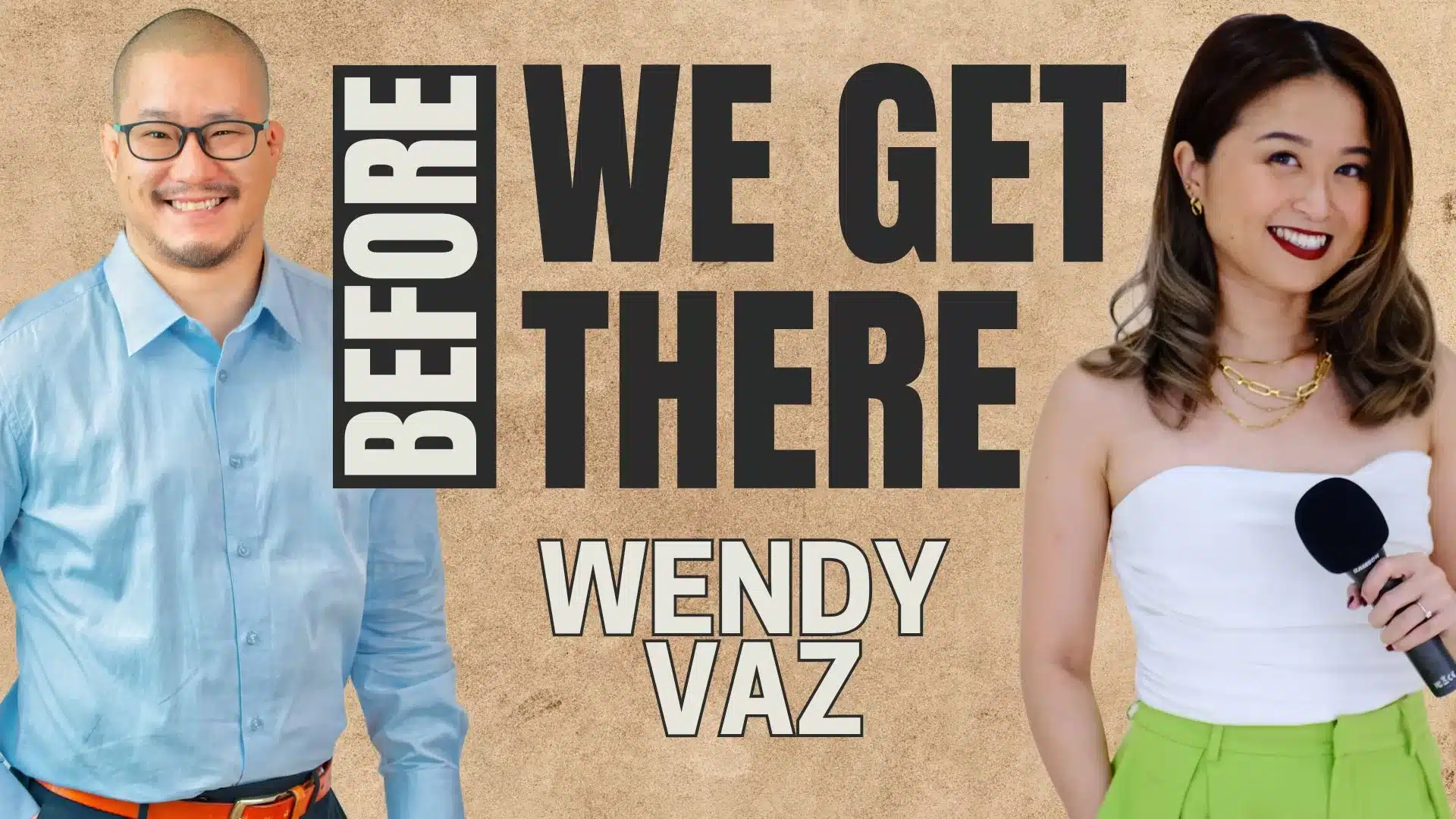
  • Wendy Vaz on Choosing Alignment Over Comfort

    Wendy Vaz on Choosing Alignment Over Comfort

    Intro

    Wendy Vaz is a Malaysian-based entrepreneur and content creator who recently walked away from a six-year corporate career to go all-in on her own business. While many wait for a “perfect” window to transition, Wendy took the leap in the middle of a year defined by major life shifts: a wedding, a move, and a serious back injury that left her temporarily unable to sit up.

    In this episode, we discuss the reality of the “messy middle” of entrepreneurship just two months after resigning. Wendy opens up about the self-doubt that occurs when you stop looking outward for validation and the spiritual shift required to trust a journey that included a fractured spine on Christmas Eve. We explore her philosophy of “nervous system regulation” as a business strategy and why she would rather work as a barista than return to the comfort of a nine-to-five.

    Story Highlights

    • Transitioning from a decade of “halfhearted” side hustling to going all-in on her own platforms.
    • Overcoming the “looking outwards” phase where seeking advice from successful peers increased her stress levels.
    • The realization that a calmed nervous system leads to better business decisions than functioning from a state of “fight or flight”.
    • Navigating the “limiting belief” of being an international student and realizing that loud participation in class does not always equal intelligence.
    • The impact of reverse culture shock and depression upon returning to Malaysia after studying abroad.
    • Adopting a “burn the boats” mentality where having no Plan B forces the necessary focus to succeed.

    Quote

    “I always know that I’m a human first before I’m a content creator or a coach or whatever … I find that tools and systems are there to guide us to live as human beings.

    About Wendy Vaz

    Wendy Vaz is a content creator and entrepreneur based in Kuala Lumpur. A graduate of the University of British Columbia, she has spent over ten years documenting her life through blogging, YouTube, and podcasting. After a career in the corporate world, she now focuses on helping others navigate modern stress by prioritizing mental health and personal alignment. Her mission is rooted in her own experiences with depression and physical recovery, aiming to help people feel calmer and more comforted in their daily lives.

    Why This Conversation Matters

    Wendy’s story provides a grounded counter-narrative to the typical “hustle culture” approach to starting a business. By focusing on the internal state—her nervous system—rather than just external metrics, she offers a blueprint for building a career that is sustainable rather than just profitable. This conversation is particularly relevant for those feeling a “growing gap” between their corporate roles and their personal values, showing that alignment is a practical choice involving significant trade-offs.

    Turning Points

    Wendy’s path was fundamentally altered by a full scholarship to Canada, which was her first time leaving Malaysia and forced her to adapt to an entirely different culture. A significant internal shift occurred in December 2023 when she fractured her back; the experience of being stuck on a hospital bed led to a deep level of spiritual trust in her journey. The final pivot came two months into her entrepreneurial journey when she realized that removing her “Plan B” was the only way to ensure she wouldn’t retreat when things got difficult.

    Key Lessons

    • Regulate your nervous system first: Making business decisions from a place of fear or stress often leads to poor outcomes.
    • Trust the journey’s timing: Slowing down can often open opportunities that rushing and “grinding” might close off.
    • Acknowledge your humanity: Systems and productivity tools should serve your life as a human, not just your output as a worker.
    • Consistency over “niche” perfection: Wendy’s long history of sharing in public helped her find her voice and build a network before she ever felt “ready”.
    • Commitment requires removing exits: If going back to a corporate job remains an easy option, you may not push through the hardest moments of building something new.
    • Prioritize alignment over comfort: A high-paying, “good” company can still be the wrong place if it no longer serves your vision for your life.

    If You Enjoyed This Episode

    You might also like:

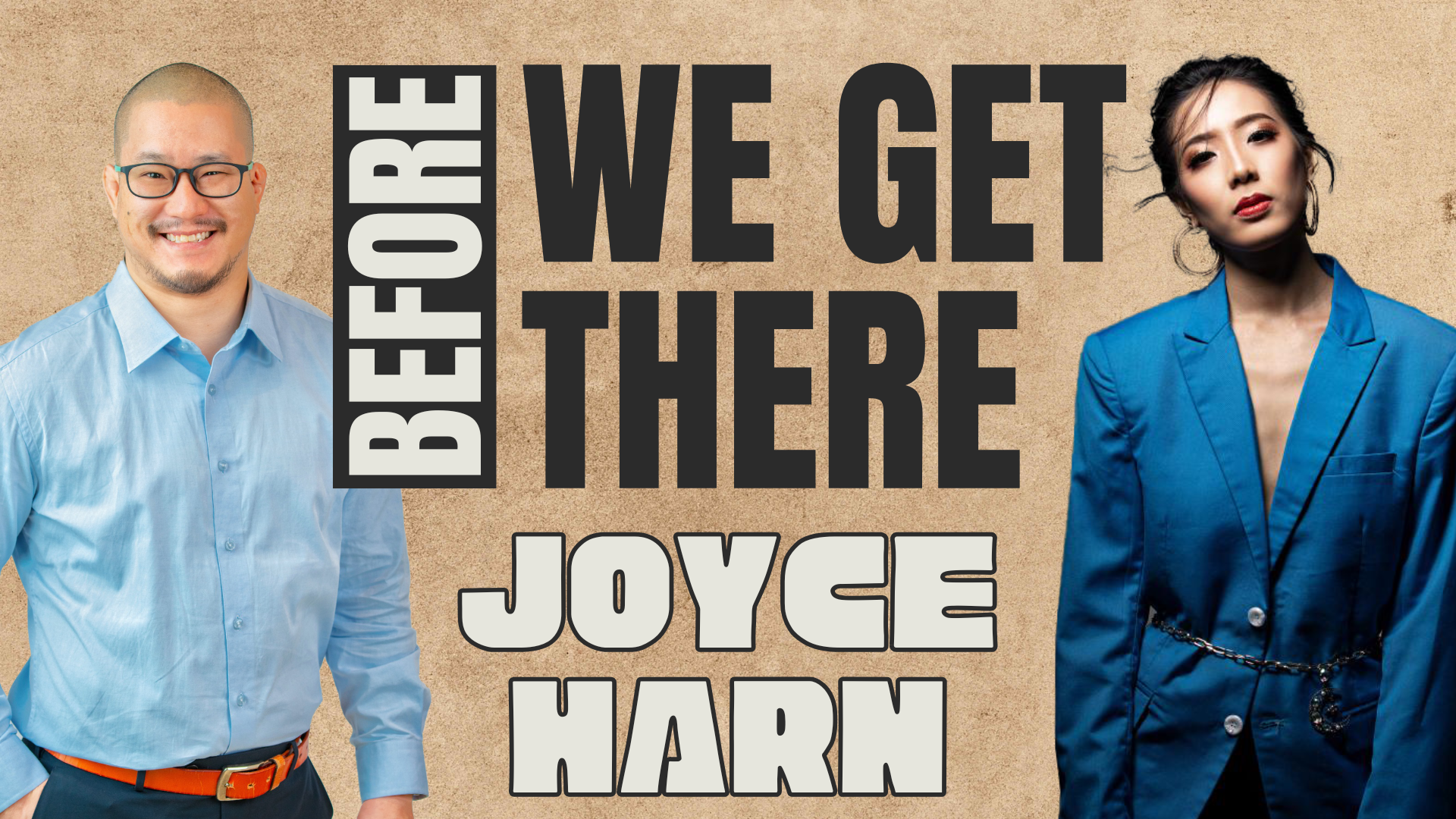
  • Joyce Harn on Acting, Rejection, and the Journey Toward Self-Belief

    Joyce Harn on Acting, Rejection, and the Journey Toward Self-Belief

    Intro

    Joyce Harn is a Malaysian actress known for her roles in Fly by Night and Budak Flat, along with appearances in television dramas and reality competitions. She’s also a judo practitioner and pageant finalist who’s carved her own path in an unpredictable industry.

    In this conversation, Joyce talks about chasing her childhood dream of acting while balancing family expectations and financial reality. She shares the emotional toll of auditions, how she built resilience through constant rejection, and why she continues to choose authenticity over certainty. From jumping off buildings on set to competing in judo tournaments, Joyce’s story is about finding confidence through action — literally and figuratively.

    Story Highlights

    • How Disney and Lizzie McGuire inspired her to act
    • Navigating family expectations and choosing broadcasting over performance arts
    • Learning to handle rejection through hundreds of auditions
    • Competing in judo and discovering strength through discipline
    • Why she dreams of directing films about family, values, and emotion

    Quote

    “People ask me if I regret it, but I don’t regret anything because I never make a decision that I don’t want to do.”

    About Joyce Harn

    Joyce Harn is a Malaysian actress and model whose credits include Budak Flat, Fly by Night, and numerous short films and television projects across Malaysia and Singapore. A graduate in broadcasting, she began her career through beauty pageants and reality shows before moving into film. Outside of acting, Joyce practices judo and advocates for persistence and self-growth in creative careers. Follow her on Instagram at @joyceharn.

    Why This Conversation Matters

    Joyce’s story highlights the unseen side of acting — the rejections, the pauses, and the quiet perseverance between projects. Her candor about failure and self-doubt gives a rare glimpse into how artists build resilience. It’s a story about choosing courage again and again, even when no one is watching.

    Turning Points

    From early extra roles to leading parts, Joyce’s journey has been a decade-long balancing act between practicality and passion. She’s experienced burnout, office jobs, and countless rejections, yet each setback deepened her self-belief. Discovering judo later in life became another form of storytelling — one rooted in movement, trust, and discipline. Whether on set or on the mat, Joyce continues to test her limits while staying grounded in curiosity and craft.

    Key Lessons

    • Rejection builds resilience. Every “no” becomes part of your training.
    • Authenticity beats perfection. Staying true to yourself outlasts trends.
    • Passion needs patience. Success in film takes time — and faith.
    • Movement heals. Physical discipline like judo strengthens mental focus.
    • Keep learning. Each project, big or small, is another step forward.

    If You Enjoyed This Episode

    You might also like:

  • Rob Lilwall on Adventure, Resilience, and the Courage to Keep Going

    Rob Lilwall on Adventure, Resilience, and the Courage to Keep Going

    Intro

    Rob Lilwall is a British-born adventurer, author, and motivational speaker known for his three-year cycling expedition from Siberia to London — a journey that spanned over 50,000 kilometers and reshaped his understanding of fear, resilience, and transformation. He has since walked across deserts, written two books, and spoken to audiences around the world about courage, change, and perseverance.

    In this episode, we talk about Rob’s early life as a shy schoolteacher, what led him to take a one-way flight to Siberia, and how adventure became both his career and his classroom. He shares stories from the road — from being robbed in Siberia to camping at minus forty degrees — and the lessons that continue to guide his life as a husband, father, and speaker.

    Story Highlights

    • How a friend’s invitation to “just say yes” changed his life
    • Why facing fear became the foundation of his growth
    • What three years of cycling taught him about adaptability
    • How setbacks turned into the start of a speaking and writing career
    • The turning point in the Taklamakan Desert that reframed his idea of success

    Quote

    “When you’re having a really bad day, whether it’s in the office or in the middle of your three-year bike ride and you think, ‘What am I doing? Why don’t I just fly home?’ Never quit on that day, because that’s the wrong day to quit.”

    About Rob Lilwall

    Rob Lilwall is a professional adventurer, author, and keynote speaker based in Singapore. He has cycled from Siberia to London, walked across China’s Gobi Desert, and trekked the edges of the Taklamakan — expeditions that have been turned into National Geographic TV shows and bestselling books. Today, Rob speaks to corporate and global audiences about adaptability, resilience, and courage in times of change. His TEDx talks and corporate programs have reached audiences across more than 30 countries. Learn more at roblilwall.com.

    Why This Conversation Matters

    Rob’s story isn’t just about adventure — it’s about learning to keep going when things get hard. Whether navigating subzero nights in Siberia or personal struggles after success, he’s discovered that the greatest growth often comes through failure and persistence. His lessons on resilience and agility apply far beyond expeditions — to careers, relationships, and everyday life.

    Turning Points

    From teaching in the UK to biking across continents, Rob’s life has been defined by leaps of faith. His decision to say yes to a friend’s challenge led to a journey that changed everything — from his worldview to his work. Later expeditions tested him in different ways, pushing him through burnout, self-doubt, and imposter syndrome. It was only after failing to complete a record-setting desert crossing that he found peace — realizing that life’s value lies not in achievement, but in doing your best every day.

    Key Lessons

    • Never quit on a bad day. Rest, recover, and make decisions with clarity, not exhaustion.
    • Fear is a teacher. Growth starts where comfort ends.
    • Resilience and agility go hand in hand. Adaptation is the key to endurance.
    • Failure can heal. Sometimes we find peace by letting go of the outcome.
    • Adventure is internal. The hardest journeys are the ones within ourselves.

    If You Enjoyed This Episode

    You might also like: