Tag: Singapore

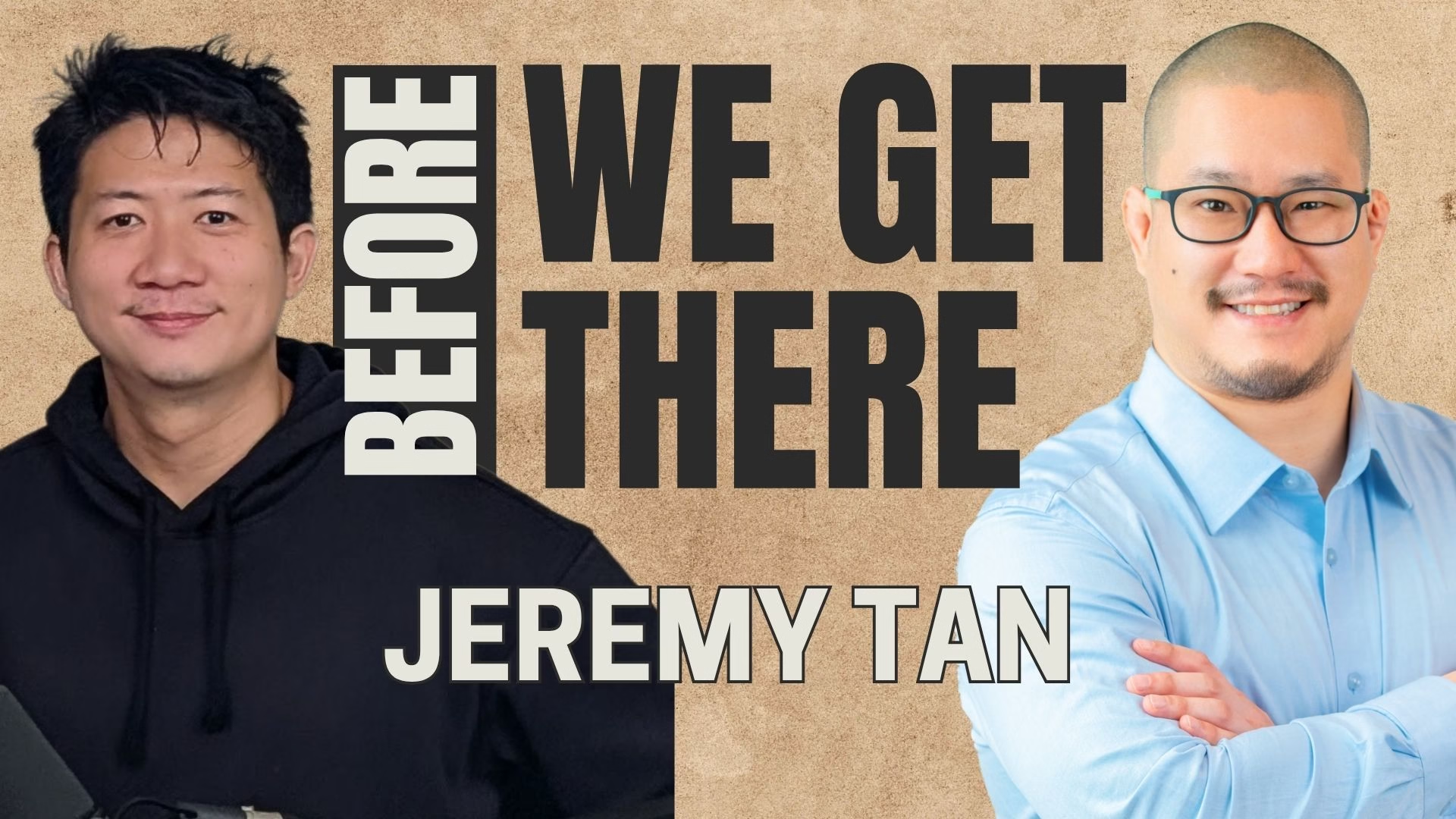
  • Jeremy Tan on Running as an Independent and the End of the One-Job Career

    Jeremy Tan on Running as an Independent and the End of the One-Job Career

    Intro

    Jeremy Tan ran for Singapore Parliament as an independent, with no party behind him, and lost. He also took the highest vote share any independent has managed here in 53 years.

    In this episode we get into what pushed him out of business and into politics, why he ran when he was fairly sure he would not win, and how he read the night the results came in. We also get into his case on the wealth gap here, where he thinks the next generation is headed once AI can do half the job, and what he tells the kids in his own family about picking work they will not come to hate. This is a conversation about running for something you do not expect to win, and about what he thinks the next generation is walking into.

    Story Highlights

    • The 2020 election as the spark. The government broke what he calls an unspoken rule and handed out direct COVID support, then called an election, and he watched a lot of that money stop at the bosses instead of reaching workers.
    • GST climbing from seven to nine, which he calls a rude awakening for someone whose whole life is running businesses and growing a fund.
    • Going through the government’s own statistics, the bankruptcies, the numbers, to check the everything-is-fine messaging against what the data actually said.
    • The stat he built the campaign around: 5% of Singaporeans hold 30% of the wealth, because capital begets capital.
    • Using Reddit and HardwareZone as a litmus test for where public anger actually sits, and how he reads who on there is a journalist, who is a ministry fishing for policy ideas, and who is just angry.
    • The coordinated misinformation that showed up right when he was live on a rally or an interview.
    • Reading election night through the entire opposition’s results rather than his own, knowing a different set of outcomes would have made independents look like a dead end.
    • His pitch to younger Singaporeans: accountant, engineer, lawyer are skill sets, not identities, and the one-title-one-track life is over.
    • The homework assignment that told him the system is already shifting. A cousin was asked to make a burnt, crisp note that Romeo might have written to Juliet, not to explain how the author felt.

    Quote

    “The idea that you hold one job and one job only, that’s not the way life works anymore.”

    About Jeremy Tan

    Jeremy Tan is a Singaporean entrepreneur who contested the 2025 general election as an independent in Mountbatten SMC, taking 36.16% of the vote against the PAP’s Gho Sze Kee. It was the strongest result for an independent candidate in Singapore since 1972. He built and sold a business before the campaign, listing himself as retired on his nomination papers, and now consults across retail, decentralized finance, and a pickleball tournament platform he is building. He has not ruled out running again. Find him on LinkedIn or at jeremytan.sg.

    Why This Conversation Matters

    Most election stories end at the result. Win and it was worth it, lose and it was not. Jeremy is harder to sort that way. He knew going in he probably would not take the seat, and he reads the outcome like a data point: against the whole opposition’s night, against what it means for the next independent who runs, against whether voters now treat independents as a real option. The 53-year number is the headline. The read underneath it is the reason to listen.

    Turning Points

    • The 2020 COVID election. Watching direct handouts go out and then stop before they reached the workers they were meant for, in a region with a large elderly population, moved running from an idea to a plan.
    • Reading the government’s statistics himself and concluding the problem was structural: a government working in silos, and in silos of thought.
    • Accepting he was not going to be PM or leader of the opposition, and deciding a single seat was still a contribution worth making.
    • Election night, when he chose to measure his loss against the whole opposition’s results and saw how easily the story could have gone the other way for independents.

    Key Lessons

    • An independent result is a signal, not just a seat. He read his own numbers against the whole opposition’s night, and his point was that a strong showing makes independents a more normal option, both for voters and for whoever runs next.
    • A job title is not an identity. He tells younger people that accountant, engineer and lawyer are skill sets, not final states, and that the ones who do well will run themselves like a small department rather than climb a single ladder.
    • For juniors, branding beats tooling. His read is that the middle of the org chart is being cut fast, so a junior’s job is to become the person a trusted operator wants beside them, not just another competent AI user.
    • Read the anger where it actually lives. He treats Reddit and HardwareZone as a way to gauge the tail end of public sentiment, the stuff that surfaces online well before it shows up at the ballot box.
    • Comfort is the failure mode. His view is that the system built enough comfort that people stopped asking whether they could do things differently, and that saying so out loud is politically hard but closer to the truth.

    If You Enjoyed This Episode

    You might also like:

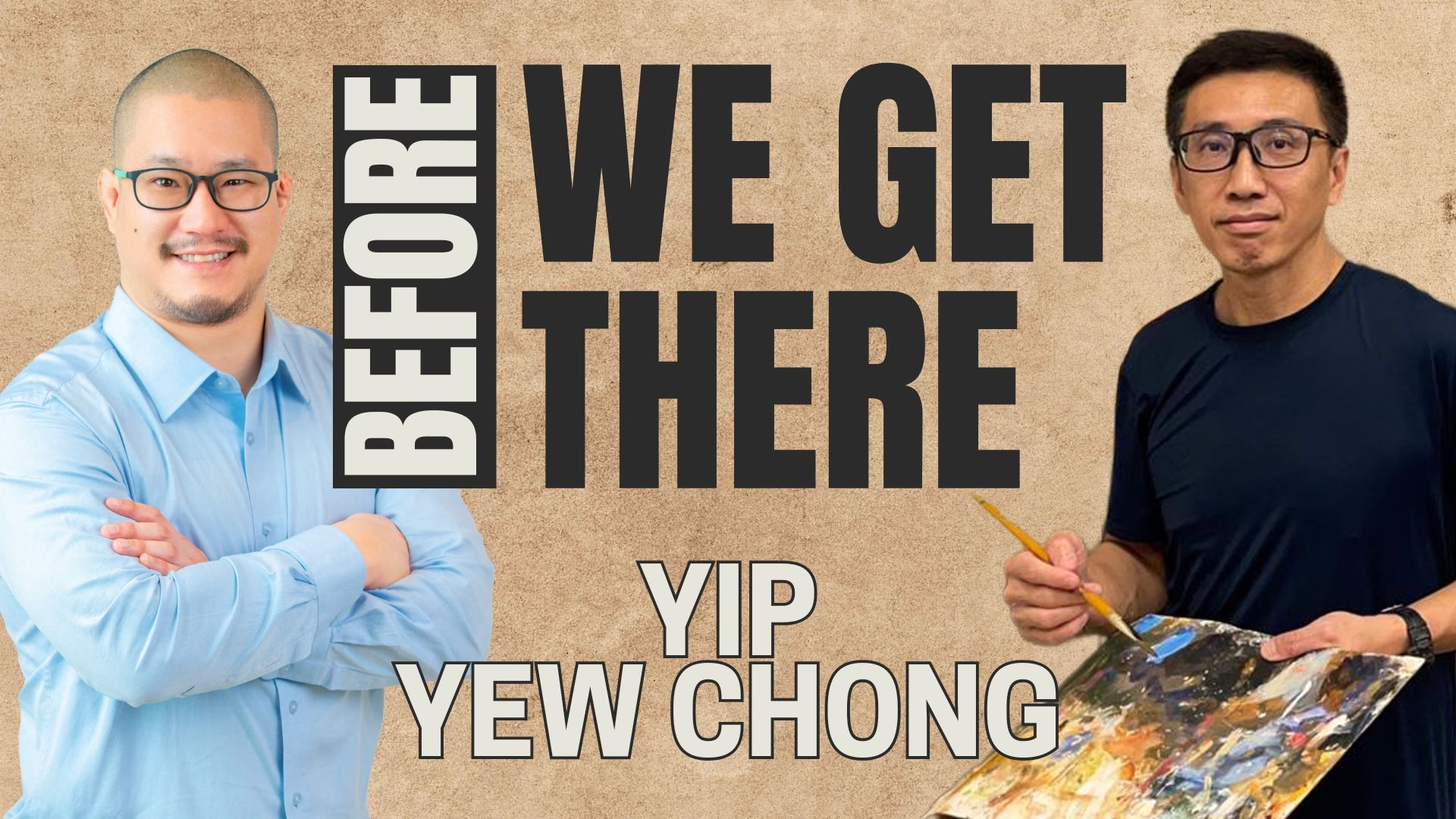
  • Yip Yew Chong on the Fiction of Memory, Mid-Career Pivots, and Painting Singapore’s Heritage

    Yip Yew Chong on the Fiction of Memory, Mid-Career Pivots, and Painting Singapore’s Heritage

    Intro

    Yip Yew Chong is the artist behind the sprawling, nostalgic murals that have become a defining feature of Singapore’s urban landscape across neighborhoods like Chinatown and Tiong Bahru.

    In this episode, we move past the aesthetics of his work to explore the reality of his transition and mid-career reinvention. Yew Chong walks us through spending a successful 25 years in finance before becoming a full-time artist at the age of 49. We get into his pragmatic approach to following a passion, the three-year “parallel run” where he balanced international business trips with weekend painting, and why he believes his art is more about the fiction of memory than preserving strict history. This is a conversation about the stamina required to pursue a dream without ignoring the reality of keeping food on the table.

    Story Highlights

    • Spending 25 years in accountancy and finance as his main career before transitioning to a full-time artist in 2018.
    • Enduring a grueling three-year “parallel run” from 2015 to 2018, balancing his role as a finance director in an MNC with painting on the streets during his weekends.
    • Knocking on doors in Chinatown to get permission from shop house owners and facing rejections due to privacy concerns before finally getting his big break through private connections.
    • Discovering his signature nostalgic style organically, simply because his first public murals at Everton Road happened to be in a historical conservation area.
    • Balancing passion projects that allow for free-flowing ideas without deadlines against commissioned works that bring food to the table faster.
    • Overcoming the “cringe” factor when looking at older works, viewing it instead as a necessary sign of artistic progress and evolution.

    Quote

    “My works… 50% are my imagination. 25% are research. And 25% I lived as memory. So that 50% of imagination dominates the whole thing… which is why I say fiction. Fiction of my imagination. Fiction of my lived memories.”

    About Yip Yew Chong

    Yip Yew Chong is a Singaporean artist widely known for his nostalgic public murals located in areas like Chinatown and Tiong Bahru. After a 25-year successful career in finance, he transitioned to full-time artistry at age 49. Rather than strictly preserving history, his work aims to capture the vibes and expressions of his lived experiences. He works across a diversity of formats, including canvases, digital drawings, and filmmaking, and is currently embarking on a multi-year project painting places around the world.

    Why This Conversation Matters

    Yew Chong’s story challenges the “starving artist” stereotype and the idea that chasing a dream requires a reckless leap. His transition was natural and built on years of pragmatic planning, waiting until he had fulfilled family obligations and secured public recognition before leaving his corporate job. For anyone contemplating a second act mid-career, this episode provides a grounded, realistic framework for turning a lifelong passion into a sustainable reality without sacrificing financial security.

    Turning Points

    • Taking a break from his accountancy work in 2015 to try painting a mural on the street for the first time, inspired by public works in Malaysia and Singapore.
    • The immediate public recognition of his first murals at Everton Road, which proved there was an audience for his art.
    • Reaching a point after 25 years of work where his children were grown, his financial obligations were met, and his wife encouraged him to finally dedicate time to himself.

    Key Lessons

    • If you have obligations to fulfill, avoid idealistic leaps; try a parallel run and transition naturally once the timing is right.
    • Passion must be the foundation of your pursuit; chasing something just because it seems glamorous will not sustain you.
    • To connect with an audience, capture the “vibe” and feeling of a place rather than focusing strictly on geographical or historical accuracy.
    • It is essential to continually evolve, reinvent yourself, and diversify your skills to stay relevant in a fast-changing world.

    If You Enjoyed This Episode

    You might also like:

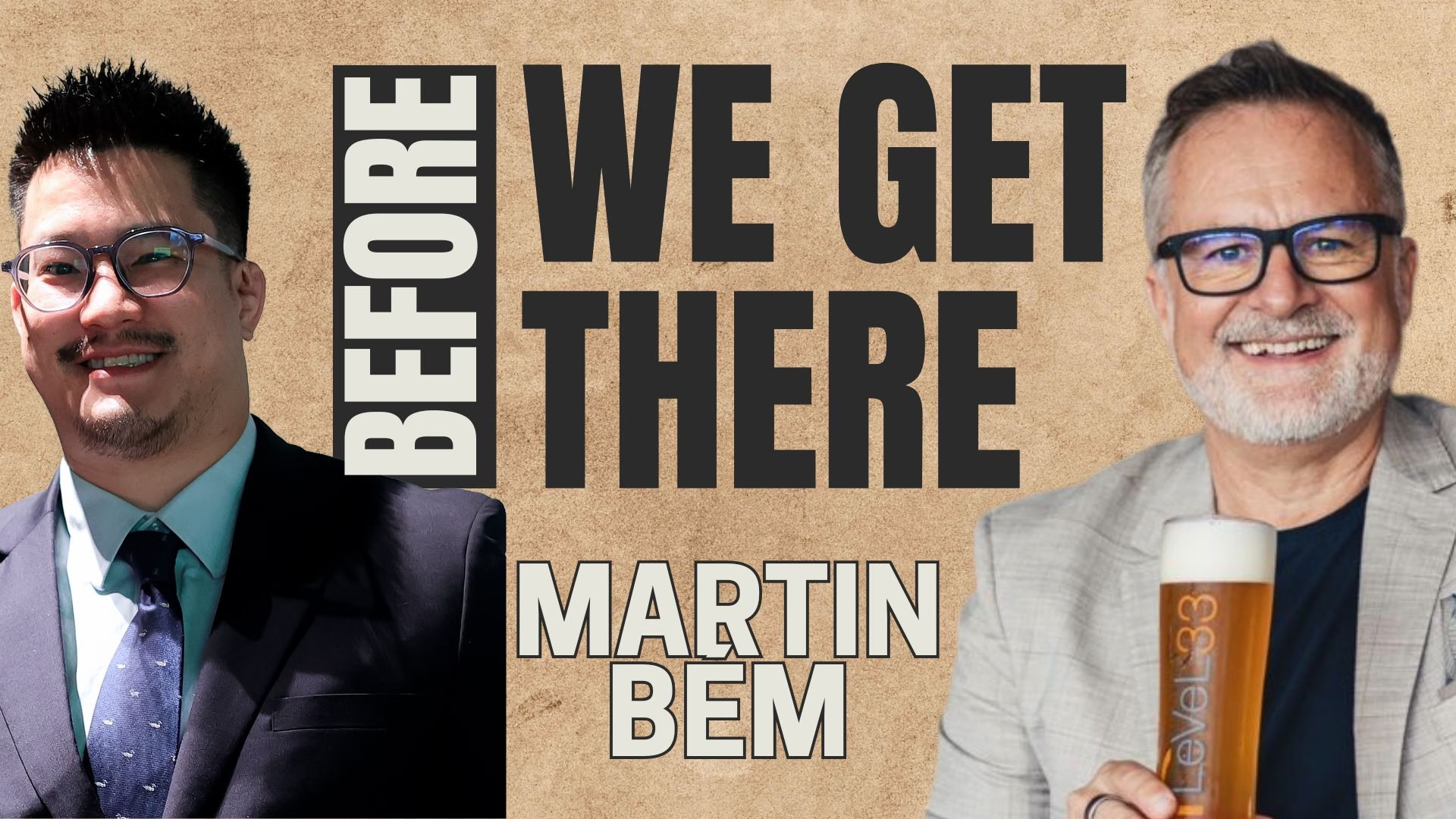
  • Martin Bém on Letting Go of Control and Building Through Uncertainty

    Martin Bém on Letting Go of Control and Building Through Uncertainty

    Intro

    Martin Bém is an Austrian-born entrepreneur who has spent the last 26 years building a business life in Singapore — one that began with a corporate posting and evolved into something entirely his own. He is the founder of Level 33, widely recognized as the world’s highest microbrewery, perched on the 33rd floor of Marina Bay Financial Centre.

    In this episode, we move past the landmark location and the accolades to look at the full arc of how he got there. Martin walks us through arriving in Singapore in 1999 as a relative unknown to the region, deciding to leave the corporate track and start his own business, and being immediately hit by SARS. We get into what it took to survive that, how COVID nearly undid an expansion years in the making, and what he’s learned about making decisions when you don’t have the full picture. This is a conversation about staying curious, not falling in love with your own ideas, and building something that lasts.

    Story Highlights

    • Moving from Vienna to Milan to Singapore in 1999 on a posting with San Pellegrino, and choosing to stay rather than return to a corporate ladder in Europe
    • Launching PO Partners as a bridge between European brands and Asian markets — and landing in the middle of the SARS outbreak days after signing the first contracts
    • Finding a business partner with months of runway left, a relationship that has now lasted 24 years
    • Building the restaurant concept on the back of a distribution deal, entering the F&B world with zero prior operational experience
    • The thinking behind Level 33 — wanting fresh, unpasteurized beer, a serious wine list, and a real kitchen under one roof, in a location nobody else had thought to ask about
    • Getting within days of signing a licensing deal to bring Level 33 to Australia, only for COVID to derail the construction and the developer to pivot to apartments
    • A staff retention model built around monthly appraisals, a four-day kitchen work week, service charge distributions, and a mission beyond just running a restaurant
    • The challenge facing Singapore’s F&B industry — rising rents, labor quotas, and well-resourced foreign chains using Singapore as a proving ground
    • The line between passion and stress when your business employs 70 people and the government is changing opening rules week to week

    Quote

    “You cannot fall in love with your concept too much. I take my favorite dishes off the menu if they don’t sell.”

    About Martin Bém

    Martin Bém is the founder of Level 33, the world’s highest microbrewery, located at Marina Bay Financial Centre in Singapore. Originally from Vienna, with a PhD and early career years in Milan, he arrived in Singapore in 1999 on a corporate posting and never left. Over the past two and a half decades, he has built and operated multiple F&B concepts across Singapore and China, including Brauhaus, and has been a consistent voice on the challenges and opportunities facing the industry in the region. He is currently working toward B Corp certification for Level 33 and exploring expansion opportunities internationally.

    Why This Conversation Matters

    Martin’s story cuts against the clean version of entrepreneurship. He didn’t leave a corporate job with a fully formed plan and a runway — he left with a few months of savings, launched into a health crisis that shut down the entire market, and built from there. What’s interesting isn’t the success of Level 33, which by now is well documented. It’s the decision-making behind it: when to hold, when to cut, how to stay attached enough to care but detached enough to act. For anyone navigating the tension between conviction and flexibility — in business or otherwise — this conversation is worth sitting with.

    Turning Points

    Martin’s path was shaped by several moments where the plan simply stopped working. SARS hit before his first clients could place an order. A 24-year business partnership was born out of necessity when the funds ran low. The Australia expansion — fully designed, terms agreed upon — was erased by COVID and a developer who did the math on apartments. What emerges from each of these isn’t a pivot narrative, but something quieter: a pattern of recognizing what you can’t control, doing the math honestly, and moving forward anyway. The decision to leave the Bjо microbrewery franchise in China in 2019 — in hindsight, at the right moment — shows the same instinct applied in reverse.

    Key Lessons

    • Start small and test before making drastic moves — a pilot that gets traction is more useful than a leap of faith
    • In F&B, the feedback cycle is short; if something isn’t working, you’ll know within a week, so act on it
    • Falling in love with your own idea is one of the more costly habits a founder can have
    • Retention is built through systems, not gestures — monthly check-ins, shared upside, and a sense of purpose beyond the job
    • Passion is sustainable when the challenge feels interesting rather than threatening, and building a good team makes that possible
    • Know when to exit; not every peak is a plateau

    If You Enjoyed This Episode

    You might also like:

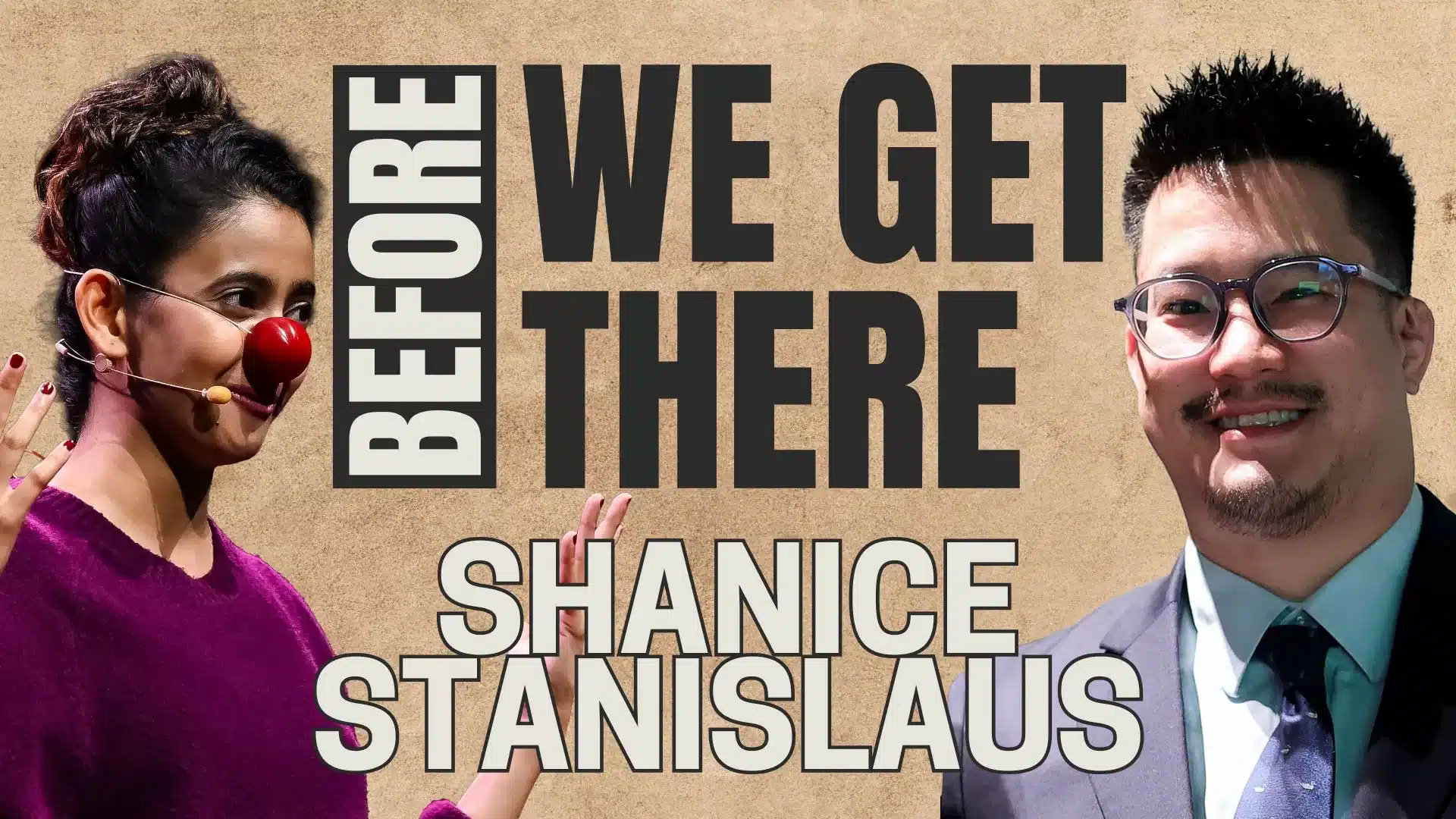
  • Shanice Stanislaus on Masks, Failure, and the Serious Work of Clowning

    Shanice Stanislaus on Masks, Failure, and the Serious Work of Clowning

    Intro

    Shanice Stanislaus is a Singaporean professional clown, performer, and educator whose work sits at the intersection of comedy, vulnerability, and social critique. In a country known for discipline, success, and emotional restraint, Shanice chose a path built on failure, play, and showing up exactly as you are.

    In this episode, we talk about how Shanice discovered clowning at NYU, why it shattered her ideas of what performance could be, and how learning to “take off the mask” became a personal and political act. She shares what it’s like to feel unseen in your own country, to be celebrated abroad but doubted at home, and to keep coming back anyway.

    From being kicked out of clown class in France, to winning international awards, to running workshops that help engineers, teachers, and students reconnect with joy, this is a conversation about identity, belonging, and the courage to look foolish in order to feel whole.

    Story Highlights

    • Growing up in Singapore feeling pressure to be serious and successful
    • Discovering clowning at NYU and realising failure could be a skill
    • Learning to remove emotional “masks” through play
    • Being rejected and doubted by arts institutions at home
    • Finding validation and confidence through international training and touring
    • Winning awards abroad before being recognised locally
    • Teaching clown workshops to adults who believe they “aren’t funny”
    • Using the red nose as a safe way to be vulnerable
    • Helping others reconnect with joy, play, and self-trust

    Quote

    “It almost felt like you always had to put a mask on. In Singapore, you need to be successful. Clown class was the first place where I learned how to take the mask off.”

    About Shanice Stanislaus

    Shanice Stanislaus is a Singaporean professional clown, performer, and educator who has trained internationally in France, the UK, and the US. Her award-winning shows have toured globally, earning recognition in Canada and beyond. Alongside performing, she runs clown workshops through Creatives in Spirit, working with students, professionals, and communities to help people reconnect with play, confidence, and emotional freedom. Her work challenges conventional ideas of success, seriousness, and what it means to be an artist in Singapore.

    Why This Conversation Matters

    Shanice’s story captures a tension many people feel but struggle to name: the gap between who we are expected to be and who we actually are. This episode goes beyond performance and art, touching on fear, identity, cultural pressure, and the cost of constantly wearing a mask. It is a reminder that joy, play, and failure are not distractions from real life — they are essential parts of it.

    Turning Points

    After discovering clowning at NYU, Shanice returned to Singapore and tried to balance creative ambition with stability through a corporate marketing job. Feeling increasingly disconnected, she took the risk to train in France and later the UK, where harsh feedback and rejection forced her to confront her own loss of playfulness. Despite international success and awards, returning home brought skepticism and doubt from institutions that didn’t know how to place her work. Rather than leaving for good, Shanice chose to stay engaged with Singapore — teaching, performing, and slowly building space for clowning to exist locally.

    Key Lessons

    • Failure can be learned and practiced
    • Play is not childish — it is essential
    • Being unseen does not mean you lack value
    • External validation is unreliable but revealing
    • Cultural pressure shapes identity more than we realise
    • Safety and vulnerability are deeply connected
    • Joy can be taught, modeled, and reclaimed

    If You Enjoyed This Episode

    You might also like:
    Neonomora on Identity, Motherhood, and Finding Her Own Sound
    Christel Goh on Leaving Corporate, Taking Risks, and Building a PR Business

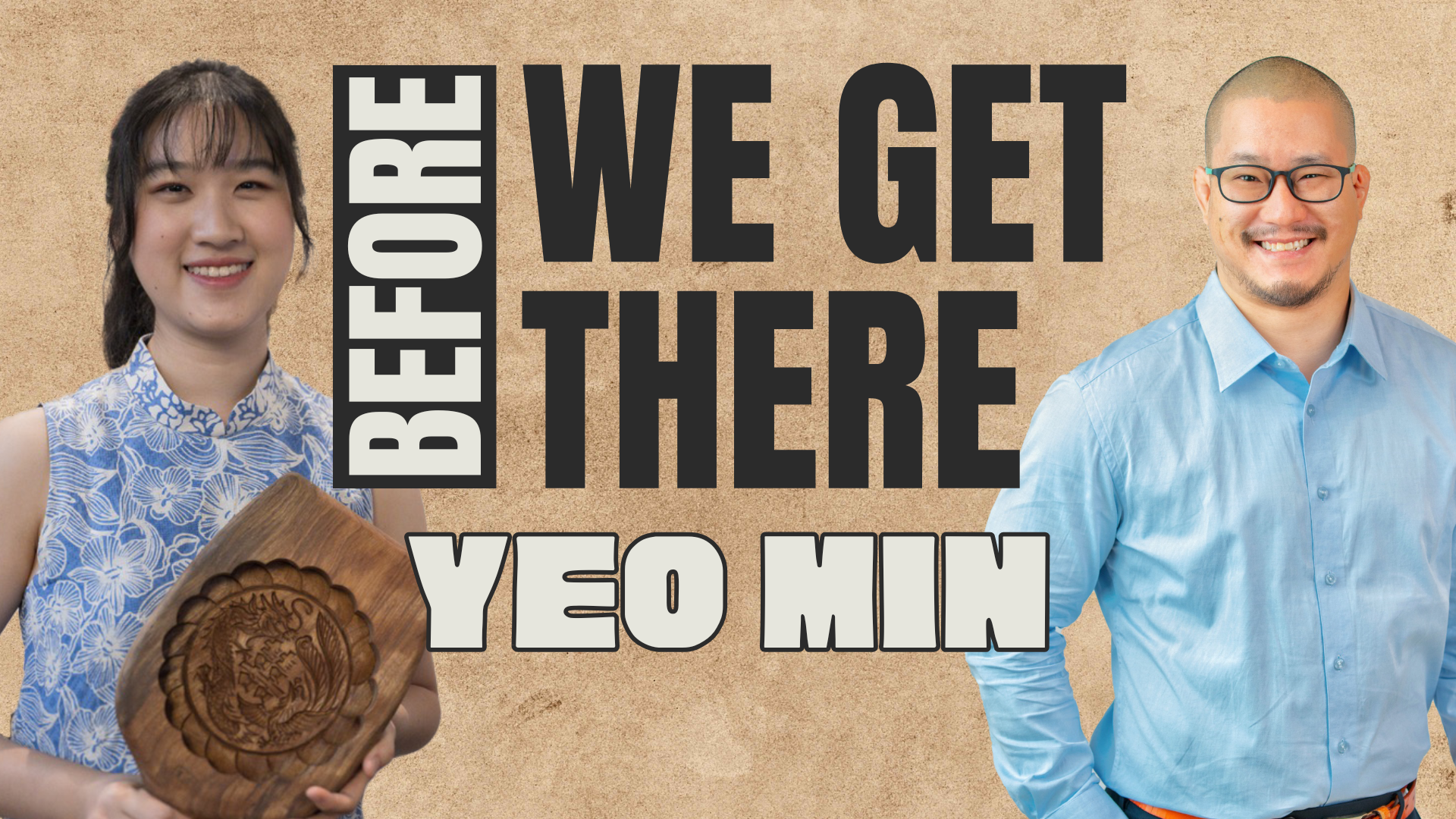
  • Yeo Min on Food Heritage, Creativity, and Preserving Tradition Through Pastry

    Yeo Min on Food Heritage, Creativity, and Preserving Tradition Through Pastry

    Intro

    Yeo Min is the author of Chinese Pastry School, founder of Pastories Bakery, and co-founder of the Museum of Food Singapore, a nonprofit dedicated to preserving and educating the public about local food heritage.

    In this conversation, we explore how Yeo Min left her career in social work to study pastry, what drew her to traditional Chinese pastries, and how she’s balancing creativity, entrepreneurship, and cultural preservation. From her “cool aunt” sneaking her to McDonald’s as a kid to writing one of the first English-language cookbooks on Chinese pastries, Yeo Min’s story is both deeply personal and profoundly local — a look at how food can connect past, present, and identity.

    Story Highlights

    • The accidental journey from social worker to pastry chef
    • How she met her mentor, Chef Pang, and fell in love with heritage baking
    • Why she wrote Chinese Pastry School to document disappearing crafts
    • The challenge of pricing and sustaining heritage food businesses
    • Building the Museum of Food Singapore to preserve culinary memory

    Quote

    “I feel like we need to be more proud of our food heritage, like our food heritage, and just, just sell it. Don’t be shy about it and just be proud of it like any other person.”

    About Yeo Min

    Yeo Min is a Singapore-based pastry chef, author, and food heritage advocate. After working in social services, she pursued pastry school and discovered her calling in traditional Chinese pastries. She later founded Pastories Bakery, co-founded the Museum of Food Singapore, and published Chinese Pastry School — a first-of-its-kind guide to the craft, science, and stories behind Asian pastries. Her work bridges research, education, and entrepreneurship, bringing forgotten food traditions to a new generation.

    Why This Conversation Matters

    Yeo Min’s story captures what it means to redefine heritage in modern Singapore. Her reflections on craft, pricing, and pride shed light on how traditions survive only when they adapt. In a city obsessed with innovation, she reminds us that preservation is also progress — that being proud of where our food comes from is the first step toward keeping it alive.

    Turning Points

    From making dumplings in a London dorm room to studying pastry in Singapore, Yeo Min’s evolution was sparked by curiosity. Meeting Chef Pang shifted her direction from Western-style baking to heritage pastries, and the closure of old pastry shops deepened her resolve to document traditional techniques. Writing Chinese Pastry School became both a research mission and a love letter to her culture. Through the Museum of Food, she’s extending that mission — teaching children, families, and visitors that food is not just flavor but history.

    Key Lessons

    • Heritage evolves. Tradition survives through adaptation, not imitation.
    • Pride is preservation. Value comes from seeing local food as craft, not commodity.
    • Education drives change. When people know the story, they’re willing to pay for it.
    • Mentorship matters. Knowledge must be passed down to stay alive.
    • Creativity can serve culture. Innovation and respect can coexist in the kitchen.

    If You Enjoyed This Episode

    You might also like:

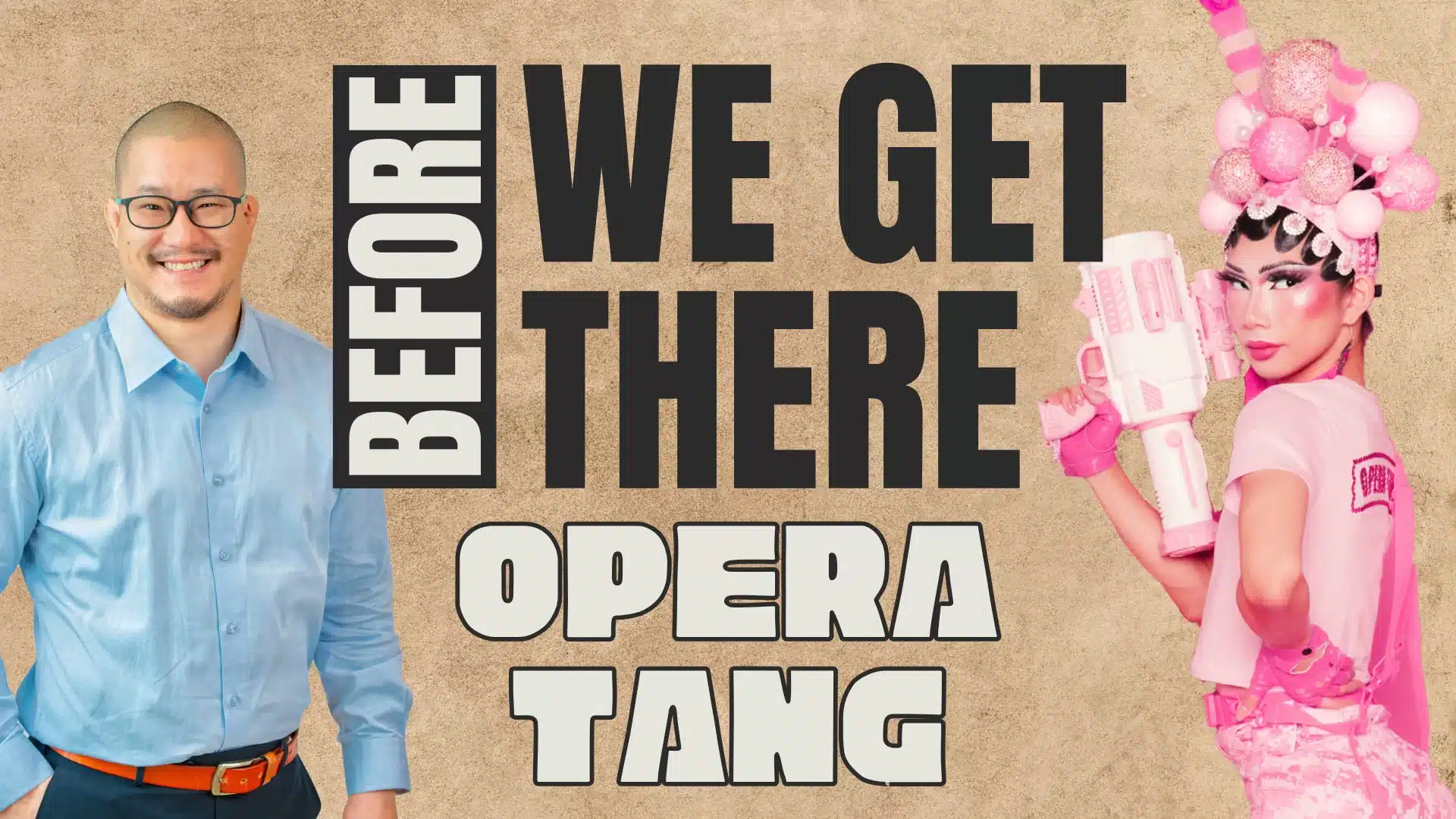
  • Opera Tang on Authenticity, Artistry, and Building a Life You Believe In

    Opera Tang on Authenticity, Artistry, and Building a Life You Believe In

    Intro

    Opera Tang is a Singaporean drag artist, creator, and storyteller whose work blends advocacy with authenticity. Known for her signature look inspired by Chinese opera aesthetics, Opera has become a voice for creative freedom and self-expression in Singapore’s growing drag scene.

    In this conversation, we talk about how Opera went from working in tech sales to performing drag full-time, how she found her artistic identity through heritage, and what it takes to balance art and commerce as a queer creator. She also shares lessons from her grandmother, the person who taught her how to sew and remains her creative mentor, and how she’s using her platform to bring joy and connection to others.

    Story Highlights

    • Getting laid off from a tech job and taking the leap into full-time drag
    • Discovering her creative identity through Chinese opera and cultural heritage
    • Balancing personal expression with commercial collaboration
    • The role her grandmother plays in her creative process
    • How drag can build bridges between generations and communities

    Quote

    “I live by this quote, which is fake it till you make it, because no one knows what they’re doing at the start. No one knows 100% what they’re set out to do and what they want to achieve. Maybe they know what they want to achieve, but they don’t know how to get there. So just do the things that you think that will help you achieve whatever objective.”

    About Opera Tang

    Opera Tang is a Singapore-based drag artist known for her unique blend of Chinese opera aesthetics, fashion, and performance art. Formerly a tech sales professional, she began performing during the pandemic and has since collaborated with brands like Netflix, MTV, and Carlsberg. Beyond performing, she designs her own costumes, runs her social channels as a one-woman creative team, and frequently collaborates with her grandmother on new designs. Opera continues to advocate for representation, creativity, and intergenerational connection within Singapore’s queer and artistic communities.

    Why This Conversation Matters

    Opera’s story is a testament to authenticity — how embracing your identity, even when it doesn’t fit the mold, can lead to freedom and purpose. Her journey from corporate retrenchment to creative independence shows how art can be both personal and political. This conversation is about courage, reinvention, and the joy of showing up as yourself.

    Turning Points

    From her first performance at a post–Pink Dot party to becoming one of Singapore’s most recognized drag artists, Opera’s path has been shaped by risk and reflection. Getting retrenched from her corporate job pushed her to pursue drag full-time, and with her grandmother’s support, she built her brand from the ground up. What began as a love for costume design evolved into storytelling through performance. Now, Opera is channeling her energy into giving back — volunteering with senior communities and dreaming of creating inclusive spaces where drag and social connection meet.

    Key Lessons

    • Authenticity builds connection. People respond to honesty more than perfection.
    • Adaptation creates opportunity. Every pivot, even unexpected ones, can lead to purpose.
    • Heritage can inspire innovation. Identity and culture are sources of strength.
    • Rest fuels creativity. Taking time off sustains longevity in artistic work.
    • Kindness multiplies. Using art to uplift others creates lasting impact.

    If You Enjoyed This Episode

    You might also like:

    • Nuray Istiqbal on Faith, Reinvention, and Life After Rae Lil Black — about transformation and identity.
    • Jingjin Liu on Leadership, Womanhood, and Redefining Power — exploring authenticity and ambition.
    • Vivian Lim on Building Communities and Continuous Growth — about connection and purpose.

  • From Boxing Gloves to BBQ: 5 Life Lessons from an Unconventional Journey

    From Boxing Gloves to BBQ: 5 Life Lessons from an Unconventional Journey

    Sometimes, life takes us on unexpected journeys. My recent podcast guest is a testament to this, seamlessly weaving together two worlds that seem worlds apart: professional boxing and culinary entrepreneurship. From winning a prestigious boxing title to building a unique fusion food brand, their journey is packed with lessons on grit, passion, and adaptability. Here are the top five takeaways from our conversation, offering insights that can inspire anyone pursuing their dreams.


    1. Passion Transforms into Opportunity

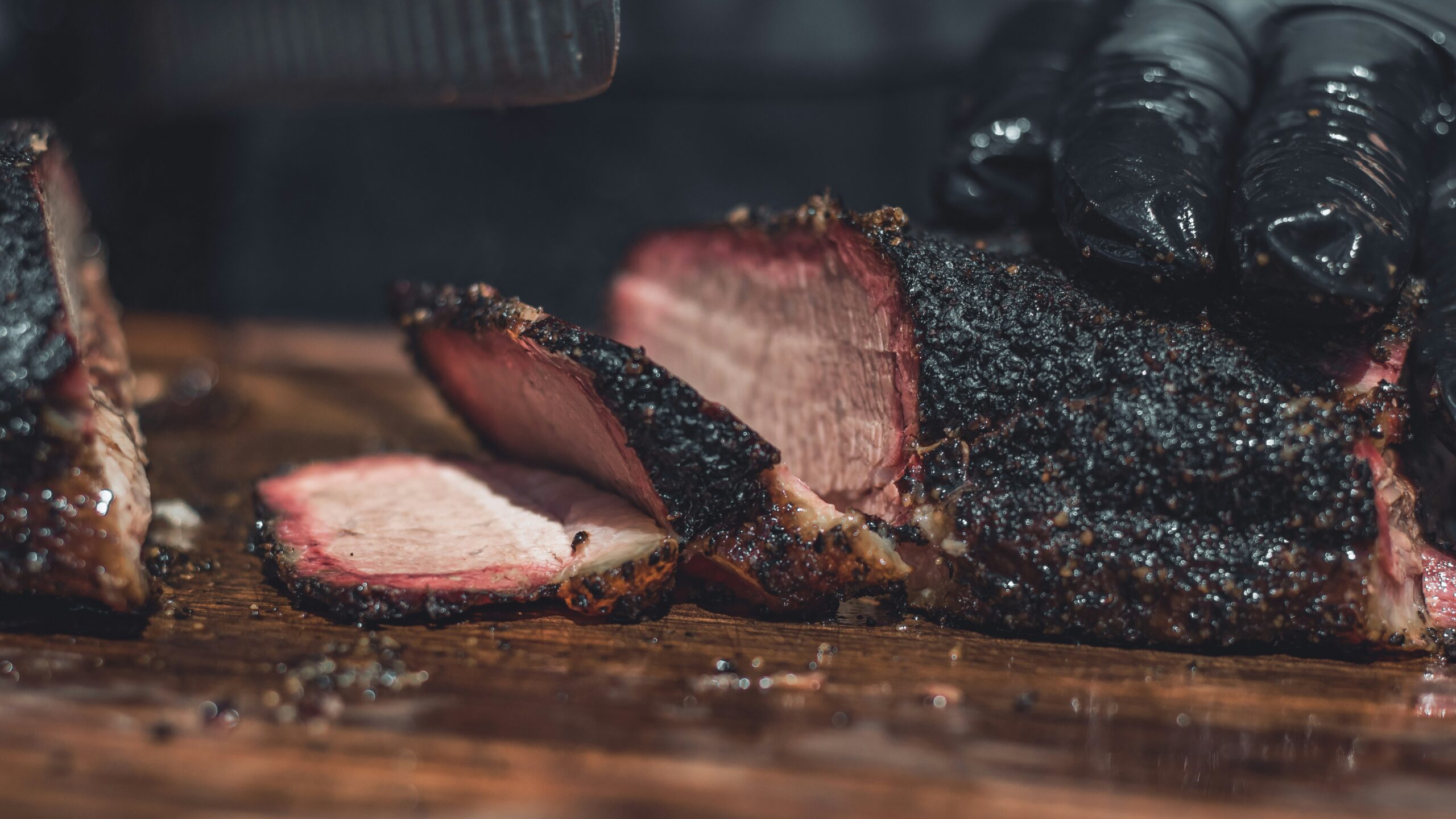
    Every great story starts with a spark, and for my guest, that spark came during culinary school. What began as a fascination with curing and smoking meat turned into a small home-based business, smoking bacon in a backyard grill. They started by selling to chef friends, and through Instagram marketing, what was once a personal experiment quickly gained traction.

    This journey teaches us that passion is the first ingredient in the recipe for success. But passion alone isn’t enough—it’s the action you take, no matter how small, that transforms an idea into something tangible. Starting small doesn’t limit you; it lays the groundwork for future growth.

    If you have a passion project waiting on the sidelines, ask yourself: what’s stopping me from taking that first step today?


    2. Resilience is the Foundation of Success

    Success isn’t a straight line; it’s a winding path full of setbacks and comebacks. For my guest, this was true both in the boxing ring and in business. Early losses in their professional boxing career, including a controversial decision that felt like a “robbery,” were tough to swallow. Similarly, their initial ventures in the food industry weren’t all smooth sailing. They faced challenges like finding the right location, adapting to customer needs, and learning the nuances of restaurant management on the go.

    But what stood out was their perspective: setbacks aren’t roadblocks, they’re lessons. In boxing, a loss isn’t the end; it’s a chance to improve, to come back stronger. In business, a failed approach is an opportunity to pivot and innovate. This mindset of resilience—taking challenges in stride and moving forward—offers a blueprint for overcoming adversity in any area of life.


    3. Success is a Team Effort

    One of the most striking aspects of my guest’s journey was their deep appreciation for community. In boxing, their bond with their coach and gymmates created a support system that fueled their growth. Similarly, in business, their family and close friends played an integral role, from helping with grueling early-morning smoke sessions to encouraging them to keep pushing forward.

    This highlights a crucial lesson: success is rarely a solo endeavor. Behind every milestone is a network of people who lend their support, whether it’s through guidance, hands-on help, or simply being there during tough times. Building and nurturing these connections is as important as honing your craft.

    For anyone feeling overwhelmed by a big dream, remember: you don’t have to do it alone. Lean on your community, and don’t be afraid to ask for help.

    Photo by mintosko on Unsplash

    4. Adaptation is the Key to Growth

    If there’s one word that defines my guest’s journey, it’s adaptability. After finding initial success selling smoked bacon, they scaled their operations, opened a virtual restaurant in a cloud kitchen, and eventually transitioned to a dine-in restaurant. But this wasn’t a straightforward process. For example, their business in the cloud kitchen struggled to convey the essence of their Texan-Japanese barbecue concept, leaving customers confused and orders inconsistent.

    Rather than sticking rigidly to a failing model, they adapted. Moving to a physical restaurant space allowed them to interact directly with customers, share the story behind their food, and create a more immersive experience. They even invited regulars into the kitchen to see the smoking process firsthand, building a deeper connection with diners.

    The takeaway? Listening to feedback and being open to change can turn challenges into opportunities. Whether you’re running a business, pursuing a creative project, or simply navigating life, flexibility is a superpower.


    5. Balancing Ambition with Well-Being

    Balancing multiple passions—boxing and running a restaurant—is no easy feat. My guest described a grueling schedule: training six days a week in the mornings, managing restaurant operations throughout the day, and closing shop late at night. This relentless pace, compounded by the physical demands of weight-cutting and fight preparations, took a toll on their body and mind.

    While they managed to power through, they’ve since decided to take a short hiatus from boxing to focus on their business and health. This decision reflects an important lesson: ambition is admirable, but it should never come at the expense of your well-being. Learning to recognize when to push and when to pause is crucial for sustaining long-term success.

    If you’re juggling multiple priorities, take a moment to assess whether you’re giving yourself enough space to rest and recharge. Sometimes, slowing down is the fastest way forward.


    Final Thoughts

    What resonated most with me during this conversation was the idea that success isn’t about following a single straight path—it’s about navigating the twists and turns, learning from every stumble, and adapting to whatever comes your way. Whether you’re stepping into a boxing ring or launching a business, the principles of resilience, adaptability, and community apply universally.

    If this story sparked any reflections or lessons for you, I’d love to hear them. What challenges have you faced in pursuing your passions, and how did you overcome them? Let’s chat in the comments below—I’m always eager to hear your thoughts.

    Listen to the full podcast here:
    Youtube: https://youtu.be/yElYpWaLdF8
    Spotify: https://open.spotify.com/episode/0WZXin0EtfuvPnitj6xiJm?si=127f874e6fe54f3a

    And as always, stay tuned for more inspiring stories and lessons from my guests. Until next time!

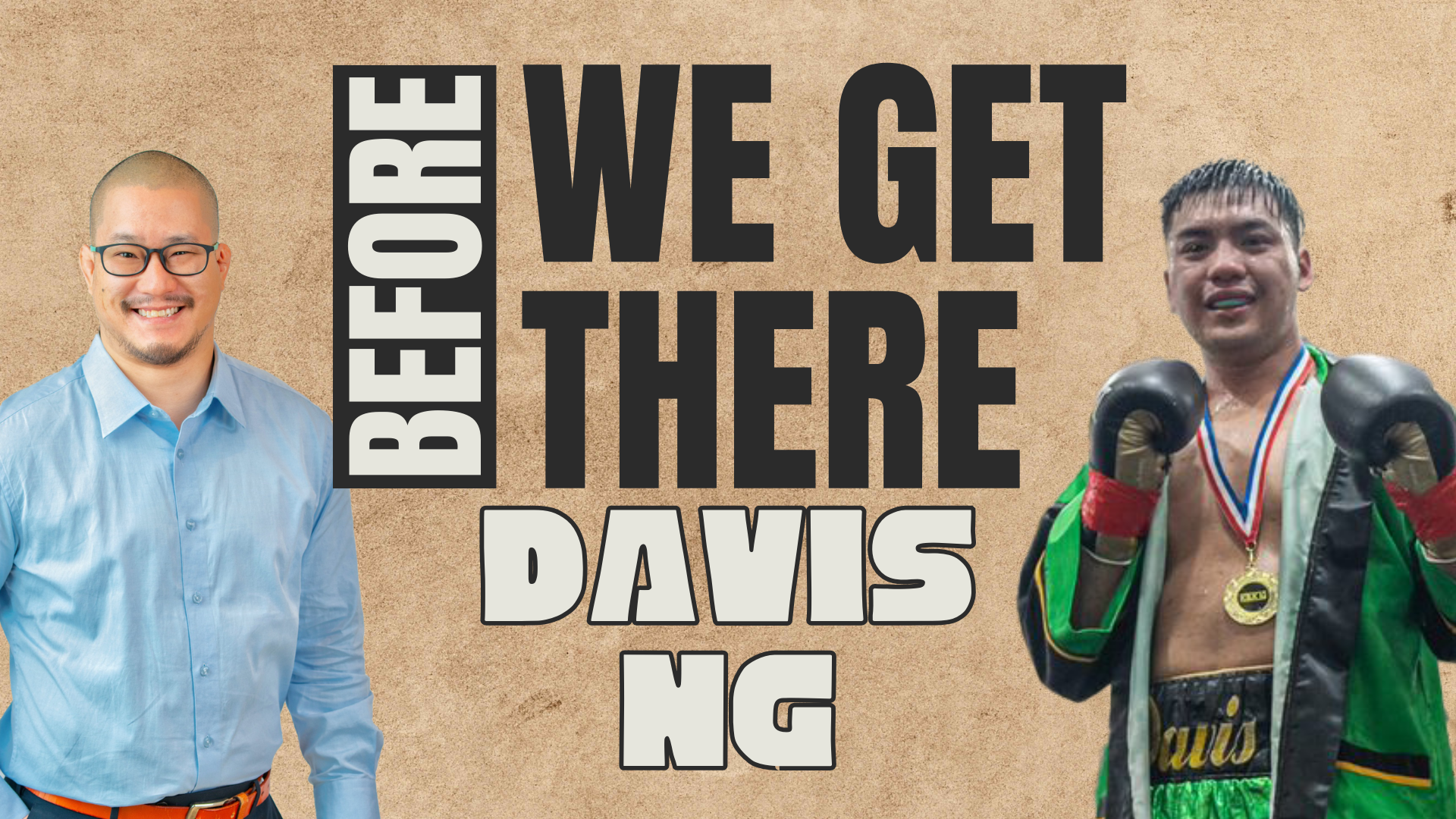
  • Davis Ng on Boxing, Barbecue, and Building Singapore’s First Texan-Japanese Smokehouse

    Davis Ng on Boxing, Barbecue, and Building Singapore’s First Texan-Japanese Smokehouse

    Intro

    Davis Ng is a professional boxer, chef, and founder of Kumari BBQ and BaconKing.sg, Singapore’s first fusion of Texan-style barbecue and Japanese flavors. He’s also the WBC Asia Silver Middleweight Champion, a title earned after more than a decade of balancing two worlds — the intensity of professional fighting and the discipline of culinary craftsmanship.

    In this episode, we talk about Davis’s journey from culinary school to the boxing ring, how a backyard bacon experiment became a thriving business, and the lessons he’s learned from pressure, loss, and persistence. From cooking brisket for 12 hours to cutting weight for a fight, Davis’s story is about grit, focus, and staying true to your craft.

    Story Highlights

    • Starting boxing at 15 and training under the same coach for 11 years
    • Winning the WBC Asia Silver Middleweight Championship
    • How a class on curing meats led to his first business, BaconKing.sg
    • Turning a backyard hobby into a full-fledged smokehouse
    • Balancing entrepreneurship, family, and competition

    Quote

    “Things like that in professional boxing happen. Yeah, so you just gotta take it and move on and be stronger.”

    About Davis Ng

    Davis Ng is a Singaporean professional boxer and chef, best known as the founder of Kumari BBQ and BaconKing.sg, which combine Texas-style barbecue with Japanese flavors. A graduate of the Culinary Institute of America (Singapore), Davis trained at LeRoy and Lewis Barbecue in Austin, Texas, before returning home to start his own concept. Alongside his culinary career, he has competed in over 40 boxing matches, earning the WBC Asia Silver Middleweight title.

    Why This Conversation Matters

    Davis’s story captures what it means to balance extremes — sport and business, intensity and patience, risk and reward. His evolution from student to champion and from chef to entrepreneur shows that mastery often comes through trial and error. It’s about staying adaptable while pursuing excellence in any craft.

    Turning Points

    What began as a culinary school experiment with bacon turned into a home business that grew faster than expected. As orders piled up, Davis turned his passion into a brand — BaconKing.sg — and later expanded into Kumari BBQ, a dine-in smokehouse fusing Texas techniques with Japanese ingredients. At the same time, he continued to train and compete, juggling long nights at the smoker with early morning sparring sessions. Winning the WBC Asia Silver Middleweight Championship marked not just a personal milestone but proof of his philosophy: keep showing up, no matter how hard it gets.

    Key Lessons

    • Discipline is universal. The same focus that wins fights can build businesses.
    • Failure teaches faster than success. Every loss becomes data for the next round.
    • Authenticity connects. Craftsmanship and heart always show through.
    • Support systems matter. Family and friends make big dreams possible.
    • Adaptation keeps you alive. Whether in sport or business, you evolve or you stall.

    If You Enjoyed This Episode

    You might also like:

  • Michael Thompson on Game Design, Grit, and Two Decades on the Mats

    Michael Thompson on Game Design, Grit, and Two Decades on the Mats

    Intro

    Michael Thompson is a UX and game designer turned educator who has worked on some of the world’s biggest titles, including FIFA, NBA Live, and Need for Speed. After nearly two decades in the video game industry, he transitioned into teaching, helping the next generation of designers learn how to create meaningful, immersive experiences.

    In this conversation, Michael shares how he went from growing up on Vancouver Island to working at Electronic Arts and Ubisoft, the creative highs and burnout that come with game development, and how Brazilian Jiu-Jitsu became his lifelong anchor. We talk about creativity, perseverance, and what both games and martial arts can teach us about learning, ego, and endurance.

    Story Highlights

    • Moving from Vancouver Island to Singapore to join Electronic Arts
    • The reality behind “dream jobs” in the gaming industry
    • Working on major franchises like FIFA, NBA Live, and Need for Speed
    • The challenges of creative burnout and career transition
    • What 20 years of Jiu-Jitsu taught him about persistence and humility

    Quote

    “If anything, Jiu-Jitsu has taught me it’s just perseverance. You keep going in any endeavor, whether it’s a career-based endeavor or something in your life. Most people, most of the time, will quit. If you just keep going, you’re going to be the successful one at the end.”

    About Michael Thompson

    Michael Thompson is a Canadian UX and game designer, educator, and Brazilian Jiu-Jitsu black belt based in Singapore. Over his career, he has held senior roles at Electronic Arts and Ubisoft, contributing to global franchises such as FIFA Online, NBA Live, and Ghost Recon Phantoms. Today, he teaches at DigiPen Institute of Technology in Singapore, where he trains aspiring designers to combine technical skill with creative empathy. Outside the classroom, he continues to train and teach Brazilian Jiu-Jitsu at FAMA and SG Grappling.

    Why This Conversation Matters

    Michael’s story bridges two worlds — the creativity of game design and the discipline of martial arts. His reflections on failure, teaching, and consistency reveal how mastery is built over time, not through talent alone. Whether in art, sport, or life, his message is simple: stay curious, keep showing up, and never stop learning.

    Turning Points

    After more than 15 years in the games industry, Michael hit a wall. The long hours, intense deadlines, and constant creative churn had taken their toll. He decided to pivot to teaching, first at Singapore Polytechnic and later at DigiPen. In parallel, he deepened his commitment to Jiu-Jitsu — a practice that taught him patience, humility, and resilience. His journey from “dream job” to meaningful work reflects how success can evolve from ambition to impact.

    Key Lessons

    • Dream jobs have trade-offs. Passion doesn’t erase pressure.
    • Persistence beats talent. Keep showing up — that’s how you get better.
    • Creativity is discipline. The best ideas come from consistency, not chaos.
    • Teaching gives perspective. Sharing knowledge sharpens your own craft.
    • Movement is meditation. Physical practice grounds the mind.

    If You Enjoyed This Episode

    You might also like:

  • Mathew Yuhico on Creativity, Courage, and Learning to Keep Making Things

    Mathew Yuhico on Creativity, Courage, and Learning to Keep Making Things

    Intro

    Mathew Yuhico is a video producer, visual storyteller, and creative all-rounder whose journey has taken him from the Philippines to Singapore — from designing corporate campaigns to producing stories for VICE. Along the way, he’s learned what it means to build a creative career, navigate burnout, and rediscover joy in making things for their own sake.

    In this episode, we talk about how Mathew moved from graphic design to video production, how a rap video landed him a job at VICE during the pandemic, and why Brazilian Jiu-Jitsu has become his anchor outside of work. It’s a conversation about creativity, courage, and finding meaning in the process, not the outcome.

    Story Highlights

    • Growing up in a creative family and discovering art through his mother
    • Transitioning from business school to visual design and storytelling
    • Making a viral rap video that got him hired by VICE
    • How burnout changed his relationship with creativity
    • What Jiu-Jitsu and filmmaking have in common

    Quote

    “If anything, Jiu-Jitsu has taught me it’s just perseverance. You keep going in any endeavor, whether it’s a career-based endeavor or something in your life. Most people, most of the time, will quit. If you just keep going, you’re going to be the successful one at the end.”

    About Mathew Yuhico

    Mathew Yuhico is a Singapore-based video producer, content creator, and storyteller. Originally from Manila, he studied at Singapore Management University before beginning his career in PR and design. His creative path led him to VICE, where his innovative approach to visual storytelling helped shape their digital and social content. Outside of media, he’s a dedicated Brazilian Jiu-Jitsu practitioner and continues to create personal films exploring emotion, mental health, and everyday life.

    Why This Conversation Matters

    Mathew’s story is about following creative instincts even when the path isn’t clear. From rejection to reinvention, his journey reminds us that growth doesn’t always mean climbing a ladder — sometimes it’s about rediscovering joy in what you do, making things for yourself, and learning to embrace imperfection.

    Turning Points

    After starting in business school, Mathew realized his true interests lay in design and visual storytelling. He built a small portfolio through freelance projects and eventually transitioned into video. During the pandemic, after losing his job and a planned move to film school, he took a bold risk — submitting a rap video as his job application to VICE. That video went viral, earning him the role that would change his career. Today, whether he’s filming, training Jiu-Jitsu, or creating short pieces about life, Mathew continues to chase meaning through creativity, not metrics.

    Key Lessons

    Do it for the joy. Not every project needs to be a career move.

    Make time for what feeds you. Creativity needs space, not just deadlines.

    Start before you’re ready. You can figure it out as you go.

    Perseverance outlasts talent. Keep showing up — that’s what matters most.

    Let yourself evolve. What fulfills you at 25 may change by 30.

    If You Enjoyed This Episode

    You might also like: