Tag: Self-improvement

  • Inside the Journey of a Marketer: 5 Lessons in Authenticity and Career Growth

    Inside the Journey of a Marketer: 5 Lessons in Authenticity and Career Growth

    On my second episode of Before We Get There, I sat down with a guest whose marketing journey was anything but traditional. He shared valuable insights, from early setbacks in life and battling imposter syndrome to balancing life and work. Here are the top takeaways for those looking to grow both professionally and personally.

    1. Authenticity Isn’t Just a Buzzword, It’s Essential
    One of the most important points my guest emphasized was the role of authenticity in building a personal brand, particularly on LinkedIn. In a space often criticized for its “overly professional” or even inauthentic vibe, he found that staying true to himself brought a strong following and meaningful engagement. He learned that being genuine isn’t just about what you say, but about engaging consistently, and connecting with others on a deeper level. For anyone looking to grow their network or build a brand, his advice is clear: authenticity is what will make you stand out and attract the right audience.

    Photo by Nick Morrison on Unsplash

    2. Imposter Syndrome Is Part of the Journey
    He admitted that self-doubt—often called imposter syndrome—is something he still encounters. Seeing seasoned professionals with extensive careers often made him question whether his content was “good enough.” His approach to overcoming this was focusing on why he was sharing in the first place: to connect, to learn, and to help others. Staying grounded in his purpose helped him keep perspective, reminding him (and all of us) that even the most experienced professionals feel this way at times.

    3. Embrace a Nonlinear Career Path

    The guest’s career path was far from linear. He started out in business development before moving into marketing, giving him a unique perspective on both roles. This broad experience, he explained, actually strengthened his abilities in marketing by giving him insight into different facets of business. For anyone with an unconventional path, this serves as a reminder that varied experiences can be powerful assets, bringing a well-rounded perspective to any role.

    4. Don’t Be Defined By the Conventional Path
    Rather than sticking strictly to traditional career metrics like job titles and salaries, my guest discussed the importance of finding fulfillment beyond work. His perspective shifted over time, moving from “climbing the ladder” to finding a balance that allows him to prioritize family, health, and well-being alongside his career. This broader perspective is one we can all benefit from: success isn’t defined by external titles but by a fulfilling, balanced life.

    5. The Power of Adaptability and Staying Open to New Experiences
    In his career, my guest transitioned through various industries, from education to FMCG to technology. Each transition brought him fresh insights and valuable skills. He shared that working across industries kept him adaptable, teaching him how to thrive in different environments and teams. This adaptability ultimately led him to find his place in the fast-paced world of tech, where he feels right at home today. This conversation was a refreshing reminder of how much we can learn from others’ unique journeys. Whether you’re just starting out or looking to refine your path, these lessons provide a roadmap for approaching work—and life—with purpose and authenticity.

    This conversation was a refreshing reminder of how much we can learn from others’ unique journeys. Whether you’re just starting out or looking to refine your path, these lessons provide a roadmap for approaching work—and life—with purpose and authenticity.

    Find out who this guest is by watching on YouTube or listening on Spotify or Apple Podcasts.

  • From the Editing Room to Everyday Life: 5 Lessons from a Video Producer

    From the Editing Room to Everyday Life: 5 Lessons from a Video Producer

    In this series, I will share lessons from guests on my podcast, Before We Get There. My first guest, a passionate creative working in media, shared invaluable insights into the struggles and successes that have shaped his unique career. Here are the top five lessons we can all take from his story, whether we’re pursuing a creative path or simply trying to balance our passions with our day-to-day responsibilities.

    1. Find Creative Fulfillment Outside of Work

    Although he’s worked in roles that allowed some creative freedom, my guest discovered a crucial distinction between creating for others and creating for himself. He found that the constraints of client projects often left him yearning for more control over his vision. So, he began channeling his creative energy into personal projects outside of his nine-to-five, finding a renewed sense of satisfaction and personal expression. This lesson is a reminder that sometimes, true fulfillment comes from what we pursue outside the boundaries of work.

    Photo by Jakob Owens on Unsplash

    2. Don’t Let Perfectionism Hold You Back

    Like many creatives, my guest once struggled with the desire for perfection, editing his work for weeks until it met his standards. Over time, he learned that setting a project aside and coming back with fresh eyes helped him judge when it was “good enough” to release. This balance of quality with progress can free us from the traps of over-editing and endless revisions, which can often hinder growth and the ability to move forward.

    3. Embrace Personal Projects as a Source of Fulfillment

    From his early days doodling as a child to his current work in video production, my guest has consistently turned to personal projects to fulfill his need for creative expression. When work doesn’t allow for complete creative control, he makes time to explore video, photography, and other projects that feed his soul. Personal projects can ground us in our passion, helping us reconnect with what brought us to our field in the first place.

    4. Build Resilience and Adaptability

    The journey hasn’t always been smooth, as he experienced setbacks, especially during the pandemic when his plans to attend film school were derailed. He adapted by crafting a unique job application — a rap video — which eventually helped him land a role at a media company. This story exemplifies how creativity and adaptability can open doors even in the face of unexpected challenges.

    5. Strive for Balance and Be Kind to Yourself

    One of the most striking lessons he shared was his desire for a balanced life that combines both professional achievements and personal joy. He’s come to value a work-life balance that allows space for his passions, family, and future dreams. For him, success is about not only career milestones but also nurturing the things that make life truly rewarding, whether it’s a side project, time with loved ones, or a creative hobby.

    This conversation was a great reminder that, in the creative journey, the biggest achievements aren’t always what others see on the outside. Instead, success often lies in the way we stay true to our passions, find balance, and adapt when life throws us a curveball. These lessons can resonate with anyone, regardless of profession — because, at the end of the day, we’re all trying to find fulfillment in our own ways.

    Find out who this guest is by watching on YouTube or listening on Spotify or Apple Podcasts.

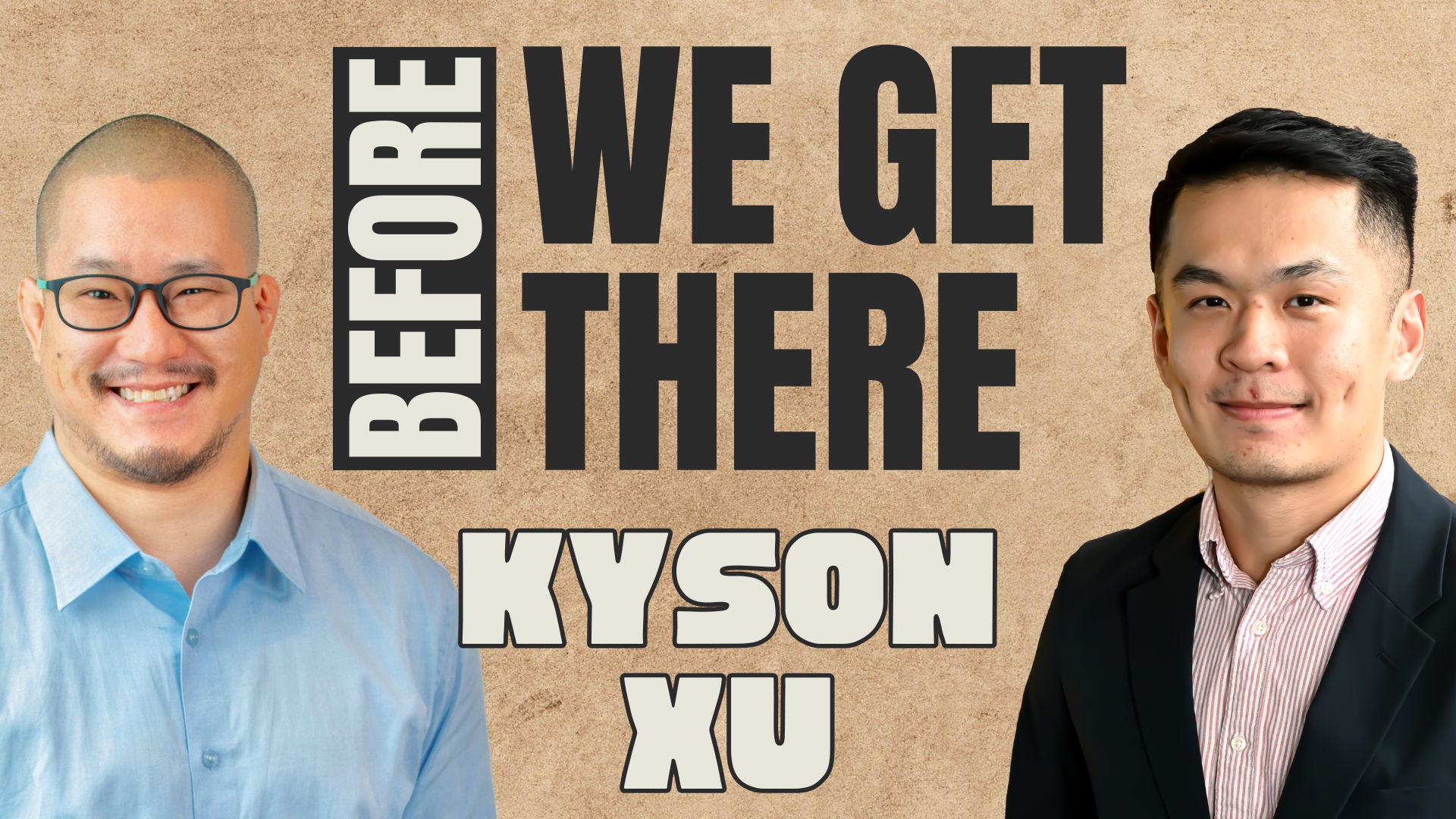
  • Kyson Xu on Personal Branding, Perseverance, and Building a Career with Heart

    Kyson Xu on Personal Branding, Perseverance, and Building a Career with Heart

    Intro

    Kyson Xu is a marketing professional, content creator, and LinkedIn storyteller whose thoughtful posts on career growth, resilience, and authenticity have made him one of Singapore’s most relatable marketing voices. A former business development executive turned regional marketer, he’s built his career across industries — from education to FMCG to tech — while steadily growing his personal brand online.

    In this episode, we talk about Kyson’s journey from failing his A-levels to finding his footing in marketing, how he overcame imposter syndrome, and what it means to build a career that’s not just successful but meaningful. He shares lessons on LinkedIn growth, fatherhood, leadership, and how to keep showing up even when life doesn’t go as planned.

    Story Highlights

    • How failing his A-levels became a turning point in his life
    • Moving from business development to marketing
    • Growing an authentic personal brand on LinkedIn
    • Lessons on engagement, content, and community
    • Redefining success as balance, not status

    Quote

    “You fall down seven, you get up eight. That’s the spirit I think all of us should have, regardless of whatever environment we’re caught up in. It’s always about moving forward, understanding what worked, what didn’t work, and how we can do better.”

    About Kyson Xu

    Kyson Xu is a Singapore-based marketer and content creator known for his authentic, high-engagement presence on LinkedIn. With a background spanning sales, FMCG, and technology, he has built a career rooted in curiosity and resilience. Kyson is also a husband and father, balancing work, family, and personal growth while mentoring young professionals on building sustainable careers and personal brands.

    Why This Conversation Matters

    Kyson’s story is a reminder that success isn’t linear. His journey from academic setbacks to professional stability shows how persistence, self-awareness, and authenticity can redefine what achievement looks like. For anyone navigating uncertainty or feeling behind, this episode offers perspective on progress, humility, and the quiet power of consistency.

    Turning Points

    After failing his A-levels, Kyson questioned everything — his education, his direction, his worth. Over time, he found clarity through small steps, moving into business development and later into marketing, where his curiosity and people skills flourished. His transition into tech and content creation gave him the freedom to combine creativity and impact. As he built a family, he also redefined success: not as position or pay, but as balance, kindness, and fulfillment.

    Key Lessons

    • Authenticity builds trust. Your real voice attracts the right audience.
    • Failure is feedback. Every setback helps refine your direction.
    • Consistency compounds. Show up, even when it’s uncomfortable.
    • Work-life balance is built, not found. Life comes before work.
    • Success is kindness. Leadership is about integrity and care.

    If You Enjoyed This Episode

    You might also like:

  • The Weekend Wind-Down #4 – March 17, 2024

    The Weekend Wind-Down #4 – March 17, 2024

    Writing this after a busy week where I solo-parented almost the whole time. Had some great adventures with my daughter, played and explored together, and even got some relaxation in! Here’s the list for this weekend.

    Biggest marketing lesson from this weekend
    My last role was actually the first time I became more than passing acquaintances with a marketer I met at an event we were sponsoring. We started talking about work and business and ended up sharing a lot with each other about specific conferences and agencies. And now in my current role, I’ve started talking to another fellow marketer in the same industry that I met at a networking event. My previous thinking would be that I wouldn’t want to share too much information, even if we weren’t direct competitors. But these friendships have helped me realize we are all in this together, it isn’t a zero-sum game and we can learn a lot from each other.

    What I’m testing this weekend
    I finally subscribed to ChatGPT Plus, which gives you access to GPT 4, plugins, and more. I haven’t gotten too deep into testing yet, but my first impression is that I haven’t noticed a huge difference in the quality of the responses. I think the plug-ins, more current data, and longer memory will be the biggest benefits. The image generation is fun, but not any better than available alternatives. The most surprising thing so far is that it is noticeably slower than GPT 3.5, I’m not sure if that is due to more complex processing or checking more data, but I’m still looking forward to diving in deeper!

    What I read this weekend
    Taylor Swift has been all over my socials the past few weeks, having played 6 sold-out shows in Singapore. This Inc. article talks about her marketing savviness and dives into her upcoming concert movie being released right after her tour ends. I’m not a Swiftie (I haven’t listened to her music since she was a country star), but what caught my attention were the points on media releases and artists owning their licenses. I’ve been playing streaming services musical chairs recently after changing the card everything was subscribed to, and have been wondering what the future holds. I don’t think it is sustainable needing to have so many subscriptions, but on the other hand, I wouldn’t want everything to be controlled by one company either. Having a lower price point to pay for specific shows and movies I want to watch would be an option I’m in favor of.

    Biggest parenting lesson I learned this week
    I realized my daughter is far more independent and capable than I give her credit for. I thought I was pretty good about letting her learn and explore by herself, but this trip made me realize I could let her go even further on her own. She’s growing up super fast and already I can feel my perception of her falling behind her real stage. I don’t want to raise a sheltered kid, I want her to be confident, independent, and strong, so I’m going to be trying to consciously loosen the metaphorical leash from now on. Some highlights were her saying yes to questions I asked her even when I didn’t think she understood, her learning to close her mouth and dunk her head underwater, and her waking up and jumping off a 3-4ft high bed to go find me.

    Quote I’m pondering this weekend
    Seth Godin wrote this post about how important names are in marketing and says:
    ChatGPT is a terrible name. And the trademark office in the US just denied them ownership in GPT, so even if they were a pioneer, that’s gone now. It’s hard to tell the story when you don’t know what to call it.”
    In some ways I think he’s right, it is a technical acronym, and I even switched two letters throughout a recent blog post and didn’t catch it until someone pointed it out to me. But, it got me thinking, could ChatGPT be on the road to evolving into another Kleenex or Taser? A name so synonymous with AI that people use it for anything that seems similar?

    Most impressive customer service I this week (and in years)
    Lazada is the Amazon/Taobao of Southeast Asia, and I use it to do tons of shopping. There are individual stores, but I usually don’t pay much attention to which I’m buying from unless I buy multiple things from one store for a discount. Last week I ordered something I wanted for this trip, but it hadn’t arrived by the night before my flight. I asked for an update midday, and they offered to send the item to me personally and come pick up the one they sent by courier when I’m back. Shoutout to Mystics Technology for going above and beyond, they certainly made me a loyal customer. It’s rare to see that level of service anywhere, much less from a small e-commerce store.

    That’s all I have for this week folks. Hope you had a fantastic weekend and have a great week ahead!

    Note: My goal is to eventually move this newsletter to email format which will land in your inbox every Sunday evening (Singapore time). Subscribe here if you want to receive this by email after I make the change.

  • The Weekend Wind-Down #3 – March 10, 2024

    The Weekend Wind-Down #3 – March 10, 2024

    Wrapping up a bit of a tough week, came down with some kind of bug, but got through it and had a great executive roundtable event on Thursday. Took this weekend to relax and recharge and finally get back in the gym, so I had a great end to the week!

    Quote I’m thinking about this weekend
    OpenAI CEO, Sam Altman said, “95% of what marketers use agencies, strategists, and creative professionals for today will easily, nearly instantly and at almost no cost be handled by the AI”. He predicts this will happen with the advent of Artificial General Intelligence, which will happen in around 5 years. Whether or not he is right about the timeframe and usefulness of AGI, I think this reinforces the idea that marketers and other knowledge workers need to be evolving to work together with AI to be more effective and efficient. AI may replace some jobs, and a portion of people from other jobs, just like previous technological advances have. But I believe that AI will be a powerful tool for those who embrace it, not a competitor.

    What I watched this week
    I meant to watch Slumdog Millionaire before my India trip, but I ran out of time, and in the end, I’m super glad I waited until I’d already been there. I think if I had watched it earlier, my view of Mumbai may have been skewed by the extreme nature of how the movie portrays it, which was clearly for storytelling purposes. In the end, I loved the movie and the city. There is certainly far more to Mumbai than the slums and gangsters the movie showed, but honestly, the movie could have been set in many countries around the world. So I don’t think it was meant to show India in a bad light but rather, it served as a vibrant backdrop to a classic story of hardship, love, and redemption.

    Most interesting study I saw this weekend
    This study by Ispos asked participants how confident they feel the global economy will be in 2024 versus 2023. The striking thing to me, was that the top six countries with the highest confidence were all in Asia. India, Indonesia, and China led the way, each with over 80% percent confidence. Singapore came in at 59%, while the US, UK, and Germany all were below 50%. How much this variance is due to the economic realities in each country, will have to be seen, but it does point to Asia (or at least Asian confidence) being on the rise.

    Ipsos Global Advisor – 2024 Predictions

    What I’m pondering this weekend
    I was incredibly inspired by International Women’s Day on Friday and the multitude of activities and posts I saw celebrating women and driving conversations around equality and empowerment. I’ve always been supportive of DEI initiatives and had many incredible women bosses, leaders, and colleagues throughout my career, but with a young daughter, I’m paying more attention than ever. And it got me thinking, what can men like myself who aren’t hiring for leadership positions (Forbes found that women still only make up 32.2% of senior leadership roles), do to be an ally? Is just treating women as the equals they are, standing up in the face of microaggressions, and calling out misogyny when we see it enough? Or is there more we can do?

    What I listened to this weekend
    Speaking of diversity, The New York Times podcast The Daily had an episode on Google’s Gemini AI chatbot, which made headlines in February when users found out that it would create inaccurate images by injecting diversity into prompts such as those for “a US senator from the 1800s”, “a 1943 German soldier”, and more. This seems to be because Google had included some additional prompting baked in, which was meant to counteract the problem of underrepresentation. But instead, resulted in inaccurate images being generated. Google had to put guardrails in place which stopped Gemini from generating images for certain types of prompts at all. The two main factors leading to this result were Google’s rush to catch up to OpenAI and Microsoft, and measures to “force” diversity into the results. Seems like a pretty clear microcosm of the question of how much affirmative action is the right amount.

    Biggest marketing learning reinforcement of the week
    I’ve always preached delivering value over sales pitches at conferences, webinars, and roundtables – and sometimes have had to deal with pushback from some people who want to pitch in front of every audience. There’s a time and a place for that, and it isn’t at top of the funnel events. With many solutions I’ve worked on having sales cycles from 6-12 months, there’s no rush to try to sell, it is far better to deliver valuable content and build up thought leadership and relationships first. This was reinforced when talking to my roundtable provider this week when he shared with me that many of his clients end up presenting a long slide deck or demo, only to be unable to run similar events in the future because people don’t want to sit there and listen to boring sales pitches.

    That’s it for this week, I hope you had a great weekend and are looking forward to next week!

    Note: My goal is to eventually move this newsletter to email format which will land in your inbox every Sunday evening (Singapore time). Subscribe here if you want to receive this by email after I make the change.

  • The Weekend Wind-Down #2 – March 3, 2024

    The Weekend Wind-Down #2 – March 3, 2024

    What a week! I’m writing this from Mumbai, having spent the last 4 days here for a work conference and some exploring. I’ve loved it here, the food is amazing, the city bustling, and the conference attendees energetic and ready to learn and grow. I hope to be back soon, but now on to the list!

    What I listened to this weekend
    I’ve been a big fan of Korean-American chef and entrepreneur, David Chang since I first saw him on Mind of a Chef. I’ve been a loyal listener of his podcasts and even went to Momofuku Ko in NYC before it closed. Often his podcasts are filled with hilarious and informative tirades on food, restaurants, parenthood, or culture and society. This week’s episode contained a hilarious ten-minute exploration of “the platonic ideal of a breakfast burrito” (starts at about 33 minutes in). Well with a listen if you are as passionate about breakfast as I am.

    Best viral post I saw this weekend
    I first saw this clip on Instagram, but it is being shared all over LinkedIn as well. People all over the world are impressed with a discussion in the Singapore parliament on AI and upskilling workers to remain competitive. The difference is striking when compared to the questioning of TikTok CEO, Shou Chew last month in front of the US Senate, when the US Senator appeared not to understand Singapore isn’t part of China.

    What I learned at my first conference in India
    Having spent the past 8+ years focused on Southeast Asia with only some time spent on the China and Australia markets, I was excited to hold my first work event in India. I wasn’t disappointed. In some ways, the energy of the delegates reminded me of Indonesia, with everyone being very curious to learn and eager to implement solutions to help them grow. Other than the interest in talking to us and seeing our solution, the other thing that stuck out was the style of sessions at the conference. I always feel that sessions like fireside chats or panels are more engaging than solo presentations, but I would say most times I only see 20-30% of the sessions being something without slides. Here it was completely the opposite, not only were there 4 panel sessions (plus my company’s fireside chat), all of the panels were huge, with 5-to 10 people on stage sharing their expertise. This makes things way more engaging for the audience and it was great to hear from so many CFOs and Heads of Treasury from both India-born companies and MNCs.

    Best LinkedIn hack I worked on this weekend
    LinkedIn launched the Community Top Voice badge last year, rolling it out to selective users who are able to contribute to Community Articles and earn a badge in various topics. After seeing these contributions start to pop up in my feed, I took the plunge and started contributing as well. After less than a week of contributing to 2-3 articles a day, the “Top Lead Generation Voice” badge appeared on my profile yesterday. I think this is a good way to engage on LinkedIn, because most people don’t ask questions in their own posts, so you can really share your expertise and read what others have to say.

    Blog post I’m excited to share
    Using ChatGPT can still be a bit of a touchy subject. On one hand you have all kinds of influencers and solo-preneurs sharing how you can build businesses just by using AI tools and get rich quickly. On the other hand, people are cautious about using it for their work both from the fear it could make them replaceable, and because they don’t want to seem lazy or put out low-quality work. In this post I share some practical ways I use ChatGPT that doesn’t compromise my work and allows me to save time and get more done.

    Coolest place I visited this weekend
    I decided to get out of the city and see another side of India, and I’m so glad I did. Lonavala is a Hill Station about two hours from Mumbai. There are incredible historic and natural sites in the area. My favorite was Lohagad and Visapur forts, which tower imposingly over the plains below. The forts have been occupied by various empires over the last 700+ years and were an amazing sight to see. It was a great reminder to get off the beaten path when traveling. I planned the excursion myself and was the only non-Indian I saw there. The total of around 6 hours getting there and back wasn’t very fun, but it was totally worth it in the end!

    That’s all for this week, have a great week folks! I hope you had a great weekend and a productive week ahead.

  • The Weekend Wind-Down #1 – February 25, 2024

    The Weekend Wind-Down #1 – February 25, 2024

    Hello friends! I’m starting a new project today and am excited to share it with you. I’ve long been a fan of Tim Ferriss, first from his podcast, then books, and over the last few years, his weekly newsletter “5-Bullet Friday”. Tim provides a short curated list of everything from book and music recommendations, to gadget suggestions, poems and quotes to ponder, and more. I love the format of short bite-sized points of interest that are easily digestible and don’t take a lot of time to read.

    For my version, I wanted to deliver some value on Sunday evenings as the weekend is winding down and we are preparing for a new week. Especially after having my first kid, weekends can be a blur of activities, errands, and trying to fit in relaxation. We’ve all felt the “Sunday Scaries” when it gets to be late in the day and we wonder where the weekend went. This newsletter will be my way of ending your Sundays with a small dose of valuable curated content: personal and career growth tips, interesting things to ponder, and more. The topics will change from week to week, but in general, I will stick with some core areas that I am focused on in my life, so if you’re anything like me, I think you’ll find it useful. I look forward to taking this journey with you!


    1. How I’ve been utilizing ChatGTP this weekend
      I found out that the mobile app has a conversation mode with real-time two-way voice chat. I’ve started using this to practice speaking, answering questions, roleplaying networking, or other times I want to improve my communication. It even transcribes your speech afterward so you can see how many umms and ahs you said! I don’t think you need to learn how to be a “prompt engineer” or take courses to learn how to utilize ChatGTP and other AI tools, it’s more important to think of use cases that benefit you and then improve how you interact with the AI so you get better results.
    2. What I focused on this weekend to improve my work
      Planning agendas for syncs and 1:1s! If your calendar is anything like mine, you have a bunch of recurring 1:1s scheduled throughout your week. I’ve committed myself to sharing an agenda with a list of topics to cover before the meeting. This allows me to organize my thoughts and gives the other person a chance to prepare for our meeting. Something basic that I have done on and off, but I believe being consistent about it will really help my meetings be more productive!
    3. What I listened to this weekend
      This January Recap Episode of The Time Ferriss Show had a ton of great clips and sparked the idea for this newsletter. The highlight for me was Chris Beresford-Hill‘s discussion on how to come up with great ideas. I found this quote particularly valuable “Time kills all deals, for sure, and it kills momentum and it kills energy.” when discussing making decisions quickly.
    4. What I read this weekend
      beehiiv shared the average open rates for all emails sent on their platform in 2023 in this blog post. It was an astonishing 38.7%! I honestly haven’t heard of them before, but with that kind of success, I’m definitely going to pay more attention to what they do and how they help marketers.
    5. My most gratifying moment of the weekend
      A friend from the gym where I train jiujitsu, muay thai, strength training, etc. who is earlier in her career, happened to receive a new job offer right before our training session started. She immediately asked for my opinion on the role and company. It was an honor to be able to offer her my view and see that she valued my opinion. Most of us should reflect more on how far we’ve come and realize our experience is valuable and worth sharing with people younger than us.
    6. The most interesting post I saw on LinkedIn this weekend
      Wes Kao shared this post on Grammarly’s 2024 State of Business Communication Report and how much miscommunication happens for marketers during their work. Highlights: “Marketers spend 26 hours/week on written communication, which is the most of any team surveyed.” and “Marketers spend 49% more time than the average knowledge worker responding to written communication from others, which is more than any other function.”

    That’s all for this week, I hope you had a great weekend and will have an even better week ahead!

    -Nicholas Braman

    Note: My goal is to eventually move this newsletter to email format which will land in your inbox every Sunday evening (Singapore time). Subscribe here if you want to receive this by email after I make the change.

  • The Top 5 Lessons 2023 Taught Me

    The Top 5 Lessons 2023 Taught Me

    What a wild ride this year was! My daughter grew from a tiny baby into a toddler, I had to change jobs unexpectedly, I traveled back to China for the first time in 4 years, and much more. While in 2022 I felt like the world was still recovering from the pandemic hangover, by the beginning of 2023 everything was in full swing and things were all but back to normal. This meant that work was super busy for me, including running 17 events around the region in the first half of the year. All my normal gym training was also back to full speed, and there were plenty of team dinners and other social engagements. Becoming a father has been the most important thing to ever happen to me, and I can definitely say I love being a dad and can’t wait to experience my little girl growing up. All-in-all 2023 was a great year, but there were plenty of ups and downs, as well as unexpected issues to deal with. Everything seems more important after having a kid, which is why I thought it is a good time to reflect and look back on the lessons life taught me over the last year.

    1. Not everyone is a true friend, and we should be grateful for those who are
      I heard something recently that really resonated with what I learned this year, and I wish I heard it earlier, it would have saved me a lot of social anxiety. It was something like “People don’t really care about you that much, everyone is the main character in their own story, and when you aren’t in the scene you aren’t thought about.” And while that may sound bleak, but it’s really true. Thinking about it for myself, there are thousands of people who I’ve crossed paths with, and even gotten to know well, but when life stops putting us in the same place at the same time, it’s easy to have them drift away and not really be thought about often.

      The way this came into play for me this year was when I was going through some challenges and had the opportunity to be supported by colleagues and friends. There were many people who offered words of support, but only a portion of those went beyond that, where that was going out for coffee, lending a sympathetic ear, or other helpful actions. I don’t blame the people who stopped after the first words of support, I’ve done it myself countless times. But it did drive home how much I should appreciate those people in my life who were generous and care enough about me to go above and beyond.
    2. Always be ready for unexpected changes and challenges at work
      I’ve had many unexpected changes during my career, new bosses, company getting aquired, changes of team structure, being put on a project in another country, and much more. Going through another huge change and challenge this year re-emphasized to me how much I need to take ownership of my career and professional journey. I need to know what I’m good at, what I want to do next, what I bring to the table, and essentially look at my career as a business I’m in charge of running. This is more than just having an updated resume, it means using each job as a stepping stone to grow your skillset and experience, so you’re ready for the next step up.
    3. Be grateful for where you’re at and how far you’ve come
      Having had a chance to really reflect and take stock of where I’m at in my career and reassess how I got here. I realized I should be grateful and proud of where I’m at today. A lot of hard work has gone into it, but a lot of lucky breaks and great colleagues, bosses, and mentors have helped along the way. Without the people who gave me a chance, advocated for me, led by example, gave me exposure, and believed in me, I wouldn’t be here. I feel more confident in my skills and experience than at any point in my career, and while that’s a nice feeling to have, I’m sure the next bout of imposter syndrome will come soon; or at least it should if I keep pushing myself.

      But I think too often we get caught up in the next goal, career progression, promotion, or whatever. And we forget to be grateful for how far we’ve come. This week I’ve been listening to more sports shows than usual after an amazing Seahawks win on Monday Night Football, and when talking about another team someone said “If you’d told this team at the beginning of the year they’d have 10 wins at this point in the season, everyone would have taken it, no questions asked.” I think the same can be said for me and many of us about our life journey. If someone had told me when I was 10, “By 2023 you’re going to have a beautiful wife and daughter, be living abroad, having a fufilling career that pays your bills, and be healthy and enjoy going to the gym.” I also would have taken it, no questions asked.
    4. Being a family is on a different level after having a kid
      Everyone knows this, but I didn’t realize how much I would really feel it until it happened to me. It would be a lie to say that as soon as my daughter was born I was instantly a better, more responsible person. But it was more like putting on a new pair of glasses and seeing everything in a different light. Each decision I make has more weight, as much as I love my wife, it feels different when you are completely responsible for someone who can’t do anything for themselves. From the time she came home from the hospital until now, I have taken care of my daughter almost every night. While at the beginning that meant holding her to sleep for many hours and feeding her two or three times and now it is much easier since she is a great sleeper, I have treasured this one-on-one time with her and feel it has created a great bond between us.

      I also feel much more connection with my wife than ever before, and having a kid feels like a more important milestone than getting married was. Getting married was just words, but now there is a little human connecting us. It has strengthened our relationship and made both of us more conscious of our behavior and the example we are setting for our child. It’s cliche, and true for all good parents, but it has really changed how I prioritize my life, and putting my daughter’s needs before my own has helped me grow as a person.
    5. You owe it to yourself to take care of your physical and mental health
      Last year I had a lot of “self-care” firsts, a shoulder injury from jiujitsu sent me to a physio for several months, I tried therapy for the first time, I was able to do semi-regular cold-plunges and sauna, I got back into yoga, and I had a lot of massage, cupping, and acupuncture for various aches and pains. First, I realized I’m getting old. Recovery takes longer and I have to make a deliberate effort to manage my training volume and intensity. I remember one day when I had a physio session followed by talking to my therapist; the thought came into my head that I felt like a race car being serviced by different mechanics, one for the engine, another for the tires etc. And it made me think that it isn’t weak to allow people who understand more about the body or mind, to help you get yours in shape. We rely on experts to learn sports, fix things in our house, and cook us meals, but at least for me, there was still some taboo or reluctance to get help for myself from others. I’m glad I started to overcome this hurdle in 2023.

    Overall 2023 was just the first step in the journey of being a parent, a small speedbump overcame in my career, and another year of growing and learning as a person. While the lessons I’ve listed here are nothing ground-breaking and I’ve heard them all before, they were really demonstrated in a personal way in my life this year. Sometimes even the wisest advice doesn’t make an impact until you live through it yourself. I’m looking forward to another great year in 2024 and I hope you have learned your own lessons this year and get a fresh start in the new year!

  • How To Make The Best Of a Bad Job

    How To Make The Best Of a Bad Job

    It is every professional’s worst nightmare. You’ve sent out dozens or hundreds of applications, gone through countless rounds of interviews, finally got one or more offers, chosen which to go with, negotiated your package, and then, a few days, weeks, or months in you realize that you’ve made the wrong move. Maybe the company is a mess, your colleagues are toxic, the job isn’t what was promised, your boss is a tyrant or countless other possible issues. But it is too late, what can you do? You just moved, it won’t look good on your resume to move again so quickly, plus you are already burned out on job-seeking. So you decide the best thing to do is to suck it up, keep your head down, and endure the misery for at least a year or more until you can find something better. But that’s not actually the best thing you can do, in this article I’m going to share some strategies with you to not only survive a bad job, but actually turn it around and thrive.

    Focus on what you can control
    Obviously, you won’t be able to affect if there is an awful CEO or develop a new product if the current one isn’t making it in the market. But by focusing on the things you can control, you can improve the situation around you. For example, if the processes are super disorganized and manual, make sure the work you do is as organized and automated as much as you can. Find the little things around you that you can control and improve instead of the bigger things you can’t affect and it will make your day-to-day work life better. The more time you spend improving what’s around you, the less effect it will have on your psyche and the stress of big-picture problems. And if you are able to deliver good results in a tough environment it will make you that much better of a professional and able to thrive even more at your future companies.

    Photo by kate.sade on Unsplash

    Do as much job crafting as possible
    Job crafting is a term I learned early in my career and I have implemented it in all my roles, which has really helped my professional development. The idea of job crafting is to influence your tasks and projects and mold them in the way that is most advantageous to you. That could mean diving into an area you want to gain more experience in, focusing on doing things that align with your strengths, or building out strategic projects that get you noticed by leadership. Now this doesn’t mean you can do whatever you want and ignore the basic requirements of your role, but what you can do is prioritize and modify what you are doing to give you the most benefits in the long run.

    One example of this I did in my career I’ve already written about here. That was to give myself more experience public speaking and improve my skill at it, or at least get over my fear of it. I was able to craft opportunities for myself to speak in front of audiences in the course of the work I was already doing. Another example was when I wanted to get better at video editing, I started several campaigns that would have video elements, and not only saved the company money by doing them myself but also improved my skills and created some great results.

    Start growing a garden around you
    At many bad jobs, you will find a lot of people who are pessimistic, stuck in their ways, and beaten down from having been in the environment too long. One way to combat this is to notice who the “gems” are and build relationships with them and help each other do better work and have more success together. They may not be on your exact team or someone you work with every day, but you will be able to see the people who care about their work and want to do better compared to those stuck in the mud. By building each other up, not only will you get better results, but you will also increase your and their morale and enjoy going to work more.

    I had this happen at a company I worked at previously where there were many old-timers who were just doing enough to get by and this had rubbed off on some of the newer people as well. In general, the culture was negative, new ideas and ways of doing things were always shot down and it took forever to get things done. At first, I became enmeshed in this atmosphere as well, it’s really contagious! But as I started to work on more projects I came across people who I could see wanted to do more and have more success. I didn’t become a ringleader or anything, but I did manage to work with them as much as possible and it made our work better and more fun.

    Make your accomplishments visible
    Even if your immediate team and boss aren’t great to work with, you can still build your network for your future career by doing good work and making sure it is noticed. Of course, you need to be balanced and not come across as a show-off. But there are ways to make sure you and your accomplishments get noticed without talking about yourself all the time. Personal branding isn’t just for influencers and entrepreneurs, your personal brand is also about how people see you within your company, and you should be actively working to improve it all the time.

    For example, in many of my roles, I have gone above and beyond to help other teams not related to my job function like HR, recruitment, and office management when they had things that would be improved with marketing skills. I have also taken on employee resource group leadership positions to support communities within the company and get a chance to know people outside my function and location. All of these kinds of actions, along with consistently delivering good work and getting your big accomplishments noticed by other teams will not only help you in your current role but also set you up for success down the road. You never know who will move to a new company and remember you as a great colleague and expert in your field.

    Photo by Andrew Teoh on Unsplash

    Plan for your exit
    While you are doing all of these things to make your current bad job as good for you as you can, you still should be setting yourself up for your next move. These days, especially in industries like tech, job-hopping doesn’t have nearly the taboo it used to. It is common for people to move after a year or two, especially if it is in an upward trajectory, it likely won’t be seen as a bad thing to future employers. You should always keep your resume updated, it will also help you with your yearly reviews with your manager when you track your accomplishments. It also helps to be active on LinkedIn and in-person networking. Once you feel the time is right, you’ll be ready to start applying for a better job, and you never know when someone might recommend you for a role, so you should always be ready.

    Hopefully, we all have the good fortune of never having a bad job, but the reality is most of us will eventually find ourselves in this situation. With the advice from this article, I hope you are able to make the best out of a bad job and come through stronger and more competent. I’ve also written specifically on how to deal with a bad boss here.

  • Best Strategies for Dealing With a Bad Boss

    Best Strategies for Dealing With a Bad Boss

    There’s an age-old cynicism about having a bad boss that has resulted in countless memes, jokes, TV show plots, and more. But the truth of the matter is, whether you have a great or horrible boss, it is in your best interest to impress them and do your best to make them appreciate you and your work. You should be actively thinking of ways to make your boss see your value, actually even more so if you think they are a “bad” boss. I’ve had amazing bosses and truly awful ones in the course of my career, and frankly, I wasn’t able to keep to this goal all the time. But now, with a lot of working life under my belt, I think those of you who are struggling with bad bosses can learn from some of the lessons I’ve learned and strategies I’ve developed.

    Don’t take things personally
    If you really do have a bad boss, you and everyone else around you probably knows it. Sometimes it may feel like you are being singled out or taking the brunt of the criticism, but try not to take it personally. This isn’t about you, it’s about them. It can be frustrating when you are working hard and doing your best, but your boss doesn’t recognize it, it may even feel like your co-workers and other leaders won’t notice either because of all the criticism you are taking. But more than likely they do appreciate your good work, it is just hard for them to stick their neck out on your behalf.

    If you are able to let the criticisms and way your bad boss treats you go it won’t take such an emotional toll on you. In fact, you may be able to see it as a positive, if your boss didn’t see you as capable, or even as a threat, they likely wouldn’t pay so much attention to you at all. Or on the other hand, if they treat everyone the same way, then it really isn’t personal and you can let it go. At one of my jobs, I got yelled at by my boss on my second day, she was explaining how a system worked to me and I asked a follow-up question using standard industry terminology. She instantly started berating me and acting like I was stupid because that wasn’t the phrasing they used at this company. I felt horrible for a long time afterward, especially because this happened in the middle of a sea of cubicles and I thought everyone else agreed with her and thought I wasn’t an idiot. It wasn’t until later when I became closer to some other colleagues that they told me how ridiculous she was being and I shouldn’t feel bad.

    Photo by engin akyurt on Unsplash

    Rise above the noise
    With a bad boss, or in any toxic workplace, it is easy to get bogged down in petty drama that doesn’t matter. Especially if you are junior, you can get pulled in many different directions and now know where you should be putting in your efforts. I’ve found that it is best to pick one or two areas you know you can make measurable and visible impact in and focus your efforts there. Do the minimum to do what is required in other areas, but make a bet on these keystone projects and be sure to see them through to a successful conclusion. 

    If you have chosen the right projects, other teams and leaders will see your success, and even if your boss resents it, you will have accomplishments under your belt and have gained good experience. If you can combine this with the last strategy of making your boss look good, then it will be a win-win for everyone and may even start to turn the tide of your relationship with them.

    Become indispensable
    This is good advice even if you have a great boss, but if you have a bad boss it becomes even more important. And this doesn’t just mean kissing ass and becoming a lackey for your boss. But become a trusted indispensable partner for the teams you collaborate with as well. Honestly, there are enough bad workers in the world, it doesn’t take much to be someone people love to work with. Be polite, respond on time, be proactive, don’t shove responsibilities off on others, bring ideas and your expertise to the able, and you’ll already be far ahead of most people.

    If you become seen as someone who is reliable and indispensable to getting things done in your function, even your bad boss won’t be able to get in the way of you being recognized by the overall team. Of course, it also helps to build the relationship with your boss as well, with both bad and good bosses I have done things like going the extra mile to help them with urgent projects, stepping up to do things that don’t fall under my scope and made sure to deliver what they need. You don’t want to be walked all over by a bad boss, but sometimes by doing a little more at the right time, you earn their trust and ease the relationship bit by bit.

    Photo by CoWomen on Unsplash

    Adapt to them
    This is also actually true for both bad and good bosses, but much more vital for the poor ones. Jocko Willink has said “Sometimes you just have to play the game.” and I completely agree. If your boss has some request that isn’t logical or there is a better way, you have to judge which battles to fight, and a lot of the time it isn’t worth it to be right, it is easier and helps your relationship more just to do it the way they ask. 

    I think this is also really important in a more general sense of your boss’ working style and priorities. In my last two roles, I went from a boss who was very big picture-oriented, they didn’t care how I got things done as long as they were done correctly. And the projects they were attracted to were big and ambitious, things that would be highly visible and make a splash. My next boss was extremely detail-oriented and wanted to know everything down to the tiniest element. They were also super conservative and wouldn’t give the go-ahead for any initiative that didn’t have an almost 100% chance of success. Going from these two extremes took me a lot of time to adjust to, but when I was finally able to adapt to the new boss our working relationship got a lot better and we were both happier.

    Make your boss look good
    This can be painful, especially if you and your boss really don’t like each other, but it might be the most important strategy. This can be little things, like when you are talking to people about your projects, use “we” instead of “I”, even if your boss or coworkers didn’t do anything on it. I also have made it a point in several of my roles to find awards and recognitions I would put my boss up for, I tried to make them look good by giving them PR opportunities in media, having them highlighted internally, etc. This also may be harder if you have a bad boss, but it feeds their ego, which is the source of a lot of problems for toxic managers. In the end, if your boss looks good, you end up looking good too. And even if they don’t admit it out loud, they will see you are making efforts to up their status and will appreciate it. 

    With all this being said, sometimes when the boss is bad enough, you just have to cut ties and get out of there. But I believe with these strategies a lot of “bad boss” relationships can be improved enough to at least make them tolerable to the point you can keep progressing in your career and experience even if you are stuck in that role for a while. If you liked this article, click here to read about The Worst Career Advice I’ve Ever Heard.