Tag: Self-improvement

  • You Can’t Adapt From Empty

    You Can’t Adapt From Empty

    There are obstacles that should break you but don’t, and minor setbacks that somehow do. The difference isn’t the obstacle itself. It’s where you’re standing when it hits.

    I’ve noticed this pattern clearly enough in my own life to take it seriously. There are periods when everything is moving well, and periods when everything seems to go sideways at once. What I’ve found is that how well I handle the hard times has less to do with the challenge itself and more to do with the state I was in before it arrived. The foundation I’d built in the good times determined how much I had to draw on when things got difficult.

    That’s the part most people miss when they talk about adaptability. We focus on the moment of change: how quickly we pivot, how well we handle the disruption, how fast we recover. But adaptability isn’t just a reactive skill. It’s something you build in advance, often without knowing exactly what you’re building it for.

    The most challenging period of my life so far was just before and after my wife had to deliver our daughter prematurely. The fear that they might not be okay, the emotional weight of that responsibility, the drain of spending twelve hours a day at the hospital. It was the kind of situation that could have easily spiraled. But it didn’t. I wasn’t perfect, but I didn’t lose control either. Looking back, I think that was largely because of where I was mentally and physically leading up to it. I had been preparing to become a father, had my fitness and work going well, and was taking the responsibility seriously. That preparation didn’t eliminate the stress. But it gave me enough of a foundation that I could absorb the shock without completely falling apart.

    There have been other periods where that wasn’t the case. Times when I wasn’t sleeping well, wasn’t eating well, wasn’t taking care of myself in the basic ways. When challenges arrived during those stretches, they felt insurmountable. Not necessarily because they were harder than other challenges I’d faced, but because my baseline was already so low. I wasn’t just dealing with something new. I was already barely keeping my head above water. I had to work twice as hard to get through something I might have handled more smoothly if I’d been in a better place going in.

    This is something I’ve come to think of as the resilience prerequisite. Before you can adapt well, you need something to adapt from. A base level of stability, both physical and mental, that gives you the capacity to respond rather than just react. When that foundation is solid, you’re less frantic when something unexpected hits. You can stay present. You can think clearly. The challenge doesn’t disappear, but your relationship to it changes.

    The tricky part is that building this foundation requires the most effort precisely when it feels least urgent. When work is going well and life feels manageable, it’s easy to let things slide. Skip the gym a few times. Let the structure slip. Coast on the momentum you’ve already built. That’s a natural human response to ease. But those are exactly the moments when the quiet work makes the biggest difference later. Keeping up the morning routine when you don’t have to. Having the tough conversations before they become unavoidable. Staying disciplined when you could reasonably get away with less. Those choices compound in ways you don’t notice until something unexpected hits and you find yourself handling it better than you would have before.

    Research on resilience supports this. Studies consistently show that people who maintain strong physical health, social connection, and psychological stability during stable periods demonstrate significantly faster recovery and adaptation after disruption. It’s not that resilient people feel less stress when things go wrong. They’ve simply built more capacity to work through it. Resilience isn’t a personality trait you either have or don’t. It’s a resource that gets built over time and drawn down when you need it most.

    This reframe matters for how we think about adaptability. Most of us think about adapting as something we do in response to change. A disruption arrives and we figure out how to adjust. But the people who adapt most effectively aren’t just reacting well in the moment. They’ve been preparing the ground long before the disruption showed up. They treat calm periods not as a chance to coast, but as an opportunity to build the capacity they’ll eventually need.

    That’s not the same as living in constant anticipation of disaster. It’s not about expecting things to go wrong or carrying anxiety about what might be coming. It’s about recognizing that life will throw challenges your way, and that your ability to bend without breaking is largely determined by the work you do before they arrive.

    The practical takeaway is straightforward, even if it isn’t always easy to act on. Look at where you are right now. If things are relatively stable, treat that as an asset and use it deliberately. Build the habits, maintain the routines, have the conversations, do the work that will give you a stronger foundation to draw from when things get harder. And if you’re already in the middle of a difficult stretch, focus first on stabilizing your base. Sleep, movement, the relationships that ground you. Not because those things solve the problem, but because they give you the capacity to actually deal with it.

    The storm will come. It always does. The question is what kind of foundation you’ve built by the time it arrives.


  • Stop Looking at the Top. Look One Step Ahead.

    Stop Looking at the Top. Look One Step Ahead.

    When I started spending more time on my podcast and social media, comparison crept in fast. The numbers, the follower counts, what other creators were doing. It’s the kind of thing that can quietly drain you if you let it. But as I started actually following other creators and studying their work, something shifted. I realized that comparison could be a tool for me to learn from, rather than a discouragement. Everyone can teach us something, so rather than focusing on feeling jealous of the people ahead of me, I started to see what I could learn from them. I didn’t stop comparing myself, but I started framing it differently.

    That shift turned out to be an act of adaptation.

    Comparison is one of those things we’re told to avoid. “Comparison is the thief of joy” gets thrown around a lot, and I get it. But the research tells a more nuanced story. Studies show that social comparison is automatic. We size ourselves up against others without even deciding to. Sometimes it shows up as pride, sometimes admiration, sometimes envy. It happens whether we want it to or not, so fighting it is a losing battle. The smarter move is learning to direct it.

    The problem is that most of us don’t direct it at all. We just absorb it. We see someone further along and feel the gap, and that feeling either discourages us or sends us chasing the wrong things. We start optimizing for what they have instead of figuring out what we actually need. We copy surface-level things, the format, the aesthetic, the frequency, without understanding what’s actually driving their results. That kind of comparison doesn’t help us adapt. It just keeps us reactive, always responding to what someone else is doing instead of building something that’s genuinely ours.

    The research points to something more useful. Studies on social comparison consistently show that we draw more inspiration, and less discouragement, when we compare ourselves to people in similar circumstances: similar background, similar stage, similar starting point. The distance matters. When the gap is too wide, the comparison stops feeling instructive and starts feeling demoralizing. But when someone is just a few steps ahead of you, close enough that you can see exactly what they did to get there, it feels possible. That’s the difference between looking at Michael Jordan as your basketball benchmark and looking at the guy in your neighborhood who outscores you in pickup games. One of those comparisons moves you. The other just makes you feel like you’re not enough.

    This is where comparison becomes an adaptability tool. When I started focusing on creators who were just ahead of me, I stopped seeing a gap and started seeing a map. One person was better at structuring a story. Another had figured out how to take a single idea and stretch it across three different formats. Another had a voice so consistent that everything they posted felt intentional, like it was all building toward something. I couldn’t copy any of it directly, and I didn’t try to. But I could take something from each of them and adapt it to what I was building.

    Think of it like putting together the best version of a player by combining the strengths of many. You study the person ahead of you who is great at one thing, take that specific lesson, and figure out how it fits into your own context. Then you do it again with someone else. Over time, you’re not becoming any one of them. You’re building something that’s shaped by many influences but still entirely your own. That process, observing, extracting, testing, adjusting, is adaptation in practice. It’s not passive admiration and it’s not blind imitation. It’s deliberate learning.

    Most people skip this because they’re either too discouraged by the gap or too proud to admit there’s anything to learn. Both are ways of standing still. The people who adapt well tend to be genuinely curious about how others have figured things out, without losing sight of what they’re trying to build themselves. They hold both at once. That’s harder than it sounds.

    The adaptation isn’t just in what you learn, either. It’s in the mindset shift itself. Moving from “why are they further along than me” to “what can I take from where they are” is a real change in how you engage with the world around you. It doesn’t happen automatically. You have to catch yourself in the old pattern and consciously redirect. But the more you do it, the more natural it becomes, and the more useful comparison gets.

    Here’s something practical to take away. The next time you feel that familiar pang of envy or inadequacy when you see someone doing what you want to do, don’t look away and don’t spiral. Get specific instead. Ask yourself three things: What exactly are they doing that I’m not? Is this person close enough to my stage that their path is actually relevant to mine? And what is one thing I could test or try based on what I’m seeing? Write it down if you have to. The goal isn’t to feel better about where you are. It’s to turn a passive emotional reaction into something you can actually act on. Comparison isn’t going away. But with a small shift in how you use it, it stops being something that holds you back and starts being one of the most useful tools you have.

  • Why Preparation Beats Prediction

    Why Preparation Beats Prediction

    In fighting, the punches that knock you out are the ones you don’t see coming. Not always the hardest punch. Not the most technically perfect one. The one you weren’t ready for. The one that slips past your awareness for a split second. By the time you realize what’s happened, it’s already landed.

    Anyone who has spent time in a boxing gym or on a jiu-jitsu mat knows this feeling. You’re sparring, things seem under control, and then something lands clean. Not because your opponent did anything extraordinary. Because you didn’t see it coming. Life works the same way.

    The biggest disruptions rarely announce themselves. A layoff. A sudden opportunity. A relationship ending. A moment when you realize the path you’re on no longer feels right. Sometimes there are signals. But we rarely know exactly how things will unfold, or when. And when we sense that change might be coming, most of us respond the same way. We start thinking about it.

    We run scenarios. We imagine best cases and worst cases. We try to plan for everything. It feels productive. But most of the time, it isn’t. What we’re actually doing is worrying. Worrying and preparation can look the same from the outside. They both start with the recognition that something might change. But they lead to very different places. 

    Worrying tries to eliminate uncertainty. Preparation increases your ability to handle it.

    In a world where change is constant, that distinction matters more than most people realize.

    The signals before change

    Major changes in life are rarely completely invisible. There are almost always signals. You feel your industry shifting. New things are appearing faster than before. Your role feels less stable. The company is moving in a direction you’re not sure about. Or the signals are more personal. You feel less excited about what you’re doing. A routine that once worked now feels heavy. A restlessness starts creeping in.

    None of these signals tells you exactly what will happen next. They just tell you that something might. This is the moment when people tend to split into two paths. Some ignore the signal entirely and hope things stay the same. Others start worrying through every possible outcome. But there’s a third option, and it’s far more useful: preparation. Preparation doesn’t require knowing the future. It only requires acknowledging that change is possible, and taking steps to make yourself more capable of handling it.

    Why we fall into overthinking

    Overthinking happens for a simple reason. Uncertainty is uncomfortable. Our brains want clarity and control. When we sense that something important might shift, we try to reduce that discomfort by thinking harder. If we analyze enough, we hope we’ll eventually arrive at the right answer. 

    But there’s a threshold where thinking stops producing insight and starts producing anxiety. The mental loop looks something like this: you imagine what might happen, then another scenario, then a worse one, then a slightly better one, then you circle back again. Hours pass. Sometimes days or weeks. Nothing has actually changed except the level of stress you’re carrying. The reason this happens is that worrying feels like preparation. But it isn’t. Preparation changes your capabilities. Worrying only changes your mood.

    What real preparation looks like

    Preparation doesn’t mean predicting the exact shape of the future. It means strengthening the parts of your life that make you more adaptable when things shift. If you sense instability in your industry, it might mean learning new skills or getting closer to where things are heading. If your career feels uncertain, it might mean building a stronger network or creating work that stands on its own. If a big life transition is coming, it might mean improving your health, your financial footing, or your emotional stability.

    None of this guarantees a specific outcome. It just increases your capacity to respond when change arrives. Fighters understand this intuitively. A boxer doesn’t prepare for a match by trying to predict the exact sequence of punches their opponent will throw. That would be impossible. Instead, they train their conditioning, their awareness, their defense, their reactions. They drill until the responses are instinctive. They’re not preparing for a specific punch. They’re preparing their ability to adapt to any punch.

    Readiness shortens the adjustment period

    The most important benefit of preparation isn’t that it prevents change from happening. It’s that it shortens the time it takes to adapt when change arrives. When something unexpected happens, most people move through a similar sequence: surprise, confusion, then a period of adjustment. But the length of that adjustment period varies enormously depending on how prepared someone is.

    If you’ve already been building skills and relationships and resilience, you recognize what’s happening faster. You start exploring options sooner. You move from reaction to action more quickly. If you haven’t, the same event can feel overwhelming. There’s a longer period of scrambling to figure out what comes next. This is why two people can face the same disruption and end up in very different places. The difference often isn’t intelligence or talent. It’s readiness.

    I’ve seen this pattern come up again and again in conversations on the podcast. The guests who navigate change the best aren’t the ones who predicted it. They’re the ones who had quietly been building the habits and relationships and flexibility that made adaptation possible.

    Building adaptation readiness

    What I’ve come to think of as adaptation readiness is the state of being prepared for change even when you don’t know what form it will take. It’s built through consistent habits over time. Learning new skills keeps your thinking flexible. Maintaining strong relationships expands your options. Taking care of your physical and mental health gives you energy when things get difficult. Reflecting regularly helps you notice signals before they become crises.

    None of this predicts the future. But together, it builds a version of yourself that can respond effectively when the future arrives. You don’t need certainty to move forward. You only need readiness.

    The punches you don’t see coming

    If there’s one thing combat sports teaches quickly, it’s humility. You can be in great shape, train consistently, and still get caught by something you didn’t expect. It happens to everyone eventually. But good fighters don’t rely on predicting every move. They rely on preparation. On training their awareness and their reactions so that when something unexpected happens, they can still respond.

    Life is no different. You won’t see every change coming. You won’t predict every opportunity or disruption that will shape your path. There will always be moments when something lands that you didn’t fully anticipate. The goal isn’t to eliminate those moments. The goal is to build the kind of readiness that lets you stay on your feet when they happen.

    Preparation doesn’t remove uncertainty from life. But it gives you something far more valuable: the ability to adapt quickly when reality shifts. And in a world that changes this quickly, adaptability may be the most important advantage anyone can build.

  • Train Your Adaptability Muscle Before You Need It

    Train Your Adaptability Muscle Before You Need It

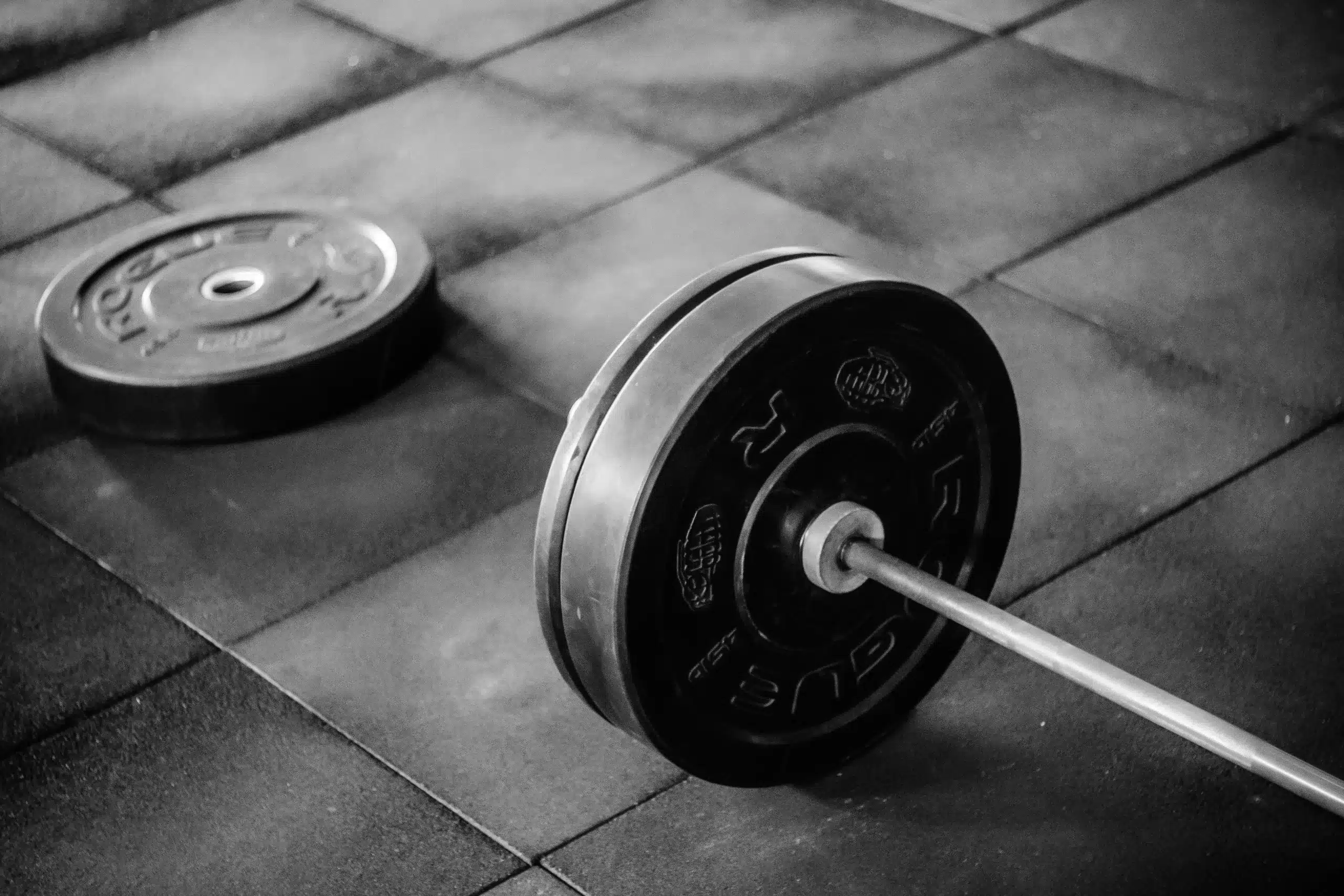
    The problem with waiting for a major life pivot to test your adaptability is that, by the time you actually need it, the muscle has often already atrophied. We treat adaptability as if it were a dormant superpower that will simply activate when a crisis hits. In reality, it functions much more like physical strength. If you haven’t been lifting the small weights of daily change, you will likely buckle under the pressure of a significant one.

    We see this most clearly in the trope of the person who is set in their ways. This is the individual who, over decades, has narrowed their world down to a series of unbreakable loops. They visit the same three restaurants. They order the same dish. They follow the same route. While this is often framed as a hard-earned right to know what one likes, it is more accurately viewed as a failure of cognitive readiness. They have stopped training for the unknown.

    The Science of the Stuck Brain

    To understand how to train the adaptability muscle, we have to look at why it stops working. In cognitive science, this involves the exploration-exploitation trade-off. As detailed by Cohen, McClure, and Yu in their 2007 research on the neural mechanisms of decision-making, this is a fundamental framework for how any system chooses its next move.

    Exploration is the act of trying something new to gather information. It is metabolically expensive and risky because the outcome is uncertain. Exploitation is the act of using what you already know to maximize a guaranteed result.

    Research published in Nature Communications by Mehlhorn et al. (2015) indicates that as humans age, our brains naturally tilt toward exploitation. This is a matter of metabolic conservation. When we repeat an action, we are reinforcing neural pathways through a process called myelination. Myelin is a fatty insulation that makes electrical signals move faster. The more we exploit our existing knowledge, the faster our brains become at those specific tasks, but the less efficient we become at switching gears. If you only ever drive on the same paved highway, you lose the ability to navigate off-road. Being set in your ways is the biological result of over-optimizing for exploitation.

    Repetition 1: Interrupting Automaticity

    The first step in building readiness is reclaiming control from the basal ganglia. As Yin and Knowlton (2006) established in their research on habit formation, the basal ganglia is the region responsible for automatic behaviors. When you are on autopilot, you are not exercising your adaptability. You are simply running a script.

    To break this, you must engage in a practice that forces the brain to transition from “automatic” to “controlled” processing. The most accessible method is the non-dominant challenge. Choose a mundane, highly automated task—such as brushing your teeth or using your phone—and perform it with your non-dominant hand.

    A study in the journal Neuropsychologia by Kelly and Garavan (2005) found that forcing the brain to break these motor habits increases activation in the prefrontal cortex as it overrides the habitual output of the basal ganglia. That feeling of slight annoyance or “brain itch” is exactly what the exercise is for. It is the physiological evidence of your brain being forced to find a new way to solve a familiar problem. By doing this daily, you are training the prefrontal cortex to remain active and available, rather than yielding to the ease of automation.

    Repetition 2: The Radical Menu and the Prediction Error

    The same food example is more than just a culinary habit. It is a sign of low risk tolerance for minor outcomes. When we always order the usual, we are protecting ourselves from a “Reward Prediction Error.”

    As explained by Wolfram Schultz (2016) in his work on dopamine and reward, our brains constantly compare what we expect with what we actually receive. If you expect a great meal and get a mediocre one, your dopamine levels drop. This is a negative prediction error. For a person set in their ways, the fear of this minor chemical dip is enough to prevent them from ever trying something new.

    To train against this, use the Radical Menu protocol. Once a week, go to a restaurant and either order the item you find most risky or let someone else choose for you entirely.

    The bridge to high-stakes adaptability is the management of the “surprise” response. When you are suddenly laid off or a project fails, your brain experiences a massive negative prediction error. If you have never practiced tolerating the minor disappointment of a mediocre sandwich, your nervous system will overreact to the larger shock. By intentionally seeking out small, controlled negative prediction errors, you are desensitizing your amygdala—training yourself to remain functional even when the external environment does not align with your expectations. This is the same mechanism that allows an experienced trader to remain calm during a market dip. They have normalized being wrong in small increments so they can think clearly when the stakes are high.

    Repetition 3: Mental Elasticity through Reframing

    Adaptability is also the ability to hold multiple, conflicting truths at once without becoming paralyzed. This is known as cognitive flexibility. According to research by Adele Diamond (2013) on executive functions, the ability to shift perspective is a core component of how we adapt to changing demands, and critically, it is a skill that weakens without deliberate practice.

    You can exercise this elasticity by practicing intentional reframing. When you experience a minor social friction, a colleague’s curt email, a driver cutting you off, your brain will immediately offer a default narrative. Usually, it casts the other person as incompetent or disrespectful. The exercise is to force yourself to generate three alternative explanations that are equally plausible but have nothing to do with you.

    Research by McRae et al. (2012) showed that individuals who regularly practice generating alternative interpretations of negative events show increased prefrontal activity and decreased reactivity in the brain’s emotion-processing centers. Over time, you are not just changing how you interpret one traffic incident. You are restructuring the default architecture of your response to the unexpected. That is the transfer mechanism: the person who can hold three explanations for a curt email is the same person who can hold three strategic options during a business crisis, rather than locking onto the first one in a panic.

    The Readiness Mindset

    We often admire people who land on their feet during a crisis. We attribute this to their character or their luck. But more often than not, it is the result of a lifelong habit of refusing to let their world become too small.

    If you want to be ready for the big shifts, you have to stop over-optimizing for comfort in the small ones. Research from the Mayo Clinic on cognitive reserve suggests that individuals who regularly challenge their mental routines build a buffer that makes them more resilient to both aging and acute stress. This reserve is the brain’s ability to improvise and find alternate ways of getting a job done.

    The person who always orders the same food isn’t just someone who likes that dish. They are someone who has stopped practicing the art of being wrong. Adaptability is the ability to say “this is not what I expected, but I can work with it.” You cannot say that at seventy if you haven’t been saying it at forty. You have to keep the muscle under tension. You have to keep lifting the weight of the new, the uncomfortable, and the unknown. That way, when life finally demands a heavy lift, you won’t be starting from zero.

  • Wendy Vaz on Choosing Alignment Over Comfort

    Wendy Vaz on Choosing Alignment Over Comfort

    Intro

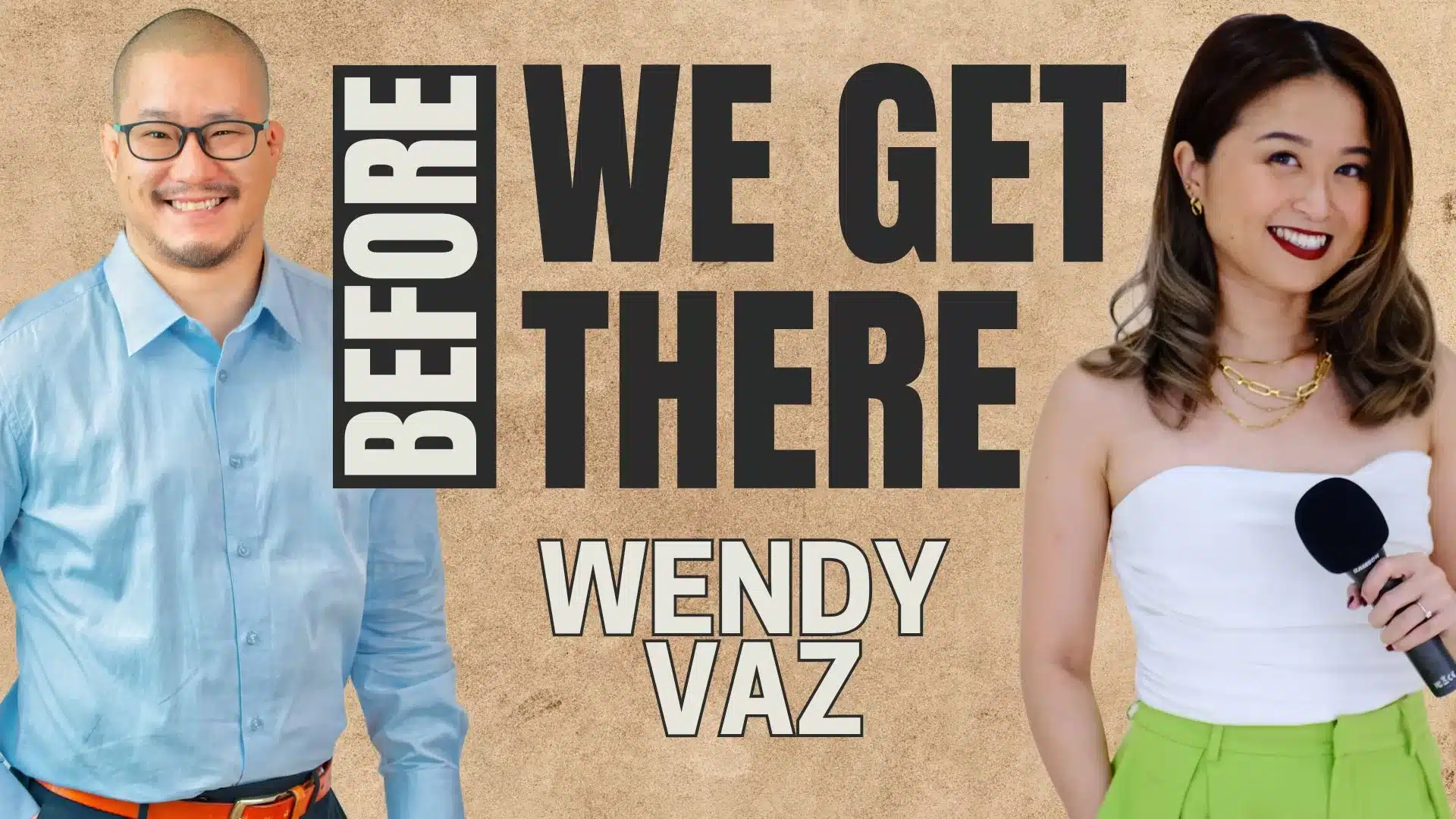
    Wendy Vaz is a Malaysian-based entrepreneur and content creator who recently walked away from a six-year corporate career to go all-in on her own business. While many wait for a “perfect” window to transition, Wendy took the leap in the middle of a year defined by major life shifts: a wedding, a move, and a serious back injury that left her temporarily unable to sit up.

    In this episode, we discuss the reality of the “messy middle” of entrepreneurship just two months after resigning. Wendy opens up about the self-doubt that occurs when you stop looking outward for validation and the spiritual shift required to trust a journey that included a fractured spine on Christmas Eve. We explore her philosophy of “nervous system regulation” as a business strategy and why she would rather work as a barista than return to the comfort of a nine-to-five.

    Story Highlights

    • Transitioning from a decade of “halfhearted” side hustling to going all-in on her own platforms.
    • Overcoming the “looking outwards” phase where seeking advice from successful peers increased her stress levels.
    • The realization that a calmed nervous system leads to better business decisions than functioning from a state of “fight or flight”.
    • Navigating the “limiting belief” of being an international student and realizing that loud participation in class does not always equal intelligence.
    • The impact of reverse culture shock and depression upon returning to Malaysia after studying abroad.
    • Adopting a “burn the boats” mentality where having no Plan B forces the necessary focus to succeed.

    Quote

    “I always know that I’m a human first before I’m a content creator or a coach or whatever … I find that tools and systems are there to guide us to live as human beings.

    About Wendy Vaz

    Wendy Vaz is a content creator and entrepreneur based in Kuala Lumpur. A graduate of the University of British Columbia, she has spent over ten years documenting her life through blogging, YouTube, and podcasting. After a career in the corporate world, she now focuses on helping others navigate modern stress by prioritizing mental health and personal alignment. Her mission is rooted in her own experiences with depression and physical recovery, aiming to help people feel calmer and more comforted in their daily lives.

    Why This Conversation Matters

    Wendy’s story provides a grounded counter-narrative to the typical “hustle culture” approach to starting a business. By focusing on the internal state—her nervous system—rather than just external metrics, she offers a blueprint for building a career that is sustainable rather than just profitable. This conversation is particularly relevant for those feeling a “growing gap” between their corporate roles and their personal values, showing that alignment is a practical choice involving significant trade-offs.

    Turning Points

    Wendy’s path was fundamentally altered by a full scholarship to Canada, which was her first time leaving Malaysia and forced her to adapt to an entirely different culture. A significant internal shift occurred in December 2023 when she fractured her back; the experience of being stuck on a hospital bed led to a deep level of spiritual trust in her journey. The final pivot came two months into her entrepreneurial journey when she realized that removing her “Plan B” was the only way to ensure she wouldn’t retreat when things got difficult.

    Key Lessons

    • Regulate your nervous system first: Making business decisions from a place of fear or stress often leads to poor outcomes.
    • Trust the journey’s timing: Slowing down can often open opportunities that rushing and “grinding” might close off.
    • Acknowledge your humanity: Systems and productivity tools should serve your life as a human, not just your output as a worker.
    • Consistency over “niche” perfection: Wendy’s long history of sharing in public helped her find her voice and build a network before she ever felt “ready”.
    • Commitment requires removing exits: If going back to a corporate job remains an easy option, you may not push through the hardest moments of building something new.
    • Prioritize alignment over comfort: A high-paying, “good” company can still be the wrong place if it no longer serves your vision for your life.

    If You Enjoyed This Episode

    You might also like:

  • Feeling the Wrong Way

    Feeling the Wrong Way

    This holiday season, I’ve been thinking about how often we make ourselves feel bad for not feeling the way we think we’re supposed to. Times when you’re supposed to feel happy, but just don’t. Or others when you feel guilty for being happier than you think you should be. When that happens, we often end up making ourselves feel even worse, creating a vicious cycle. We would all enjoy ourselves more if we learned to shut out those expectations and let ourselves be.

    For years after my mom died, I would catch myself feeling guilty if I was in a good mood. Especially if it was something she would have enjoyed, or something we had done together before. I would be enjoying it, and then all of a sudden, the thought of her would pop into my head, and I would feel bad for feeling good. Logically, I knew that’s not what she would have wanted, but it didn’t stop it from happening for a long time. I’m not sure I learned how to fix it so much as that feeling slowly faded over time.

    Over the years, I’ve also caught myself feeling bad on special occasions like birthdays or holidays, simply because I put so much pressure on myself to enjoy them. I’d prepare for days or weeks beforehand, making sure all the elements were in place to live up to my expectations. But when the time came and I didn’t feel as happy as I thought I should, instead of relaxing and letting things be, I’d make myself feel even worse. Disappointment, guilt, and frustration would come crashing down, and instead of having a good, but not perfect time, I’d end up having a bad time and not enjoying it at all.

    I only started to turn this around after I recognized that I needed to be more flexible and adaptable to what was happening and how I was feeling in the moment. Anticipation of joy can be just as fulfilling as the moment itself. But I had to learn how to balance expectations with reality, and not let everything fall apart when they don’t match.

    It isn’t always easy. We build up scenarios in our minds, and when things miss, it’s natural to feel disappointment and loss. It’s something I’m still working on, and something I’m getting a lot of practice with as a parent. Just recently, I cooked one of my favorite meals, and when we sat down to eat, my daughter barely touched it. This time, instead of forcing her to eat or holding onto my disappointment, I was able to let it go.

    I hope this holiday season, we’re able to put some of our expectations aside and meet the moment as it is, whatever that turns out to be. Maybe we won’t feel the way we think we should, and that’s okay. Let’s give ourselves permission to feel what we actually feel, and find some peace in that.

  • What Successful Adaptation Feels Like

    What Successful Adaptation Feels Like

    Because our life is full of small adaptations, we don’t stop to think about them a lot. When you plan to order something on a menu, but find out they are out of it, you are forced to adapt. When you’re about to walk out the door, but your child throws a tantrum, you adapt. Since these are so commonplace and we often adapt without stopping to think about it, we don’t develop the self-reflection to understand these small adaptations. But each of these is practice to understand our adaptability skill better. You don’t have to do a debrief after each one, but recognizing you are making even a small adaptation will start to prepare you for the bigger ones.

    The opposite problem happens when we have to make big adaptations. If you get laid off from your job, you probably don’t sit down and think about the steps you need to adapt, you just start applying for jobs. Same thing if you go through a divorce or bad breakup, you aren’t thinking about adapting to your single life, you’re just trying to survive emotionally. But these big adaptations are make or break periods, and if you are actively reflecting on your progress and state during them, you’ll get through them a lot easier.

    Sometimes the adaptations we need to make have a clear ending: you secure a new job, you survive a crisis, meet a deadline. But other times, it isn’t easy to tell if we still need to adapt more, or we can move into maintenance mode. Or sometimes you just feel you are in a funk, something’s not right and you make efforts to turn that around, taking regular walks, connecting with friends, eating healthier. Was your adaptation successful the second you start to feel better?

    When I reflected on the most successful adaptations I’ve made in my life, I realized the biggest indicator of success was the feeling of reaching a new normal. For example, when I transitioned my life in China from being a student to teaching English full-time, there were a lot of milestones along the way. It is tempting to point out the first job I landed or my positive performance review. But none of those were the best indicator I had successfully adapted. I had successfully adapted the day I felt comfortable and confident in front of my students. I had become a teacher and successfully adapted to this new normal.

    Another example is when my daughter was born and I became a father. But the milestone to focus on isn’t the day she was born or when I changed my first diaper. It is the day when being a father, holding and playing with her, getting up to comfort her in the middle of the night felt natural and didn’t require conscious effort. At a new job it wasn’t the day I met my boss, signed the contract, or sat in my first meeting. The adaptation was successful when the job became my new normal: I didn’t overthink before speaking up in a meeting, I easily shared our product with a prospect at an event, or wrote a social media post without reviewing tens of examples.

    Adapting successfully isn’t about hitting a specific metric, it’s about reaching the point that everything feels normal again. You don’t need to proactively think about what is happening, you can just be. If we don’t learn to recognize this shift, we won’t get better at adapting the next time. So keep in touch with yourself, and when you get to that point, congratulate yourself on an adaptation well done.

  • Learning How to Play Again

    Learning How to Play Again

    I’ve realised over the years how easily adulthood squeezes the play out of us. What I didn’t expect was how much play affects the way we handle change. Jiujitsu brought that part back into my life, and with it came more looseness, creativity, and adaptability than I had before.

    One of the most important things I learned from jiujitsu is how beneficial it is for adults to continue to engage in play, and how much it is lacking from our modern lives. Last week, I tried a new sweep and got immediately countered. My training partner laughed, I laughed, and we reset. Those thirty seconds reminded me why I keep showing up. I had no idea I was missing this element of life before I took up jiujitsu, but once I got in the gym, I realized how much freedom there is in the kind of play that grappling is. And soon I realized the freedom of playing more in the gym was showing up outside of it as well. It was easier to tap into my creative side, I was more relaxed and playful, and I felt more connected to the people around me.

    If you haven’t tried it before, you might think jiujitsu is all about fighting, or aggressive cuddling as we jokingly call it. But after you’ve practiced it for a while, you realize that you aren’t really fighting most of the time. Often, you are sparring with people smaller, less skilled, or just a friend that you’ve trained with a hundred times before, and you aren’t going 100% and trying to crush them. That’s where the play comes in. An upper belt rolling with me might let me get to the same position five times in a roll, just because they want to practice from that position, that’s play. When I try new things that I don’t know how to do at a high level yet, and get shut down, that’s play. If there’s a new person who I’ve never trained with before and we slap hands and start grappling, that’s an intense form of play that engages all your senses. When you are having a good training session, the play is built in; you’re automatically engaging in creativity, imagination, and connectedness.

    This wasn’t just my experience; it turns out there’s science behind why play matters. Research shows that play is not childish. It is a biological need. Stuart Brown, who has spent decades studying play, found that adults who make space for unstructured play are more adaptable, more resilient, and less rigid under stress. Other studies go further. Playfulness is linked to cognitive flexibility, the ability to shift strategies quickly when things change, and to higher creativity because the stakes are low enough for experimentation to happen. Play also improves social connection and reduces stress hormones. In other words, the things most of us say we want, such as clarity, resilience, and creativity, do not come from trying harder. They come from giving ourselves permission to play.

    There’s a common phrase that jiujitsu is for everyone, and while I think that’s true, I’m not saying everyone needs to try it. But we all could use more play in our lives. More impromptu moments, more trying something without knowing the outcome, more taking the ball from a partner and going with the flow, more using our creativity in an unstructured way. We spend hours studying how to be more organized and efficient, when sometimes what we need is exactly the opposite. Play is not a break from real life. It is what keeps real life from hardening into something we can’t grow in.

  • Learning From the People Ahead of Us

    Learning From the People Ahead of Us

    I wrote this in a season where I was obsessing over podcast downloads and social media numbers, watching other people’s projects race ahead of mine. I kept trying to stop comparing myself to them, but that never really worked. So I started asking a different question instead: what if comparison could be useful?

    I’ve been thinking a lot about the phrase “Comparison is the thief of joy”. As I’ve been spending more time working on my podcast and social media, it’s easy to get caught up in the numbers and worrying about what other people are doing. But when I started to really follow other creators and examine the work they are putting out, I realized that comparison could be a tool for me to learn from, rather than a discouragement. Everyone can teach us something, so rather than focusing on feeling jealous of the people ahead of me, I started to see what I could learn from them. I didn’t stop comparing myself, but I started framing it differently.

    Research helped me make sense of what I was experiencing. Comparison happens automatically: we size ourselves up without thinking. Sometimes it shows up as pride when we’re doing well, sometimes as admiration for what others have achieved, and sometimes as envy (Crusius & Lange, 2017; Smith, 2000; Steckler & Tracy, 2014). Recognizing these reactions as normal made it easier to separate the emotion from the information. That shift turned comparison from something discouraging into something useful, as long as I stayed grounded in who I am and what I’m actually trying to build.

    Most of us have thought about putting together the ultimate athlete or hero by taking the best attributes of different people and combining them into something unstoppable. As I compared myself to others, I realized I could do the same thing with them. One person is super good at speaking, another at editing, another at creating systems. All of these were areas I could take lessons from and apply to my own work. And as I did this more, I also found that I gained more actionable insights from comparing myself to people who aren’t too far ahead of me. It’s great to look up to a New York Times bestselling author or the top podcasts in the world, but they are playing in another league; the rules and lessons aren’t the same.

    Research supports this. Studies show that comparing ourselves to people who are similar to ourselves, in socio-economic background, status, age, etc., increases inspiration over discouragement (Andreeva, Irina & Kim, Youllee & Chung, Sungeun 2024). I’ve found it isn’t useful to look at people who are too far ahead of you in their journey. Look at those who are just a little further down your path. That will give you inspiration to achieve what they have instead of facing a seemingly insurmountable gap. You can identify with where they are and what they’ve done, and recognize the areas where they have progressed ahead of you. If you want to get better at basketball, don’t look to Michael Jordan as an example of where you want to get to; look at the guy in your neighborhood who outscores you in pick-up games. If someone slightly ahead of you can do it, then it feels possible for you.

    Comparison isn’t something we can switch off, and psychology shows it happens whether we want it to or not. So instead of fighting it, I try to use it with intention. I look for people whose next step could realistically be mine, and when I notice that familiar pang of envy or inadequacy, I’ve learned to pause and ask what I can learn from the moment. Now, when I compare myself to others, I’m looking for direction, not validation. Comparison hasn’t stopped being part of my experience, but it’s stopped stealing my joy.

  • The Parts of My Life I Used to Hide

    The Parts of My Life I Used to Hide

    I used to hate answering the question “Where are you from?”. It sounds simple, but it never was for me.

    The answer is, “I’m from Seattle.” But that always led to follow-up questions. As an Asian in the US, people asked about my ethnicity or where my parents were from. In China and Singapore, people assumed I was an American-born Chinese. So I’d end up explaining that I was adopted by caucasian parents when I was 4 months old, but was actually born in Korea. Then the usual questions: “No, I don’t speak Korean.” “No, I haven’t found my birth parents.” “Yes, I call my adoptive parents mom and dad.”

    For a long time, I kept these conversations short. It wasn’t that I was ashamed of who I am; it’s just complicated, and it was easier to downplay or simplify things. Over the past year, though, I’ve started to embrace my identity instead of minimizing it. I’ve been surprised how much it has helped me grow and connect with people. I’ve realized that the surprising things about my background are part of what I’m made from. And sharing more openly doesn’t complicate things; it helps people understand more of who I am.

    And there are surprising things about me that people wouldn’t expect by looking at me. I grew up as suburban Americana as it gets: bologna sandwiches and RC cola, tuna casseroles and minivans. I was a die-hard NASCAR fan and never missed a race from around ’93 to after Dale Earnhardt died. I threw thousands of pitches against a board in the backyard, listening to Dave Niehaus call Mariners games on the radio. I had a mullet for most of my teen years, and my first concert was Tim McGraw and Faith Hill. But that didn’t seem easy to share, even with friends I’d had for years. I didn’t think much about it for years, but at some point, I realized this wasn’t just my experience; most people do some version of the same thing. We share a simpler, safer version of ourselves with the world in an effort to protect ourselves.

    When I stopped editing my story down to the safest version and started sharing more, interesting things started happening. People opened up to me, too. Someone I knew was also adopted. Someone else had lost a parent. Another person felt conflicted about their heritage. These conversations built deeper relationships. It wasn’t that I was turning every conversation into an autobiography or listing my quirks as an ice-breaker. I was just being more open about who I am, and people responded to it. I didn’t know it at the time, but minimizing my identity wasn’t just about avoiding awkward conversations; it kept people from really knowing me.

    I also realized that I’d pushed parts of my past so far down that they barely felt connected to me anymore. I’d kept my story neat and short for so long that I stopped thinking about the details myself. When I started being more open, those old influences and memories resurfaced, not in a nostalgic way, but in a clearer “this is part of me” way. My tastes, preferences, and daily habits have changed a lot over the years, but that doesn’t mean those earlier versions of me weren’t real or meaningful. Growth doesn’t require erasing the past; it just requires putting it in context.

    As I’ve opened up more, I’ve realized something else: identity isn’t fixed, but silence can trap it. When you avoid telling certain parts of your story, those parts don’t disappear, they just go unexamined. And when pieces of your past stay unexamined for too long, they start to feel distant, almost like they happened to someone else. I didn’t understand that until I began sharing more and saw how much of myself I’d boxed away simply because it was easier.

    There was also a cost I never noticed. When you only share the polished version of who you are, people can’t form a real picture of you, they can only react to the mask you’ve curated. And when they respond positively to that version, it reinforces the temptation to stay small. Opening up isn’t about oversharing or forcing depth; it’s about giving people a fair chance to know the real you. I spent years thinking my story was too complicated, too unusual, or just irrelevant. It turns out it was the most human thing about me.

    A lot has changed since those mullet-and-country-music years, but that’s still a part of who I am. Those things shaped me. These days I can’t tell you who won the last Daytona 500 anymore, but as new chapters of my life unfold, I’m learning not to shrink the story. The more I share, the more I connect. I’m still learning how to tell the fuller version of who I am, but it starts with not hiding the parts I used to leave out. For now, that feels like real progress.