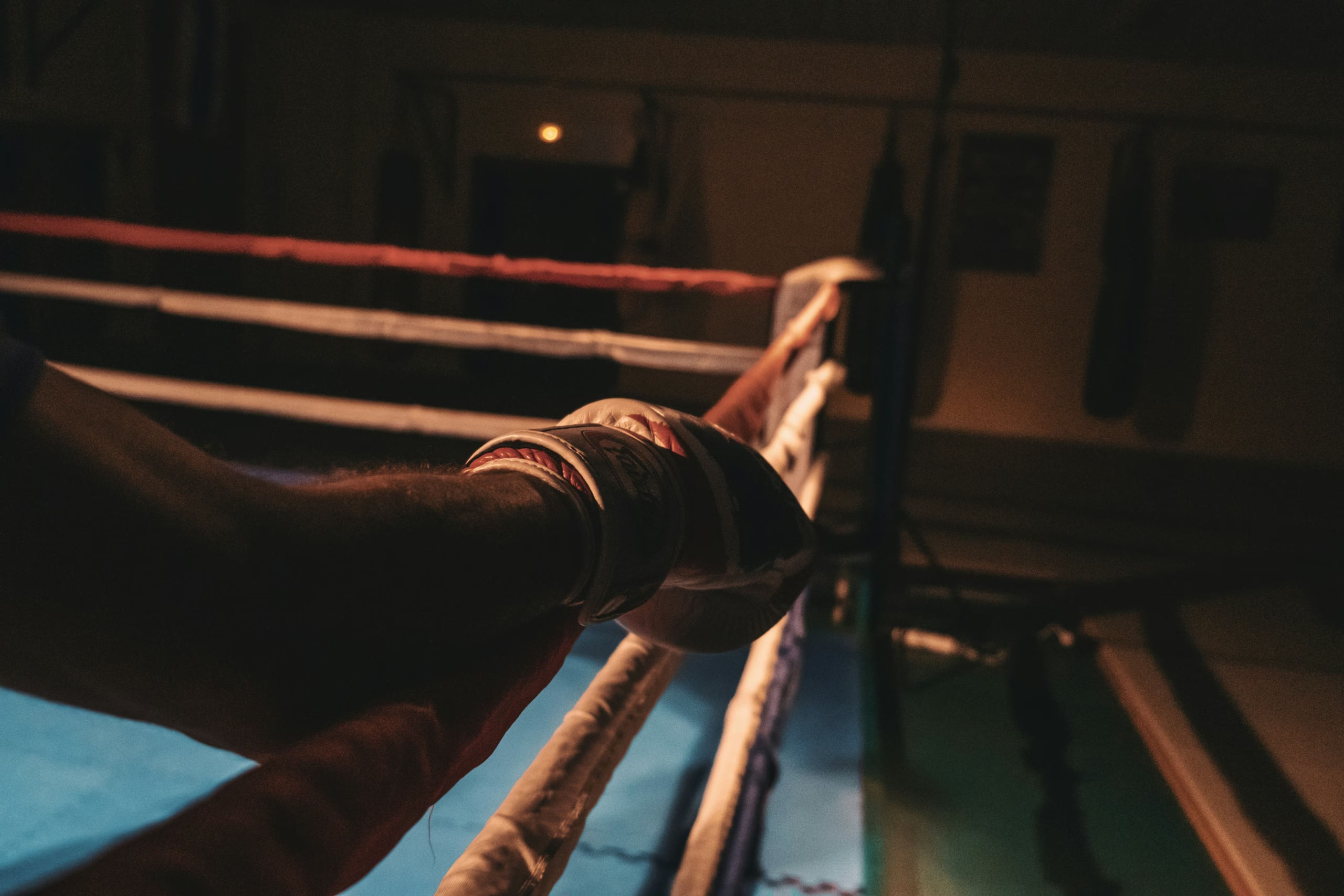

In fighting, the punches that knock you out are the ones you don’t see coming. Not always the hardest punch. Not the most technically perfect one. The one you weren’t ready for. The one that slips past your awareness for a split second. By the time you realize what’s happened, it’s already landed.
Anyone who has spent time in a boxing gym or on a jiu-jitsu mat knows this feeling. You’re sparring, things seem under control, and then something lands clean. Not because your opponent did anything extraordinary. Because you didn’t see it coming. Life works the same way.
The biggest disruptions rarely announce themselves. A layoff. A sudden opportunity. A relationship ending. A moment when you realize the path you’re on no longer feels right. Sometimes there are signals. But we rarely know exactly how things will unfold, or when. And when we sense that change might be coming, most of us respond the same way. We start thinking about it.
We run scenarios. We imagine best cases and worst cases. We try to plan for everything. It feels productive. But most of the time, it isn’t. What we’re actually doing is worrying. Worrying and preparation can look the same from the outside. They both start with the recognition that something might change. But they lead to very different places.
Worrying tries to eliminate uncertainty. Preparation increases your ability to handle it.
In a world where change is constant, that distinction matters more than most people realize.
The signals before change
Major changes in life are rarely completely invisible. There are almost always signals. You feel your industry shifting. New things are appearing faster than before. Your role feels less stable. The company is moving in a direction you’re not sure about. Or the signals are more personal. You feel less excited about what you’re doing. A routine that once worked now feels heavy. A restlessness starts creeping in.
None of these signals tells you exactly what will happen next. They just tell you that something might. This is the moment when people tend to split into two paths. Some ignore the signal entirely and hope things stay the same. Others start worrying through every possible outcome. But there’s a third option, and it’s far more useful: preparation. Preparation doesn’t require knowing the future. It only requires acknowledging that change is possible, and taking steps to make yourself more capable of handling it.
Why we fall into overthinking
Overthinking happens for a simple reason. Uncertainty is uncomfortable. Our brains want clarity and control. When we sense that something important might shift, we try to reduce that discomfort by thinking harder. If we analyze enough, we hope we’ll eventually arrive at the right answer.
But there’s a threshold where thinking stops producing insight and starts producing anxiety. The mental loop looks something like this: you imagine what might happen, then another scenario, then a worse one, then a slightly better one, then you circle back again. Hours pass. Sometimes days or weeks. Nothing has actually changed except the level of stress you’re carrying. The reason this happens is that worrying feels like preparation. But it isn’t. Preparation changes your capabilities. Worrying only changes your mood.
What real preparation looks like
Preparation doesn’t mean predicting the exact shape of the future. It means strengthening the parts of your life that make you more adaptable when things shift. If you sense instability in your industry, it might mean learning new skills or getting closer to where things are heading. If your career feels uncertain, it might mean building a stronger network or creating work that stands on its own. If a big life transition is coming, it might mean improving your health, your financial footing, or your emotional stability.
None of this guarantees a specific outcome. It just increases your capacity to respond when change arrives. Fighters understand this intuitively. A boxer doesn’t prepare for a match by trying to predict the exact sequence of punches their opponent will throw. That would be impossible. Instead, they train their conditioning, their awareness, their defense, their reactions. They drill until the responses are instinctive. They’re not preparing for a specific punch. They’re preparing their ability to adapt to any punch.
Readiness shortens the adjustment period
The most important benefit of preparation isn’t that it prevents change from happening. It’s that it shortens the time it takes to adapt when change arrives. When something unexpected happens, most people move through a similar sequence: surprise, confusion, then a period of adjustment. But the length of that adjustment period varies enormously depending on how prepared someone is.
If you’ve already been building skills and relationships and resilience, you recognize what’s happening faster. You start exploring options sooner. You move from reaction to action more quickly. If you haven’t, the same event can feel overwhelming. There’s a longer period of scrambling to figure out what comes next. This is why two people can face the same disruption and end up in very different places. The difference often isn’t intelligence or talent. It’s readiness.
I’ve seen this pattern come up again and again in conversations on the podcast. The guests who navigate change the best aren’t the ones who predicted it. They’re the ones who had quietly been building the habits and relationships and flexibility that made adaptation possible.
Building adaptation readiness
What I’ve come to think of as adaptation readiness is the state of being prepared for change even when you don’t know what form it will take. It’s built through consistent habits over time. Learning new skills keeps your thinking flexible. Maintaining strong relationships expands your options. Taking care of your physical and mental health gives you energy when things get difficult. Reflecting regularly helps you notice signals before they become crises.
None of this predicts the future. But together, it builds a version of yourself that can respond effectively when the future arrives. You don’t need certainty to move forward. You only need readiness.
The punches you don’t see coming
If there’s one thing combat sports teaches quickly, it’s humility. You can be in great shape, train consistently, and still get caught by something you didn’t expect. It happens to everyone eventually. But good fighters don’t rely on predicting every move. They rely on preparation. On training their awareness and their reactions so that when something unexpected happens, they can still respond.
Life is no different. You won’t see every change coming. You won’t predict every opportunity or disruption that will shape your path. There will always be moments when something lands that you didn’t fully anticipate. The goal isn’t to eliminate those moments. The goal is to build the kind of readiness that lets you stay on your feet when they happen.
Preparation doesn’t remove uncertainty from life. But it gives you something far more valuable: the ability to adapt quickly when reality shifts. And in a world that changes this quickly, adaptability may be the most important advantage anyone can build.