Category: Before We Get There

  • From Classical Perfection To Authentic Expression With Heema Izzati

    From Classical Perfection To Authentic Expression With Heema Izzati

    Intro

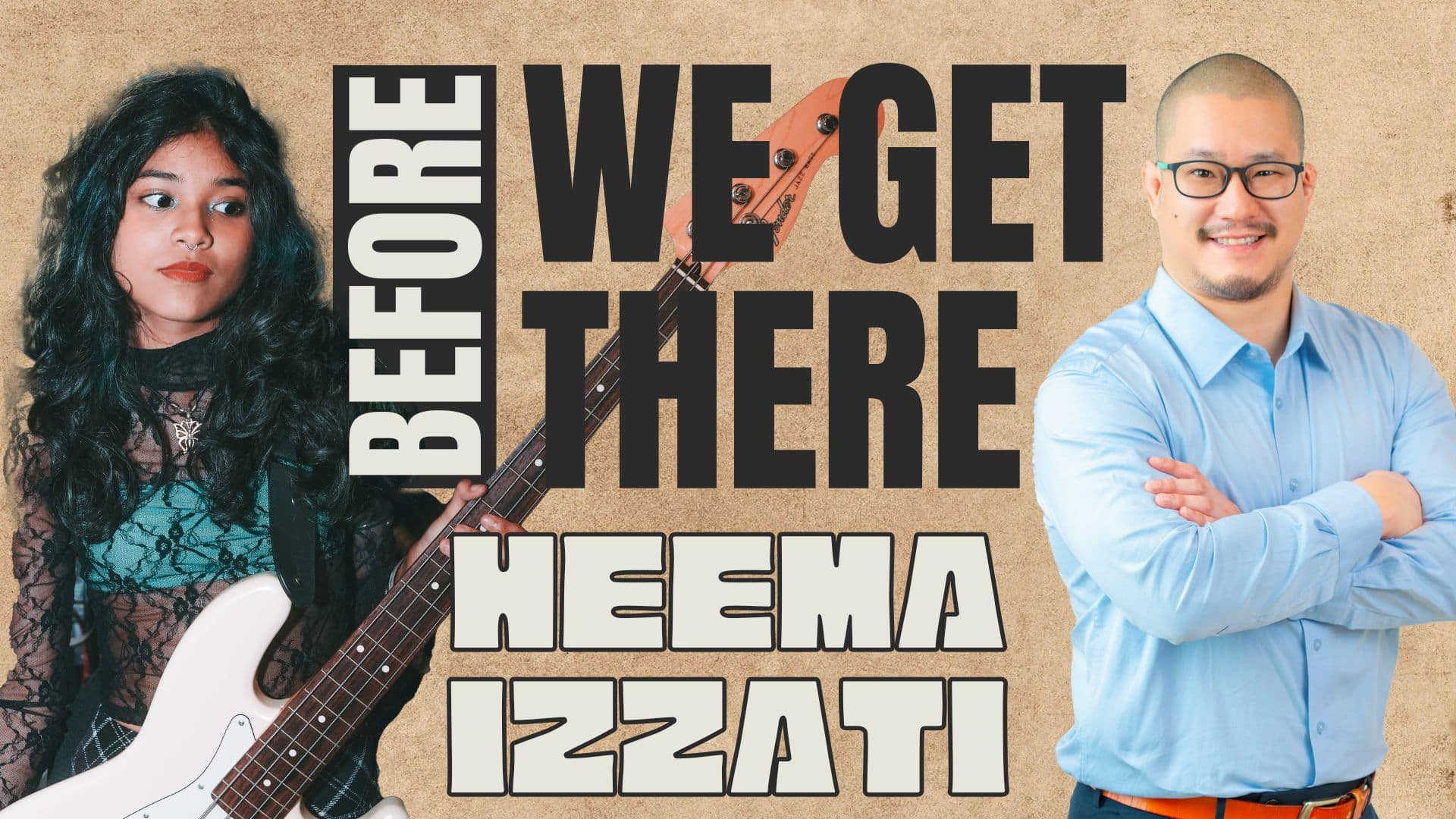
    Heema Izzati is a Singaporean musician, songwriter, and cellist who began performing at a young age. She has played at the National Day Parade, released two solo singles on Spotify, and is preparing to debut her first EP. Her work blends classical training with modern storytelling — music that moves between perfection and vulnerability.

    In this conversation, we talk about her creative process, how she handles writer’s block, and the ongoing shift from technical precision to emotional honesty. Heema shares what she learned from years of competition as a classical musician, how she healed her relationship with music, and what it feels like to finally write songs that sound like herself.

    Story Highlights

    • How studying classical cello taught her discipline and perseverance
    • Why her early training sometimes made creative expression harder
    • The lessons she carried from competition to songwriting
    • How she navigates writer’s block as a skill, not a crisis
    • Why performing her own songs feels more personal than perfection

    Quote

    “When I was younger, I did want to quit classical music, and that took me quite a while to get over and reach the age that I’m at now where I’m like, classical music is always a part of me.”

    About Heema Izzati

    Heema Izzati is a Singapore-based singer-songwriter and cellist whose work bridges the worlds of classical performance and contemporary songwriting. After years of competing as a young musician under NAFA’s School of Young Talents, she began teaching herself guitar and bass while writing original songs inspired by her own experiences. She has performed at national events and is currently studying music full-time while preparing her debut EP.

    Why This Conversation Matters

    Heema’s story captures what happens when technical mastery meets creative freedom. Her reflections on burnout, discipline, and joy show how musicianship is about more than skill — it’s about rediscovering love for your craft. For anyone trying to balance ambition and authenticity, her journey is both a caution and an inspiration.

    Turning Points

    From competition cellist to singer-songwriter, Heema’s evolution wasn’t a rejection of her past but a reunion with her passion. The structure and discipline of classical music shaped her, but the freedom of songwriting reminded her why she started. As she moves into a new phase of her career — releasing original music and performing live — Heema continues to merge precision with personality, proving that growth can honor every version of who we’ve been.

    Key Lessons

    • Discipline builds foundations. The habits of classical music translate into creativity.
    • Expression matters more than perfection. Authenticity connects deeper than flawless technique.
    • Nerves are energy. The butterflies before a show are proof that you care.
    • Collaboration brings clarity. Producers and peers can help you know when a song is finished.
    • Keep evolving. Each stage of music — from practice rooms to EPs — teaches something new.

    If You Enjoyed This Episode

    You might also like:

  • Jingjin Liu on Leadership, Womanhood, and Redefining Power

    Jingjin Liu on Leadership, Womanhood, and Redefining Power

    Intro

    Jingjin Liu is an entrepreneur, investor, and women’s empowerment advocate who has spent her career building companies and communities that help women rise. She’s the co-founder of ZaZaZu, Asia’s first sexual wellness company for women, and now leads Elevate, a platform supporting professional growth and leadership among women across industries.

    In this conversation, Jingjin shares her journey from growing up in Beijing to moving to Germany as a teenager, to finding her voice as a founder in Singapore. We talk about entrepreneurship, parenting, gender expectations, and what she’s learned from helping women navigate ambition, confidence, and change.

    Story Highlights

    • Moving from Beijing to Germany at sixteen and learning individuality
    • Starting her first company while working full-time
    • Why she believes women struggle to self-advocate in corporate environments
    • How ZaZaZu broke taboos by centering women’s sexual wellbeing
    • The realities of balancing motherhood, business, and identity

    Quote

    “If women would have wives, they will be so much more successful than men. The reason that the men are there, where they are, is because someone else took care of everything else.”

    About Jingjin Liu

    Jingjin Liu is the founder of Elevate Group, a platform helping women grow through coaching, courses, and community. Previously, she co-founded ZaZaZu, Asia’s first sexual wellness company for women, and has been recognized as a LinkedIn Top Voice and angel investor. Originally from Beijing, Jingjin has lived and worked across Germany, Singapore, and Australia, blending East and West perspectives in her leadership approach.

    Why This Conversation Matters

    Jingjin’s story is one of contrast — between cultures, expectations, and identities. From being a rebellious student in Beijing to leading empowerment programs across Asia, she embodies what it means to evolve while staying grounded in purpose. Her insights challenge traditional notions of success and remind us that leadership is deeply personal.

    Turning Points

    Jingjin’s path from China to Germany reshaped her understanding of individuality. What once made her an outsider became her strength — curiosity, boldness, and authenticity. Her decision to leave corporate life and start ZaZaZu was less about risk and more about necessity: creating what didn’t exist. Through building, failing, and reinventing, she learned that power doesn’t mean control — it means alignment. Today, through Elevate, she’s helping women define success on their own terms while advocating for systemic change in how organizations view gender and flexibility.

    Key Lessons

    • We make our own luck. Serendipity matters, but effort makes it real.
    • Empowerment starts within. Confidence comes from understanding yourself, not external validation.
    • Flexibility is strength. Both small businesses and families thrive when people can adapt.
    • Redefine success. The goal isn’t perfection — it’s alignment with your values.
    • Collective growth matters. Progress happens when women support one another.

    If You Enjoyed This Episode

    You might also like:

  • Ariff Zin on Heritage, Reinvention, and the Future of Nasi Padang

    Ariff Zin on Heritage, Reinvention, and the Future of Nasi Padang

    Intro

    Ariff Zin is the executive chef and third-generation owner of Rumah Makan Minang, one of Singapore’s most iconic nasi padang restaurants. What began as his grandmother’s humble eatery on Kandahar Street has grown into a brand that’s lasted more than 70 years — now with new outlets and a loyal following across generations.

    In this episode, Ariff shares what it means to grow up in a restaurant family, how studying at the Culinary Institute of America changed his view of food, and why preserving heritage cuisine requires constant adaptation. We talk about waking up at 3 a.m. to cook 40 dishes, introducing modern systems into a family business, and why he believes traditional foods deserve the same respect as fine dining.

    Story Highlights

    • Growing up in his family’s nasi padang restaurant on Kandahar Street
    • Studying at the Culinary Institute of America and interning in New York
    • Learning from Michelin-starred kitchens and adapting lessons back home
    • Modernizing tradition through technology and discipline
    • Why he believes home-based businesses are Singapore’s new hawkers

    Quote

    “To be honest, if I travel, I miss my food. But if I’m still in Singapore, I don’t eat as much as people thought, because every day I have to do food tasting in the restaurants. So sometimes I just feel like eating another cuisine rather than nasi padang — but it’s comfort food. I love rice so much.”

    About Ariff Zin

    Ariff Zin is a Singaporean chef and restaurateur, best known as the executive chef and third-generation owner of Rumah Makan Minang, a heritage nasi padang brand established in 1954. A graduate of the Culinary Institute of America, Ariff worked in New York’s catering scene before returning to Singapore to modernize his family’s business. He has since expanded Minang’s reach through innovations such as vacuum-packed meals, centralized kitchens, and digital ordering — all while keeping its traditional recipes intact.

    Why This Conversation Matters

    Ariff’s story embodies what heritage cuisine can become when tradition meets innovation. His journey from engineering student to chef reveals the resilience behind Singapore’s food culture. Through family, faith, and experimentation, he’s redefining what it means to honor the past while cooking for the future.

    Turning Points

    From carrying plates as a child to leading one of Singapore’s most recognized Malay restaurants, Ariff’s career has been shaped by reinvention. His time in the U.S. taught him about hierarchy, workflow, and precision — lessons he brought home to transform his family business. Introducing systems and new technology wasn’t easy, but over time his team embraced change. During COVID-19, his earlier decision to vacuum-pack dishes kept the restaurant thriving. For Ariff, adaptation is about respect: respecting the craft enough to help it survive another generation.

    Key Lessons

    • Heritage evolves. Tradition only stays alive when it adapts.
    • Discipline matters. Kitchens run on structure, not ego.
    • Innovation protects legacy. Technology can preserve, not replace, authenticity.
    • Respect the craft. True nasi padang takes hours — and generations — to perfect.
    • Community defines success. Feeding people well is both purpose and pride.

    If You Enjoyed This Episode

    You might also like:

  • Joyce Harn on Acting, Rejection, and the Journey Toward Self-Belief

    Joyce Harn on Acting, Rejection, and the Journey Toward Self-Belief

    Intro

    Joyce Harn is a Malaysian actress known for her roles in Fly by Night and Budak Flat, along with appearances in television dramas and reality competitions. She’s also a judo practitioner and pageant finalist who’s carved her own path in an unpredictable industry.

    In this conversation, Joyce talks about chasing her childhood dream of acting while balancing family expectations and financial reality. She shares the emotional toll of auditions, how she built resilience through constant rejection, and why she continues to choose authenticity over certainty. From jumping off buildings on set to competing in judo tournaments, Joyce’s story is about finding confidence through action — literally and figuratively.

    Story Highlights

    • How Disney and Lizzie McGuire inspired her to act
    • Navigating family expectations and choosing broadcasting over performance arts
    • Learning to handle rejection through hundreds of auditions
    • Competing in judo and discovering strength through discipline
    • Why she dreams of directing films about family, values, and emotion

    Quote

    “People ask me if I regret it, but I don’t regret anything because I never make a decision that I don’t want to do.”

    About Joyce Harn

    Joyce Harn is a Malaysian actress and model whose credits include Budak Flat, Fly by Night, and numerous short films and television projects across Malaysia and Singapore. A graduate in broadcasting, she began her career through beauty pageants and reality shows before moving into film. Outside of acting, Joyce practices judo and advocates for persistence and self-growth in creative careers. Follow her on Instagram at @joyceharn.

    Why This Conversation Matters

    Joyce’s story highlights the unseen side of acting — the rejections, the pauses, and the quiet perseverance between projects. Her candor about failure and self-doubt gives a rare glimpse into how artists build resilience. It’s a story about choosing courage again and again, even when no one is watching.

    Turning Points

    From early extra roles to leading parts, Joyce’s journey has been a decade-long balancing act between practicality and passion. She’s experienced burnout, office jobs, and countless rejections, yet each setback deepened her self-belief. Discovering judo later in life became another form of storytelling — one rooted in movement, trust, and discipline. Whether on set or on the mat, Joyce continues to test her limits while staying grounded in curiosity and craft.

    Key Lessons

    • Rejection builds resilience. Every “no” becomes part of your training.
    • Authenticity beats perfection. Staying true to yourself outlasts trends.
    • Passion needs patience. Success in film takes time — and faith.
    • Movement heals. Physical discipline like judo strengthens mental focus.
    • Keep learning. Each project, big or small, is another step forward.

    If You Enjoyed This Episode

    You might also like:

  • Yeo Min on Food Heritage, Creativity, and Preserving Tradition Through Pastry

    Yeo Min on Food Heritage, Creativity, and Preserving Tradition Through Pastry

    Intro

    Yeo Min is the author of Chinese Pastry School, founder of Pastories Bakery, and co-founder of the Museum of Food Singapore, a nonprofit dedicated to preserving and educating the public about local food heritage.

    In this conversation, we explore how Yeo Min left her career in social work to study pastry, what drew her to traditional Chinese pastries, and how she’s balancing creativity, entrepreneurship, and cultural preservation. From her “cool aunt” sneaking her to McDonald’s as a kid to writing one of the first English-language cookbooks on Chinese pastries, Yeo Min’s story is both deeply personal and profoundly local — a look at how food can connect past, present, and identity.

    Story Highlights

    • The accidental journey from social worker to pastry chef
    • How she met her mentor, Chef Pang, and fell in love with heritage baking
    • Why she wrote Chinese Pastry School to document disappearing crafts
    • The challenge of pricing and sustaining heritage food businesses
    • Building the Museum of Food Singapore to preserve culinary memory

    Quote

    “I feel like we need to be more proud of our food heritage, like our food heritage, and just, just sell it. Don’t be shy about it and just be proud of it like any other person.”

    About Yeo Min

    Yeo Min is a Singapore-based pastry chef, author, and food heritage advocate. After working in social services, she pursued pastry school and discovered her calling in traditional Chinese pastries. She later founded Pastories Bakery, co-founded the Museum of Food Singapore, and published Chinese Pastry School — a first-of-its-kind guide to the craft, science, and stories behind Asian pastries. Her work bridges research, education, and entrepreneurship, bringing forgotten food traditions to a new generation.

    Why This Conversation Matters

    Yeo Min’s story captures what it means to redefine heritage in modern Singapore. Her reflections on craft, pricing, and pride shed light on how traditions survive only when they adapt. In a city obsessed with innovation, she reminds us that preservation is also progress — that being proud of where our food comes from is the first step toward keeping it alive.

    Turning Points

    From making dumplings in a London dorm room to studying pastry in Singapore, Yeo Min’s evolution was sparked by curiosity. Meeting Chef Pang shifted her direction from Western-style baking to heritage pastries, and the closure of old pastry shops deepened her resolve to document traditional techniques. Writing Chinese Pastry School became both a research mission and a love letter to her culture. Through the Museum of Food, she’s extending that mission — teaching children, families, and visitors that food is not just flavor but history.

    Key Lessons

    • Heritage evolves. Tradition survives through adaptation, not imitation.
    • Pride is preservation. Value comes from seeing local food as craft, not commodity.
    • Education drives change. When people know the story, they’re willing to pay for it.
    • Mentorship matters. Knowledge must be passed down to stay alive.
    • Creativity can serve culture. Innovation and respect can coexist in the kitchen.

    If You Enjoyed This Episode

    You might also like:

  • Opera Tang on Authenticity, Artistry, and Building a Life You Believe In

    Opera Tang on Authenticity, Artistry, and Building a Life You Believe In

    Intro

    Opera Tang is a Singaporean drag artist, creator, and storyteller whose work blends advocacy with authenticity. Known for her signature look inspired by Chinese opera aesthetics, Opera has become a voice for creative freedom and self-expression in Singapore’s growing drag scene.

    In this conversation, we talk about how Opera went from working in tech sales to performing drag full-time, how she found her artistic identity through heritage, and what it takes to balance art and commerce as a queer creator. She also shares lessons from her grandmother, the person who taught her how to sew and remains her creative mentor, and how she’s using her platform to bring joy and connection to others.

    Story Highlights

    • Getting laid off from a tech job and taking the leap into full-time drag
    • Discovering her creative identity through Chinese opera and cultural heritage
    • Balancing personal expression with commercial collaboration
    • The role her grandmother plays in her creative process
    • How drag can build bridges between generations and communities

    Quote

    “I live by this quote, which is fake it till you make it, because no one knows what they’re doing at the start. No one knows 100% what they’re set out to do and what they want to achieve. Maybe they know what they want to achieve, but they don’t know how to get there. So just do the things that you think that will help you achieve whatever objective.”

    About Opera Tang

    Opera Tang is a Singapore-based drag artist known for her unique blend of Chinese opera aesthetics, fashion, and performance art. Formerly a tech sales professional, she began performing during the pandemic and has since collaborated with brands like Netflix, MTV, and Carlsberg. Beyond performing, she designs her own costumes, runs her social channels as a one-woman creative team, and frequently collaborates with her grandmother on new designs. Opera continues to advocate for representation, creativity, and intergenerational connection within Singapore’s queer and artistic communities.

    Why This Conversation Matters

    Opera’s story is a testament to authenticity — how embracing your identity, even when it doesn’t fit the mold, can lead to freedom and purpose. Her journey from corporate retrenchment to creative independence shows how art can be both personal and political. This conversation is about courage, reinvention, and the joy of showing up as yourself.

    Turning Points

    From her first performance at a post–Pink Dot party to becoming one of Singapore’s most recognized drag artists, Opera’s path has been shaped by risk and reflection. Getting retrenched from her corporate job pushed her to pursue drag full-time, and with her grandmother’s support, she built her brand from the ground up. What began as a love for costume design evolved into storytelling through performance. Now, Opera is channeling her energy into giving back — volunteering with senior communities and dreaming of creating inclusive spaces where drag and social connection meet.

    Key Lessons

    • Authenticity builds connection. People respond to honesty more than perfection.
    • Adaptation creates opportunity. Every pivot, even unexpected ones, can lead to purpose.
    • Heritage can inspire innovation. Identity and culture are sources of strength.
    • Rest fuels creativity. Taking time off sustains longevity in artistic work.
    • Kindness multiplies. Using art to uplift others creates lasting impact.

    If You Enjoyed This Episode

    You might also like:

    • Nuray Istiqbal on Faith, Reinvention, and Life After Rae Lil Black — about transformation and identity.
    • Jingjin Liu on Leadership, Womanhood, and Redefining Power — exploring authenticity and ambition.
    • Vivian Lim on Building Communities and Continuous Growth — about connection and purpose.

  • Rob Lilwall on Adventure, Resilience, and the Courage to Keep Going

    Rob Lilwall on Adventure, Resilience, and the Courage to Keep Going

    Intro

    Rob Lilwall is a British-born adventurer, author, and motivational speaker known for his three-year cycling expedition from Siberia to London — a journey that spanned over 50,000 kilometers and reshaped his understanding of fear, resilience, and transformation. He has since walked across deserts, written two books, and spoken to audiences around the world about courage, change, and perseverance.

    In this episode, we talk about Rob’s early life as a shy schoolteacher, what led him to take a one-way flight to Siberia, and how adventure became both his career and his classroom. He shares stories from the road — from being robbed in Siberia to camping at minus forty degrees — and the lessons that continue to guide his life as a husband, father, and speaker.

    Story Highlights

    • How a friend’s invitation to “just say yes” changed his life
    • Why facing fear became the foundation of his growth
    • What three years of cycling taught him about adaptability
    • How setbacks turned into the start of a speaking and writing career
    • The turning point in the Taklamakan Desert that reframed his idea of success

    Quote

    “When you’re having a really bad day, whether it’s in the office or in the middle of your three-year bike ride and you think, ‘What am I doing? Why don’t I just fly home?’ Never quit on that day, because that’s the wrong day to quit.”

    About Rob Lilwall

    Rob Lilwall is a professional adventurer, author, and keynote speaker based in Singapore. He has cycled from Siberia to London, walked across China’s Gobi Desert, and trekked the edges of the Taklamakan — expeditions that have been turned into National Geographic TV shows and bestselling books. Today, Rob speaks to corporate and global audiences about adaptability, resilience, and courage in times of change. His TEDx talks and corporate programs have reached audiences across more than 30 countries. Learn more at roblilwall.com.

    Why This Conversation Matters

    Rob’s story isn’t just about adventure — it’s about learning to keep going when things get hard. Whether navigating subzero nights in Siberia or personal struggles after success, he’s discovered that the greatest growth often comes through failure and persistence. His lessons on resilience and agility apply far beyond expeditions — to careers, relationships, and everyday life.

    Turning Points

    From teaching in the UK to biking across continents, Rob’s life has been defined by leaps of faith. His decision to say yes to a friend’s challenge led to a journey that changed everything — from his worldview to his work. Later expeditions tested him in different ways, pushing him through burnout, self-doubt, and imposter syndrome. It was only after failing to complete a record-setting desert crossing that he found peace — realizing that life’s value lies not in achievement, but in doing your best every day.

    Key Lessons

    • Never quit on a bad day. Rest, recover, and make decisions with clarity, not exhaustion.
    • Fear is a teacher. Growth starts where comfort ends.
    • Resilience and agility go hand in hand. Adaptation is the key to endurance.
    • Failure can heal. Sometimes we find peace by letting go of the outcome.
    • Adventure is internal. The hardest journeys are the ones within ourselves.

    If You Enjoyed This Episode

    You might also like:

  • Kenneth Tay on Fighting, Failure, and Finding Balance

    Kenneth Tay on Fighting, Failure, and Finding Balance

    Intro

    Kenneth Tay is a Brazilian Jiu-Jitsu black belt, coach, and co-founder of Trinity Combat Sports in Suzhou, China. He’s spent the past fifteen years teaching, training, and building communities through martial arts across Asia — from Australia to Shanghai and now Singapore.

    In this conversation, we talk about how Kenneth rebuilt his life through sport, the lessons he’s learned from depression and discipline, and what it means to start over when things fall apart. He shares the story of founding Suzhou’s first Jiu-Jitsu gym, why he once worked for free to learn from mentors, and how martial arts taught him that growth is about showing up even when you don’t feel like it.

    Story Highlights

    • Growing up between Singapore, China, and Australia
    • How depression led him back to sport and structure
    • Starting Suzhou’s first Jiu-Jitsu gym with a handful of friends and no mats
    • What running a business in China taught him about loyalty and trust
    • The decision to coach full-time in Singapore after the pandemic

    Quote

    “When I was back in Singapore, I happened to be lucky to go to a high school in Singapore which was very strong on sports. And I was always into sports. I was never particularly good at it, but I enjoyed the grind of training and playing sports. And it always kept me grounded and disciplined.”

    About Kenneth Tay

    Kenneth Tay is a Singaporean martial artist, BJJ black belt, and co-founder of Trinity Combat Sports in Suzhou, China. After years of training and coaching across Asia, he now teaches at Field Assembly in Singapore. Kenneth’s journey from depression to discipline through martial arts has inspired students across two countries. He continues to promote community, mental health, and resilience through Jiu-Jitsu.

    Why This Conversation Matters

    Kenneth’s story is about more than sport — it’s about rebuilding confidence, structure, and identity through challenge. His journey shows that discipline isn’t punishment, it’s a form of self-respect. From living abroad to starting over, he reminds us that growth comes from the mats, but it applies everywhere else too.

    Turning Points

    Kenneth’s time in Australia began as freedom but spiraled into burnout and self-doubt. Rediscovering sport became his way out. Starting Muay Thai led him to Jiu-Jitsu — a discipline that became therapy, teacher, and anchor. When he moved to China, he co-founded Suzhou’s first BJJ club, training in borrowed dance studios before building it into a full academy. Later, COVID brought him back to Singapore, where he transitioned into full-time coaching. Through it all, his focus stayed the same: use sport to grow stronger — mentally, physically, and emotionally.

    Key Lessons

    • Discipline heals. Structure provides stability when everything else is uncertain.
    • Build from the ground up. Great things often start small — even on borrowed mats.
    • Community sustains growth. Shared purpose turns struggle into support.
    • Adaptation matters. Every move, every country, every failure refines your focus.
    • Stay humble. True progress comes from consistency, not titles.

    If You Enjoyed This Episode

    You might also like:

  • Sanjay Jegatheeson on Legacy, Family, and Building Singapore’s First Meadery

    Sanjay Jegatheeson on Legacy, Family, and Building Singapore’s First Meadery

    Intro

    Sanjay Jegatheeson is the co-founder of Lion City Meadery, Singapore’s first mead brewery. What began as a home-brewing hobby turned into an award-winning business that’s redefining how Singaporeans think about craft alcohol. Balancing his full-time career in event production, fatherhood, and entrepreneurship, Sanjay’s story is one of curiosity, discipline, and persistence.

    In this conversation, we talk about how a trip to London sparked his obsession with mead, what it took to launch a business around a product most people didn’t even recognize, and how he’s building a legacy his daughter can one day inherit. We also explore his views on work-life balance, fatherhood, and what it means to pursue passion without losing perspective.

    Story Highlights

    • How discovering mead in London led to founding Lion City Meadery
    • The challenges of introducing an unknown product to Singapore’s market
    • Balancing full-time work, family, and entrepreneurship
    • How sport and structure helped him overcome burnout
    • His philosophy of legacy over money — building something to pass on

    Quote

    “I think I’m very lucky that I have a business partner who doesn’t hold me back as well. If anything, he encourages some of these stupid, crazy ideas that I have. And I’m encouraged to go and try it out, you know, brew a test batch. And if it fails, it fails, right?”

    About Sanjay Jegatheeson

    Sanjay Jegatheeson is a Singaporean entrepreneur and the co-founder of Lion City Meadery, Singapore’s first mead brewery. Founded in 2018, the company has since won multiple regional and international awards, including Best of Singapore at BeerFest Asia. Outside the brewery, Sanjay works in event production and is an avid martial artist, golfer, and father. His ability to juggle creative pursuits and family life reflects his belief that success is about legacy, not just profit.

    Why This Conversation Matters

    Sanjay’s journey shows that passion doesn’t have to replace stability — it can complement it. His story is about building something meaningful while staying grounded in everyday life. Whether it’s brewing, family, or fitness, Sanjay’s approach proves that discipline and curiosity can coexist, and that success can be defined by legacy as much as achievement.

    Turning Points

    From discovering mead in a London pub to experimenting in his kitchen, Sanjay’s journey has been shaped by learning through trial and error. When he and his business partner Justin launched Lion City Meadery in 2019, they faced an uphill battle educating consumers who thought “mead” meant “meat.” With persistence and creativity, they grew from a local startup to an award-winning brand. Beyond business, becoming a father reframed his priorities — from chasing income to building something lasting. For Sanjay, the goal now is legacy: creating a company his daughter can one day build upon.

    Key Lessons

    • Experiment boldly. Curiosity and failure are part of innovation.
    • Balance ambition with reality. Passion projects thrive when grounded in discipline.
    • Legacy matters more than money. Build something that outlives you.
    • Structure creates freedom. Boundaries enable growth at work and at home.
    • Partnership fuels progress. Shared vision multiplies results.

    If You Enjoyed This Episode

    You might also like:

  • Cheryl Lau on Quitting Law School, Reinvention, and Building a Life on Her Own Terms

    Cheryl Lau on Quitting Law School, Reinvention, and Building a Life on Her Own Terms

    Intro

    Cheryl Lau is a podcaster, entrepreneur, and business coach who helps creators build businesses rooted in authenticity and thought leadership. Once a straight-A law student on track for a corporate career, Cheryl made the radical choice to withdraw from law school — not once, but twice — to follow her own path.

    In this episode, we talk about how Cheryl rebuilt her identity after quitting graduate school, how she found her voice online, and why she believes sharing your story can change someone else’s life. We also discuss imposter syndrome, redefining success, and the evolution of her award-winning podcast as she launches its next chapter, Edit History.

    Story Highlights

    • The courage to quit law school — twice — and start over
    • How she turned her “quarter-life crisis” into a creative business
    • Overcoming guilt, self-doubt, and parental expectations
    • Building an audience through vulnerability and consistency
    • Redefining success beyond titles, degrees, and numbers

    Quote

    “Something felt so off and I couldn’t explain it. But I knew that continuing down as a lawyer and actually finishing this law degree and becoming a qualified practicing lawyer, it didn’t sit well with me. So I, after one year, I submitted the withdrawal form on the website.”

    About Cheryl Lau

    Cheryl Lau is a Hong Kong–born entrepreneur and content creator now based in Singapore. She is the founder of Cheryl Theory, where she coaches creators on building authentic personal brands and online businesses. A two-time graduate-school quitter turned full-time coach, Cheryl hosts Edit History, a podcast where entrepreneurs and creators revisit their early, “cringy” content to explore how they’ve grown. Her work focuses on helping people show up truthfully online while balancing purpose and sustainability.

    Why This Conversation Matters

    Cheryl’s story is about trusting your instincts — even when logic says otherwise. Her journey from traditional success to creative independence challenges what achievement looks like in Asian culture. Through her honesty about fear, failure, and family, she shows that reinvention isn’t reckless — it’s courageous.

    Turning Points

    Leaving law school was Cheryl’s first act of self-definition. Despite family disappointment and uncertainty, she took small steps to rebuild — from tutoring and research to content creation. Later, during her PhD, COVID-19 forced her to reassess again, leading her to move to Singapore and run her business full-time. Each pivot taught her that fulfillment isn’t found in external validation but in doing work that feels aligned.

    Key Lessons

    • Trust your intuition. If something feels wrong, listen — even when you can’t explain it yet.
    • Redefine success. Fulfillment isn’t about credentials, it’s about alignment.
    • Share your story. You never know who it might help.
    • Ego limits growth. Letting go of how you “should” look opens new possibilities.
    • Balance ambition with peace. Sustainable success comes from gratitude and grace.

    If You Enjoyed This Episode

    You might also like: