Category: Before We Get There

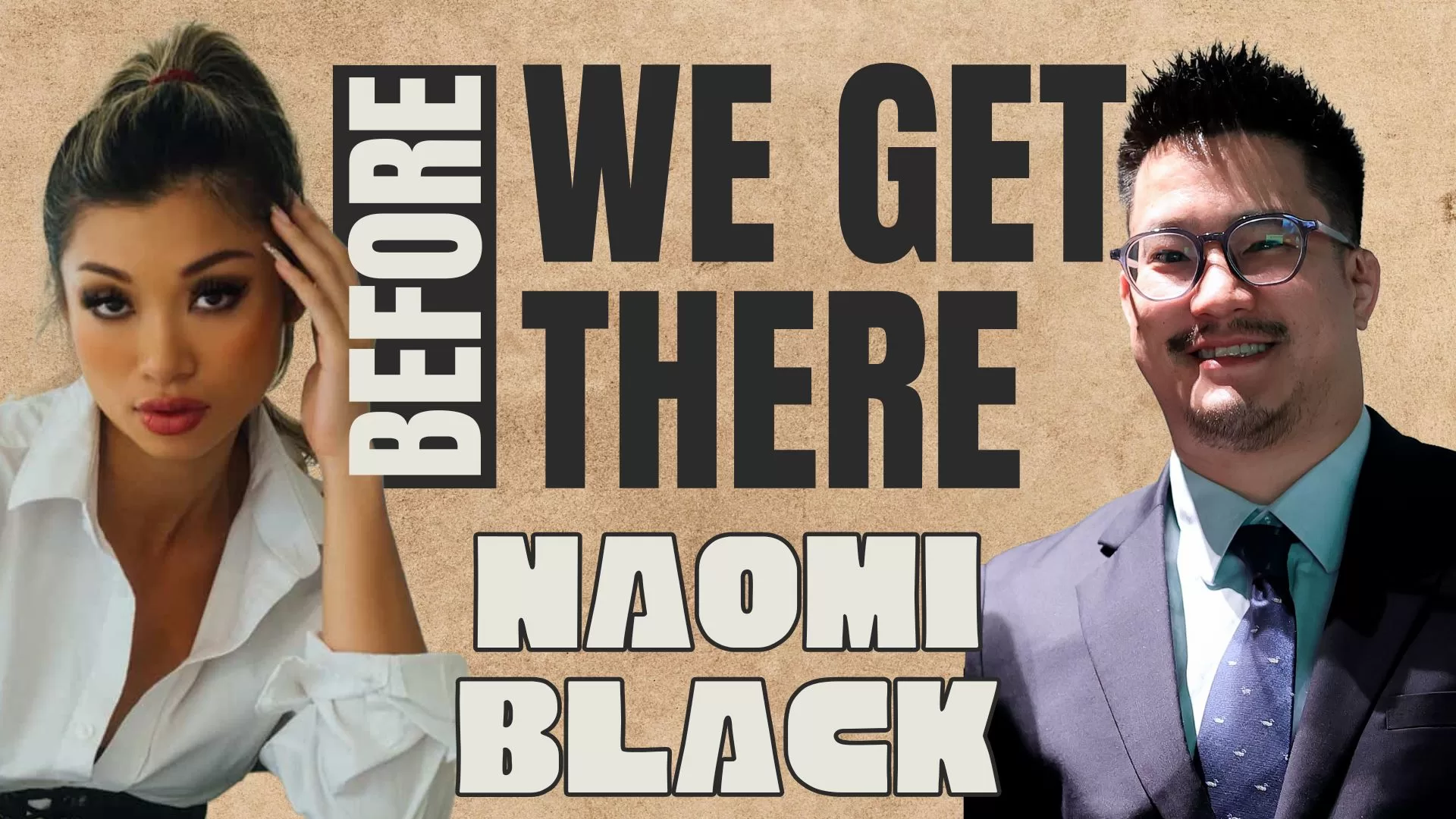
  • Naomi Black on Dating Standards, Resilience, and Reinvention

    Naomi Black on Dating Standards, Resilience, and Reinvention

    Intro

    In August 2025, Naomi Black went viral after rejecting a first date at Lau Pa Sat, one of Singapore’s most famous hawker centres. Overnight she was labeled entitled and out of touch—but that headline missed the real story.

    Naomi has built a multifaceted career across modelling, hospitality, and real estate. She’s lived and worked across Europe, faced online backlash, endured bullying in corporate jobs and kitchens, and come out stronger for it. In this conversation, she opens up about what really happened behind the viral moment, what it’s like to rebuild confidence in public, and how her years abroad taught her to stay grounded in her own voice—no matter what others say.

    Story Highlights

    • The real story behind the “Lau Pa Sat first-date” saga and what people got wrong
    • How Naomi handled waves of online criticism and cyber-bullying
    • From paralegal student to model to chef to real-estate professional—her winding career path
    • Lessons from working in a Michelin-star kitchen in France and experiencing racism for the first time
    • Why she believes women should say no, set boundaries, and support one another

    Featured Quote

    “That whole experience made me the person I am today — full of grit and resilience.”

    About Naomi Black

    Naomi Black is a Singaporean model, entrepreneur, and real-estate professional. After studying law, she worked across Europe in modeling and hospitality before returning home to Singapore. She’s also trained as a chef in a Michelin-star restaurant in France and is known for her outspoken views on confidence and self-respect. Follow her at @naomiblackk or explore her projects and merch line through her Instagram bio.

    Why This Conversation Matters

    Naomi’s story isn’t just about dating standards — it’s about knowing your worth and staying steady when the internet turns against you. Beyond the viral noise, she reflects on career pivots, self-doubt, and resilience. Her openness shows that confidence isn’t arrogance; it’s the courage to live on your own terms, even when others don’t understand.

    Turning Points

    Throughout her journey, Naomi has continually reinvented herself. She’s pivoted from law to modelling, from working in Michelin-star kitchens to thriving in real estate. Each transition came with its own challenges—loneliness abroad, burnout, and self-doubt—but she learned to see them as lessons rather than failures. Whether rebuilding after a tough experience in France or facing public scrutiny online, Naomi’s turning points reveal her core belief: life’s hardest chapters often lead to the most authentic version of ourselves.

    Key Lessons

    • Know your standards. Setting boundaries doesn’t make you difficult — it makes you clear.
    • Do the inner work. Self-belief protects you when criticism comes.
    • Adapt and explore. Each career pivot — from law to culinary arts to sales — taught Naomi new dimensions of herself.
    • Learn through adversity. Harsh experiences in France shaped her resilience and empathy.
    • Support other women. Empowerment means lifting others up instead of tearing them down.

    If You Enjoyed This Episode

    You might also like:
  • Parul Sharma on Writing, Homesickness, and Creative Persistence

    Parul Sharma on Writing, Homesickness, and Creative Persistence

    Parul Sharma is an author whose novels explore memory, belonging, and the quiet struggles of everyday life. Her latest book, 17 Morris Road, tells the story of a woman at a crossroads who revisits her childhood home to reconsider the life she wants. In this conversation, we talk about her writing process, the years she spent balancing creativity with corporate life, and how she rediscovered her voice during the pandemic lockdowns.

    Parul shares the difference between nostalgia and homesickness, the agony of not writing, and the joy of finally finishing a story that had lived inside her for years. It’s an intimate, thoughtful look at what drives a writer to keep creating — even when life gets in the way.

    Story Highlights

    • The difference between nostalgia and homesickness, and how both shaped 17 Morris Road
    • Why writing is both a gift and a burden
    • The heartbreak of not writing during busy seasons of life
    • How motherhood, corporate work, and creativity can coexist
    • The long road to publishing and how it changed her view of success

    Quote

    “The toughest part about writing is not writing. It’s when you don’t write — and the misery that it gives you.”

    About Parul Sharma

    Parul Sharma is an Indian author and creative professional based in Singapore. She has published four novels, including 17 Morris Road, By the Water Cooler, and The Wake-Up Call. Her writing often explores themes of memory, belonging, and womanhood in modern India. Alongside her fiction, she has led a corporate research career and mentors aspiring writers. Follow her on Instagram @parulsharma or find her books on Amazon and Kindle worldwide.

    Why This Conversation Matters

    Parul’s story reminds us that creative work doesn’t disappear when we get busy — it waits. Her return to writing during lockdown is a reflection of how passion can lie dormant and still survive. This conversation isn’t just about publishing; it’s about returning to what gives life meaning after years of distraction.

    Turning Points

    From her first novel written in stolen hours after work to a long hiatus spent building a business and raising children, Parul’s path shows the patience behind creative endurance. The lockdown gave her the stillness to rediscover what she loved most — the act of writing itself. Each book marks a different season of her life, and her next, The Missing Piece, has been fifteen years in the making. Her story is proof that creativity never truly leaves us; sometimes it just waits for the right time to reemerge.

    Key Lessons

    • Honor your calling. The misery of not creating is its own reminder to start again.
    • Be patient with your craft. Some stories need years to mature.
    • Balance is imperfect. Creativity and career often coexist in tension, not harmony.
    • Feedback is part of the process. Courage is sharing your work before you feel ready.
    • Keep showing up. Writing — like growth — is about consistency, not perfection.

    If You Enjoyed This Episode

    You might also like:

  • Bow T on Content Creation, Confidence, and Life Abroad

    Bow T on Content Creation, Confidence, and Life Abroad

    Intro

    Bow Kajeeporn Techataveekijkul – better known online as @bowiehoneybaby — is a Thai content creator, storyteller, and full-time marketing professional based in Singapore. What started as a personal diary for her friends and family has grown into an audience of tens of thousands who follow her travel tips, food finds, and honest reflections on life abroad.

    In this conversation, we talk about how Bow built her platform while working full-time, what she’s learned about online safety, and why she believes authenticity always wins. We also get into what it means to live away from home, finding balance between ambition and peace, and learning to keep creating even when not every post performs.

    Story Highlights

    • How Bow turned a personal blog into a cross-platform community
    • Why she started Boring Singapore to show Thai audiences the fun side of the city
    • Her reflections on living in Thailand, Japan, and Singapore
    • The balance between honesty and controversy in social media
    • Navigating PR rejection, job changes, and uncertainty while staying adaptable

    Quote

    “Even the biggest creators have flopped videos. Negative people are just louder — they don’t represent everyone.”

    About Bow T

    Bow is a Thai content creator and marketing professional currently based in Singapore. She is the voice behind Boring Singapore on Facebook and Instagram, a community for Thais curious about life in Singapore. Across her personal channels — @bowiehoneybaby on Instagram and Threads — she shares humor, travel, lifestyle, and reflections on modern dating. Her work bridges cultures while keeping authenticity at its core.

    Why This Conversation Matters

    Bow’s story is a reminder that social media can be more than a highlight reel — it can be a space to connect, learn, and grow. Her reflections on feedback, online safety, and creative consistency highlight what it means to stay grounded when your personal life becomes public. It’s a candid look at how to keep showing up without losing yourself.

    Turning Points

    From her first blog in Japan to creating content that now reaches audiences in Thailand and Singapore, Bow’s journey has been a steady evolution of voice and purpose. She’s navigated layoffs, visa challenges, and PR rejection while continuing to create out of joy rather than pressure. Her turning points reveal a pattern of resilience — finding confidence through vulnerability and embracing the unpredictability of life abroad.

    Key Lessons

    • Stay authentic. Share what’s real, not just what performs.
    • Keep perspective. Online criticism rarely reflects the whole audience.
    • Adapt and learn. Every flop teaches you something about storytelling.
    • Separate work and self. Boundaries keep creativity sustainable.
    • Embrace uncertainty. Flexibility is what keeps you moving forward.

    If You Enjoyed This Episode

    You might also like:

  • Anthony Yeoh on French Comfort Food, Innovation, and the Future of Dining in Singapore

    Anthony Yeoh on French Comfort Food, Innovation, and the Future of Dining in Singapore

    Intro

    Anthony Yeoh is the chef-owner of Summer Hill, a beloved French comfort-food restaurant in Singapore. Known for its signature roast chicken and hearty family-style dishes, Summer Hill has evolved over the past eight years from a humble takeaway stall into a full-service restaurant. In this conversation, Anthony shares how that transformation happened organically—by listening to customers, experimenting with ideas like the brunch trolley, and staying grounded in hospitality.

    We talk about the challenges facing Singapore’s independent dining scene, the role of home-based food businesses, and what it takes to run a restaurant that feels personal and sustainable in a changing economy. Anthony’s story is equal parts creativity and pragmatism: a reminder that food, at its best, is about care, community, and constant adaptation.

    Story Highlights

    • The origins of Summer Hill and its evolution from takeaway stall to restaurant
    • Why the brunch trolley combines dim sum culture with French comfort food
    • What cuisine bourgeoise means and why Anthony calls his spirit animal a French grandmother
    • The importance of adapting recipes and menus for Singaporean diners
    • Why he believes home-based businesses are Singapore’s new hawkers

    Quote

    “My spirit animal is a French grandmother living inside me. And I’ve always been very drawn to that idea of the family gathering around the kitchen table—a big pot of stew.”

    About Anthony Yeoh

    Anthony Yeoh is a Singaporean chef and restaurateur best known as the founder of Summer Hill, located at Claymore Connect on Orchard Road. After studying at At-Sunrice GlobalChef Academy, he built a career championing accessible French comfort food that celebrates warmth and community. Anthony’s perspectives on adaptation, innovation, and sustainability have made him one of Singapore’s leading voices on the future of dining. Follow @summerhillsg on Instagram or visit summerhill.sg.

    Why This Conversation Matters

    Anthony’s journey reflects the realities of running a small business through volatility and change. From manpower shortages to shifting diner habits, he speaks candidly about balancing creativity with business discipline. His philosophy—that hospitality is about generosity, not perfection—shows how restaurants can thrive by staying human in an industry built on constant pressure.

    Turning Points

    Summer Hill began as a one-dish takeaway stall and grew, plate by plate, into a neighborhood restaurant. Each stage required Anthony to evolve—from cook to owner, from creative to strategist. He learned to pair instinct with data, blending menu design with financial analysis, and to see adaptation as part of the craft. When pandemic disruptions hit, he introduced the brunch trolley concept—French comfort food served dim-sum style—which became a defining innovation. For Anthony, every reinvention starts with listening to customers and trusting that flexibility is a form of creativity.

    Key Lessons

    • Listen first. Every menu and pivot should start with understanding the customer.
    • Balance art and numbers. Creativity thrives when grounded in solid business fundamentals.
    • Evolve traditions. Preserving cuisine means remembering its heart, not replicating old rules.
    • Generosity builds loyalty. True hospitality is about care, not control.
    • Adapt relentlessly. Whether it’s a dish, a business model, or an industry, change is constant.

    If You Enjoyed This Episode

    You might also like:

  • Nuray Istiqbal on Faith, Reinvention, and Life After Rae Lil Black

    Nuray Istiqbal on Faith, Reinvention, and Life After Rae Lil Black

    Intro

    Nuray Istiqbal, formerly known to millions online as Rae Lil Black, has undergone one of the most public and personal transformations imaginable. Once an adult-film performer and streamer with a global following, Nuray has since converted to Islam, changed her name, and left the industry behind.

    In this conversation, she speaks candidly about what led her to faith, how her time in Japan and Thailand shaped her worldview, and why she doesn’t regret her past. We also talk about how she discovered Islam by chance, what Ramadan taught her about patience, and how she’s learning to live a quieter, more purposeful life after fame.

    Story Highlights

    • The journey from Rae Lil Black to Nuray Istiqbal — and what that change means to her
    • How a trip through Southeast Asia opened her heart to Islam
    • Why she says she’s “never made a decision I didn’t believe in”
    • The difference between loneliness and belonging in her new community
    • How Muay Thai training keeps her grounded and present

    Quote

    “People ask me if I regret it, but I don’t regret anything because I never make a decision that I don’t want to do.”

    About Nuray Istiqbal

    Nuray Istiqbal is a Japanese-born creator and former adult-film performer who was widely known under her previous name, Rae Lil Black. After years of working in Europe’s entertainment industry, she began studying Islam while living in Thailand and converted in 2024. Today she shares her journey toward faith and renewal with followers across Asia, appearing in podcasts, TEDx talks, and Islamic community events. Nuray is also an advocate for self-reflection, patience, and personal growth through faith.

    Why This Conversation Matters

    Nuray’s story challenges the idea that our past defines our future. Her willingness to speak openly about life before and after Rae Lil Black reveals a message of self-acceptance and grace. Whether you’re religious or not, her journey is a reminder that change doesn’t erase who we were — it helps us understand why we became who we are.

    Turning Points

    After years in Europe’s adult industry, Nuray reached a point of fatigue and moved to Thailand, where a chance encounter with Muslim friends led her to study Islam. Six months later, she converted, beginning a new chapter grounded in prayer, humility, and learning. What stands out most is her balance of realism and faith — she neither denies nor glamorizes her past. For Nuray, both Rae Lil Black and Nuray Istiqbal are parts of the same story: a woman learning, evolving, and seeking peace on her own terms.

    Key Lessons

    • Own your choices. Growth doesn’t require regret — it requires understanding.
    • Faith brings perspective. Spiritual practice can transform how we handle judgment.
    • Adaptation is lifelong. True reinvention happens from within.
    • Community matters. Belonging to something bigger gives strength through change.
    • Let go with grace. The past shapes us, but it doesn’t have to define us.

    If You Enjoyed This Episode

    You might also like:

  • Vivian Lim on Building Communities, Courageous Conversations, and Continuous Growth

    Vivian Lim on Building Communities, Courageous Conversations, and Continuous Growth

    Intro

    Vivian Lim is a community builder, storyteller, and the driving force behind TEDxSingapore and Gen, a project exploring diversity and inclusion from an Asian lens. For over a decade, she’s helped shape how people in Singapore come together to share ideas and stories that matter.

    In this conversation, Vivian and I talk about her philosophy of community building, what she’s learned from a decade of volunteer-led work, and how she balances vision, leadership, and personal growth. We also discuss the role of discomfort in creating meaningful change and how Singapore’s ideas landscape compares with others across Southeast Asia.

    Story Highlights

    • How Vivian started her TEDx journey as a student at NTU
    • What makes community-building both inspiring and challenging
    • Why she believes culture must be “caught, not taught”
    • Insights from creating Gen and turning research into children’s books
    • The differences she’s observed in creativity and storytelling across the region

    Quote

    “I believe that humans celebrate for that sense of connection and sense of belonging. That’s why all of us are drawn to this community, or the idea of having a group of like-minded people that can understand you, that can grow with you, that can evolve with you.”

    About Vivian Lim

    Vivian Lim is a Singapore-based community builder and curator who leads programs for TEDxSingapore and co-founded Gen, a platform dedicated to diversity, equity, and intergenerational storytelling in Asia. Trained as a mechanical engineer, Vivian found her calling in bringing people together to share ideas that inspire action. Her work spans event curation, youth engagement, and creative education initiatives.

    Why This Conversation Matters

    Vivian’s journey reminds us that communities don’t just happen — they grow through shared effort, trust, and time. Her reflections on discomfort and openness show how building spaces for honest, sometimes sensitive conversations is essential for progress. At its heart, her work is about rethinking what it means to belong.

    Turning Points

    From her early days at NTU organizing student-led TEDx events to leading one of Singapore’s most active idea communities, Vivian’s career has been built on curiosity and courage. She’s navigated burnout, shifting team dynamics, and evolving personal priorities, yet never lost her commitment to connection. Her next chapter with Gen marks a turning point — expanding from ideas on stage to storytelling that reaches families and children, proving that the language of community can start at any age.

    Key Lessons

    • Community is an organism. It evolves and grows in ways you can’t control.
    • Culture is caught, not taught. Real engagement happens through experience, not hierarchy.
    • Discomfort drives growth. Sensitive conversations are often the most meaningful.
    • Focus changes with seasons. Hustle gives way to clarity over time.
    • Shared purpose sustains. Optimism and collective energy keep communities alive.

    If You Enjoyed This Episode

    You might also like:
  • 5 Powerful Lessons from a Successful Serial Entrepreneur

    5 Powerful Lessons from a Successful Serial Entrepreneur

    On a recent episode of my podcast, Before We Get There, I had the privilege of chatting with a truly inspiring serial entrepreneur. Her journey, packed with diverse experiences and profound insights, offered so many takeaways. It’s always fascinating to delve into how people get to where they are, what drives them, and the wisdom they pick up along the way. I wanted to share five lessons from our conversation that particularly resonated with me, and I believe they’ll offer you some valuable perspective too.

    Here are some of the key insights my guest shared:

    1. Embrace the Journey, Not Just the Destination

    We often get laser-focused on the next big goal, the next milestone. But my guest beautifully articulated the importance of finding joy in the “everyday. The really little moments, the kind of quiet joys of it all, because that’s essentially what life is made of”. She reminded us that “life is actually happening while all of that is going on”, not just when we hit those major targets. This really hits home for me. It’s easy to get caught up on the next milestone or promotion. But taking a moment to appreciate the small wins, the learning process, and going through the process, that’s where so much of the richness lies.

    2. Redefine Failure: You Either Win or You Learn

    This is a common saying, but it’s not often people embody it as much as my guest. She has founded numerous businesses, and by her own admission, “maybe more than half have failed” in the conventional sense. But instead of seeing these as absolute failures, she views them as redirections and crucial learning experiences. It makes you think, doesn’t it? How often do we let the fear of failure prevent us from trying something new or ambitious? Shifting our mindset to see setbacks as lessons can be incredibly empowering. It’s easier than ever to start something without a lot of investment. That might be making a video on YouTube or TikTok, writing on Medium, starting a club or community Telegram channel, or building an app with the help of AI. If you have an idea, take the leap without worrying if it will work out, and you’ll reap the benefits no matter the outcome.

    3. Authenticity and Self-Belief Are Your Superpowers

    A consistent theme throughout our conversation was the power of self-belief and authenticity. My guest’s mission is partly about “letting people know that they already are enough”. She emphasized that when you “show up exactly as you are”, you not only find your own footing but also create a space where “people will feel like they can show up exactly as they are”. This is so relevant, whether you’re an entrepreneur, a leader in a tech company, or building your personal brand. Genuine connection stems from authenticity. As the world get’s more and more noisy, both with more people putting themselves out there, and content easier than ever to create with AI, authenticity is what will set you apart and make you attractive to your audience. You can see this with how Gen Z posts on socials vs. the highly curated feeds of millennials, but this applies to other areas as well. Don’t be afraid to show your true self, that’s what makes you unique.

    4. The Untapped Potential of Diverse Experiences

    It was fascinating to hear that my guest had over 50 different jobs before she was 22, ranging from tutoring to working behind the scenes at major concerts. She discovered that “all the skills I gained, I could really see how they came up, and all these other different life experiences”. She fully embraces being “multi-passionate”, and encourages others to explore their varied interests. This really challenges the traditional idea of a straight, narrow career path. As someone who also explored a few different avenues before diving deep into marketing, I found this incredibly validating. Those diverse experiences often equip you with a unique lens and a surprisingly versatile skillset. Until recently, I felt like my varied start to working life set me behind others who kept to their chosen path from the start, but recently I’ve started to realize how valuable those experiences actually were.

    5. Act Now, Live Your Values Today

    One of the most actionable pieces of advice was about embodying the person you want to be, right now, rather than waiting for some future point. My guest passionately stated, “You are ready now and you are more than enough now, and you don’t need to wait to be everything you want to be”. If you aspire to be more generous, for example, find ways to give with what you have currently, even if it’s your time and not vast sums of money. The idea is to “embody that and you can find ways of making that version of yourself a reality right now”. This is a powerful call to action. Instead of just dreaming about our “future self,” what small, concrete steps can we take today to live more in alignment with our core values and aspirations?

    These are just a few of the gems from what was a truly enlightening conversation. My guest’s outlook on life, business, and personal growth was both refreshing and packed with wisdom. If you’re looking for a dose of inspiration to help you navigate your own journey with more intention, resilience, and authenticity, I highly recommend tuning into the full episode of Before We Get There here.

    You might just find the spark you need for your next step.

  • Sarah Choo Jing on Stillness, Observation, and the Honest Work of Being an Artist

    Sarah Choo Jing on Stillness, Observation, and the Honest Work of Being an Artist

    Sarah Choo Jing is a multidisciplinary artist from Singapore whose work spans photography, video, and installation. Her pieces explore isolation, memory, and the subtleties of human connection through quiet, cinematic scenes. Her acclaimed project Accelerated Intimacy captures vignettes of strangers in hotel rooms — evoking themes of loneliness, voyeurism, and fleeting encounters in contemporary life.

    In this conversation, we talk about Sarah’s creative process, how she knows when a work is “done,” and how she balances honesty and control in her art. We also explore her views on generative AI, the realities of building a career as an artist in Singapore, and how she’s learned to teach creativity without losing curiosity herself.

    Story Highlights

    • How Accelerated Intimacy emerged from conversations with strangers in hotel rooms
    • Why she says, “change is the only constant” in an artist’s career
    • The tension between perfection and honesty in her creative process
    • What isolation means in her work — and in her life
    • How she approaches teaching and redefining art education in Singapore

    Quote

    “Actually, very honestly, I don’t know when an artwork is actually done. I suppose I get quiet enough to hear when it stops asking questions.”

    About Sarah Choo Jing

    Sarah Choo Jing is a multidisciplinary visual artist based in Singapore whose practice spans photography, video, and installation. Her work has been shown at the Venice Biennale, Photo London, and the Singapore Art Museum. Often exploring themes of solitude and observation in urban life, Sarah’s art examines how people connect — or fail to — in modern spaces. She also teaches art and photography, mentoring young creatives on how to balance craft and reflection in a fast-changing world.

    Why This Conversation Matters

    Sarah’s reflections remind us that creativity is rarely about confidence — it’s about attention and honesty. Her process, built on observation and patience, shows how art can mirror the quiet questions we all carry. This conversation opens a window into what it means to create work that asks rather than answers, and why embracing uncertainty can be the truest form of expression.

    Turning Points

    From painting to photography to immersive video installations, Sarah’s artistic evolution mirrors her fascination with human stillness. She learned to treat doubt not as weakness but as part of her craft. While studying and teaching both locally and abroad, she has continued to refine her voice — one grounded in empathy, discipline, and slow observation. Her approach to technology, from digital compositing to generative AI, reflects the same curiosity: using new tools to extend, not replace, human feeling.

    Key Lessons

    • Stillness has power. Pausing creates room for both artist and viewer to feel.
    • Doubt is honest. Quiet uncertainty keeps the work alive.
    • Foundation first. Technology matters less than understanding craft and intention.
    • Education is influence. Shaping young minds starts with teaching curiosity, not perfection.
    • Art is contribution. The goal isn’t visibility — it’s expanding understanding.

    If You Enjoyed This Episode

    You might also like:
    • Mathew Yuhico on Design, Discipline, and Finding Artistic Voice — exploring creativity through structure.
    • Vivian Lim on Building Communities and Courageous Conversations — how openness drives connection and growth.

  • From Classical Perfection To Authentic Expression With Heema Izzati

    From Classical Perfection To Authentic Expression With Heema Izzati

    Intro

    Heema Izzati is a Singaporean musician, songwriter, and cellist who began performing at a young age. She has played at the National Day Parade, released two solo singles on Spotify, and is preparing to debut her first EP. Her work blends classical training with modern storytelling — music that moves between perfection and vulnerability.

    In this conversation, we talk about her creative process, how she handles writer’s block, and the ongoing shift from technical precision to emotional honesty. Heema shares what she learned from years of competition as a classical musician, how she healed her relationship with music, and what it feels like to finally write songs that sound like herself.

    Story Highlights

    • How studying classical cello taught her discipline and perseverance
    • Why her early training sometimes made creative expression harder
    • The lessons she carried from competition to songwriting
    • How she navigates writer’s block as a skill, not a crisis
    • Why performing her own songs feels more personal than perfection

    Quote

    “When I was younger, I did want to quit classical music, and that took me quite a while to get over and reach the age that I’m at now where I’m like, classical music is always a part of me.”

    About Heema Izzati

    Heema Izzati is a Singapore-based singer-songwriter and cellist whose work bridges the worlds of classical performance and contemporary songwriting. After years of competing as a young musician under NAFA’s School of Young Talents, she began teaching herself guitar and bass while writing original songs inspired by her own experiences. She has performed at national events and is currently studying music full-time while preparing her debut EP.

    Why This Conversation Matters

    Heema’s story captures what happens when technical mastery meets creative freedom. Her reflections on burnout, discipline, and joy show how musicianship is about more than skill — it’s about rediscovering love for your craft. For anyone trying to balance ambition and authenticity, her journey is both a caution and an inspiration.

    Turning Points

    From competition cellist to singer-songwriter, Heema’s evolution wasn’t a rejection of her past but a reunion with her passion. The structure and discipline of classical music shaped her, but the freedom of songwriting reminded her why she started. As she moves into a new phase of her career — releasing original music and performing live — Heema continues to merge precision with personality, proving that growth can honor every version of who we’ve been.

    Key Lessons

    • Discipline builds foundations. The habits of classical music translate into creativity.
    • Expression matters more than perfection. Authenticity connects deeper than flawless technique.
    • Nerves are energy. The butterflies before a show are proof that you care.
    • Collaboration brings clarity. Producers and peers can help you know when a song is finished.
    • Keep evolving. Each stage of music — from practice rooms to EPs — teaches something new.

    If You Enjoyed This Episode

    You might also like:
  • Jingjin Liu on Leadership, Womanhood, and Redefining Power

    Jingjin Liu on Leadership, Womanhood, and Redefining Power

    Intro

    Jingjin Liu is an entrepreneur, investor, and women’s empowerment advocate who has spent her career building companies and communities that help women rise. She’s the co-founder of ZaZaZu, Asia’s first sexual wellness company for women, and now leads Elevate, a platform supporting professional growth and leadership among women across industries.

    In this conversation, Jingjin shares her journey from growing up in Beijing to moving to Germany as a teenager, to finding her voice as a founder in Singapore. We talk about entrepreneurship, parenting, gender expectations, and what she’s learned from helping women navigate ambition, confidence, and change.

    Story Highlights

    • Moving from Beijing to Germany at sixteen and learning individuality
    • Starting her first company while working full-time
    • Why she believes women struggle to self-advocate in corporate environments
    • How ZaZaZu broke taboos by centering women’s sexual wellbeing
    • The realities of balancing motherhood, business, and identity

    Quote

    “If women would have wives, they will be so much more successful than men. The reason that the men are there, where they are, is because someone else took care of everything else.”

    About Jingjin Liu

    Jingjin Liu is the founder of Elevate Group, a platform helping women grow through coaching, courses, and community. Previously, she co-founded ZaZaZu, Asia’s first sexual wellness company for women, and has been recognized as a LinkedIn Top Voice and angel investor. Originally from Beijing, Jingjin has lived and worked across Germany, Singapore, and Australia, blending East and West perspectives in her leadership approach.

    Why This Conversation Matters

    Jingjin’s story is one of contrast — between cultures, expectations, and identities. From being a rebellious student in Beijing to leading empowerment programs across Asia, she embodies what it means to evolve while staying grounded in purpose. Her insights challenge traditional notions of success and remind us that leadership is deeply personal.

    Turning Points

    Jingjin’s path from China to Germany reshaped her understanding of individuality. What once made her an outsider became her strength — curiosity, boldness, and authenticity. Her decision to leave corporate life and start ZaZaZu was less about risk and more about necessity: creating what didn’t exist. Through building, failing, and reinventing, she learned that power doesn’t mean control — it means alignment. Today, through Elevate, she’s helping women define success on their own terms while advocating for systemic change in how organizations view gender and flexibility.

    Key Lessons

    • We make our own luck. Serendipity matters, but effort makes it real.
    • Empowerment starts within. Confidence comes from understanding yourself, not external validation.
    • Flexibility is strength. Both small businesses and families thrive when people can adapt.
    • Redefine success. The goal isn’t perfection — it’s alignment with your values.
    • Collective growth matters. Progress happens when women support one another.

    If You Enjoyed This Episode

    You might also like: