Category: Before We Get There

  • Charlene Chew on Evolving Identity, the Cost of the Mask, and Processing Trauma

    Charlene Chew on Evolving Identity, the Cost of the Mask, and Processing Trauma

    Intro

    Charlene Chew is a Singaporean-based creator, athlete, and burn survivor who has turned a life-altering accident into a platform for reflection and resilience. In an industry often dominated by curated perfection, Charlene has built a following by documenting the raw reality of her recovery and the internal work required to reclaim her identity.

    In this episode, we move past the common headlines of her story to look at the evolution of her identity over the last five years. Charlene shares the “microaggressions” of self-rejection she faces in the gym, the physical and mental toll of maintaining a “mask” for social media, and her intentional shift from a “five-year sprint” toward a season of rest and processing grief. From the technical challenges of calisthenics to the emotional weight of being viewed as a “savior” by her followers, this is a conversation about finding where you feel seen and safe while navigating the urge to evolve.

    Story Highlights

    • Transitioning from bodybuilding to calisthenics in Melbourne and finding purpose in fitness coaching upon returning to Singapore
    • The reality of “nervous system regulation” as a primary driver for movement after physical trauma
    • Navigating “micro rejections” and the internal turmoil of scrutinizing one’s own body in public spaces
    • The physical limitations of burn scars, including the “inner turmoil” of balancing a love for outdoor sports with the need for skin protection
    • The desire to evolve beyond the “burn survivor” identity and the challenge of holding space for thousands of followers
    • Recognizing the “mask” required for content creation and the “depletion” that comes from performing at “times 100” energy
    • The strategic decision to “say no” to events and engagement to protect mental health and deliver higher quality work
    • The “marathon triathlon” of the last five years and the realization that she never fully stopped to process her grief
    • Integrating past traumas—including sexual assault—into a “spider web” of experiences that shape her current perspective

    Quote

    “I just repair it myself now… I say, ‘I see you… I hear you, and it’s okay to have these feelings.’ Rather than kind of rejecting and scolding myself. I think those are two very different responses and energies.” +3

    About Charlene Chew

    Charlene Chew is a content creator and athlete based in Singapore, widely known for sharing her journey as a burn survivor. After a life-changing accident in 2020, she pivoted into the influencer space, mastering photography, videography, and digital storytelling to inspire others. Beyond her online presence, Charlene is a certified fitness coach with a background in bodybuilding and calisthenics. She is currently focused on deep therapeutic work and “unmasking” her professional persona to build a more sustainable and service-oriented next chapter.

    Why This Conversation Matters

    Charlene’s story is a masterclass in the complexity of “resilience.” It challenges the narrative that recovery is a linear path toward being “better,” instead highlighting the recurring internal battles with self-image and the exhaustion of being a public role model. By discussing the “mask” she wears as a creator, she offers a rare, grounded look at the cost of visibility and the importance of setting boundaries. This episode provides a blueprint for anyone who has achieved outward success through a “sprint” but is now ready to do the slower, harder work of internal healing.

    Turning Points

    Charlene’s path was redirected by her accident in 2020, which led to an unplanned return to Singapore and a shift into the fitness and influencer world. A significant internal pivot occurred when she realized that constantly “rehashing” her story for interviews was detrimental to her mental health, leading her to stop discussing treatments and start focusing on her broader identity. Another shift has been the transition from the “grind” of early content creation—doing multiple events a day—to a disciplined practice of “saying no” to protect her battery and process years of suppressed emotions.

    Key Lessons

    • View movement as a way of “honoring the body” rather than just seeking aesthetic validation
    • Acknowledge the “mask” you wear and learn the skill of unmasking for your own well-being
    • Set boundaries on digital access; it is not “normal” to be available 24/7
    • Replace self-scolding with self-repair by treating your triggered self with the empathy you’d give a child
    • Success in a “sprint” can mask the need for deeper processing of grief and trauma
    • Recognize privilege in your recovery and use it to access the right resources like therapy
    • Your sense of style can be a powerful tool for reclaiming how the world perceives you

    If You Enjoyed This Episode

    You might also like:

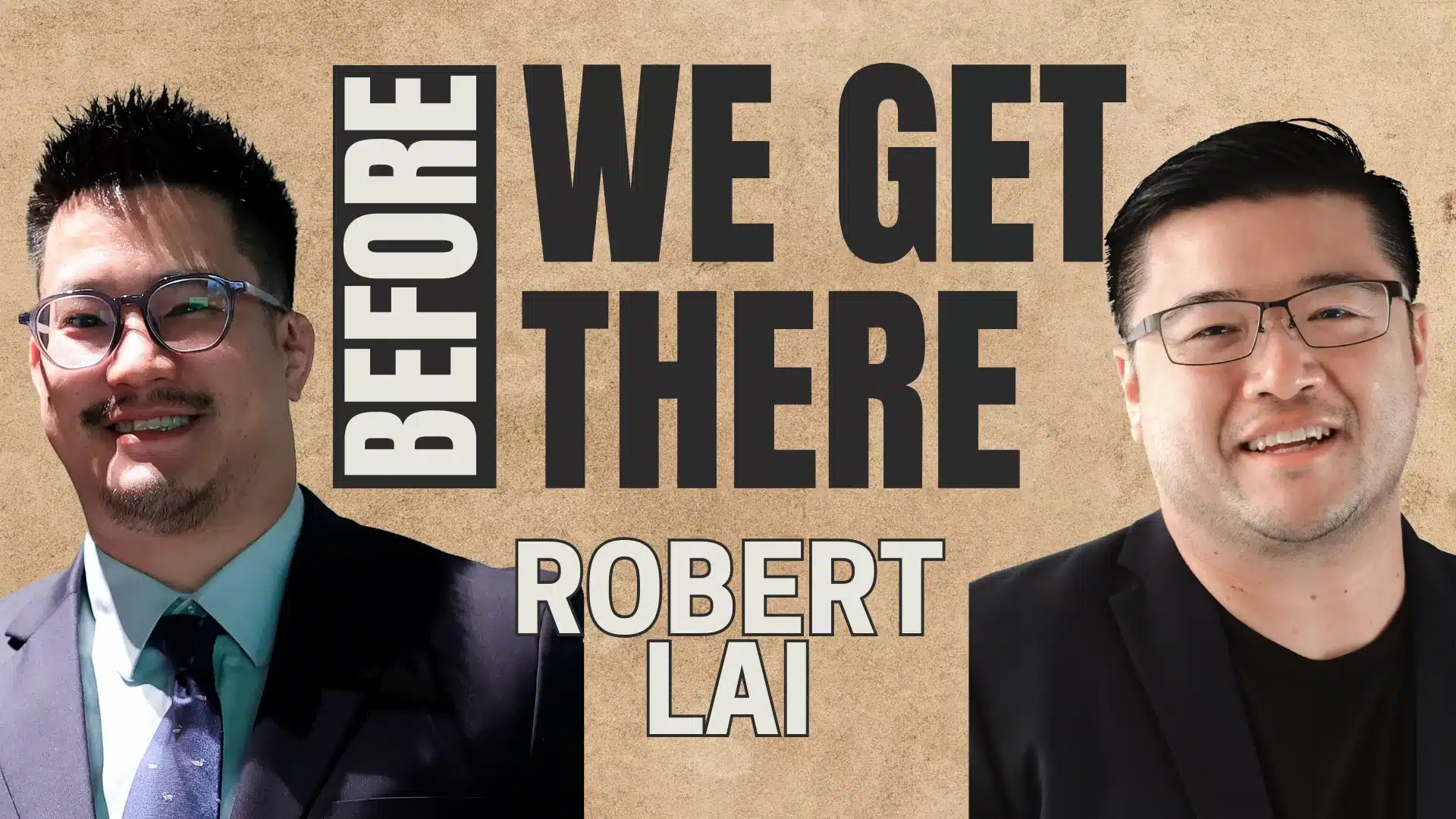
  • Robert Lai on Entreprenuership, Family, and Culture

    Robert Lai on Entreprenuership, Family, and Culture

    Intro

    Robert Lai is a Singaporean-based entrepreneur and marketing leader who founded Kaliber Performance Marketing Agency and leads the APAC Marketers community. In an industry often criticized for its lack of transparency and high burnout, Rob chose to build a business by leaning into values first and solving the “problems” that make people dislike agencies.+4

    In this episode, we talk about his journey moving across three continents—from Sydney to New York to Singapore—and the adjustments required to lead teams in diverse cultural environments. Rob shares the raw reality of starting a business during the onset of COVID-19 and the hard decisions he has made to protect his team, including his proud practice of “firing” clients who are not a good fit.+4

    From bombing a high-stakes presentation for HubSpot and LinkedIn to reframing networking as “hosting,” this is a conversation about perspective, the impact of fatherhood on decision-making, and the resilience inherited from his father’s survival through war.

    Story Highlights

    • Founding Kaliber in Singapore in 2020 without local contacts or anticipating the pandemic +2
    • Leading with values and solving the specific problems that make people “hate” the agency industry +1
    • Adjusting leadership styles between the directness of Australia and the “mind-reading” required in Asian business culture +2
    • The strategic decision to fire clients to build team momentum and protect culture
    • Overcoming a major public speaking failure by transferring negative energy into productive action +3
    • Reframing the “necessary evil” of networking into a passion for hosting and community building +3
    • How fatherhood created a “black and white” filter for prioritizing time and saying no to distractions +3
    • Inheriting a sense of perspective from his father’s experiences during wartime +3
    • Building the APAC Marketers community as a way to provide impact beyond commercial execution +2

    Quote

    “I’m like, nothing you are going through is as bad as that… I would rather have my problems than have his problems. That, to me, just sort of able to help me reframe a little bit. Take a step back… and get over yourself real quickly.” +1

    About Robert Lai

    Robert Lai is the founder of Kaliber, a performance marketing agency based in Singapore, and the leader of the APAC Marketers community. With a career that spans roles at Google and various agencies across Australia and the US, Rob has developed a leadership philosophy centered on alignment, passion, and objective-focused results. He is a lifelong learner who started his first business at 21 and now focuses on creating a model that attracts and retains the top 1% of talent and clients. Outside of his professional work, he is a husband, a young father, and an active participant in the Singaporean marketing ecosystem.+4

    Why This Conversation Matters

    Rob’s story illustrates how radical perspective can simplify complex business and personal choices. By using his father’s survival of war as a baseline for “hardship,” Rob demonstrates a unique ability to process failure and rejection without getting stuck in emotional loops. This episode provides a blueprint for anyone struggling with the “performative” aspects of professional life—like networking or public speaking—by showing how to pivot toward your natural aptitudes rather than settling for incremental improvements in areas that don’t fit.+4

    Turning Points

    Rob’s career was defined by constant movement and a refusal to “stand still,” changing six companies in six years to maximize learning. A major pivot occurred in 2020 when he chose to launch Kaliber in Singapore despite the global pandemic and a lack of local network. Another internal shift came after a failed speaking engagement for HubSpot, which led him to stop doing panel discussions and instead focus on speaking where he could “wear his heart on his sleeve”. The most recent shift has been fatherhood, which transformed his relationship with time from a commodity to be spent into a sacrifice to be carefully weighed.+4

    Key Lessons

    • Use personal history to reframe current struggles
    • Lead with values by deciding what you don’t want to be
    • Firing a client can be a more powerful team-builder than hiring one
    • Objective-focused thinking makes difficult tasks easier to execute
    • Don’t get better at networking; find a way to host instead +1
    • Alignment is more important than raw effort or pushing through a lack of talent +1
    • Fatherhood is a “hack” for business productivity and decision-making +1

    If You Enjoyed This Episode

    You might also like:

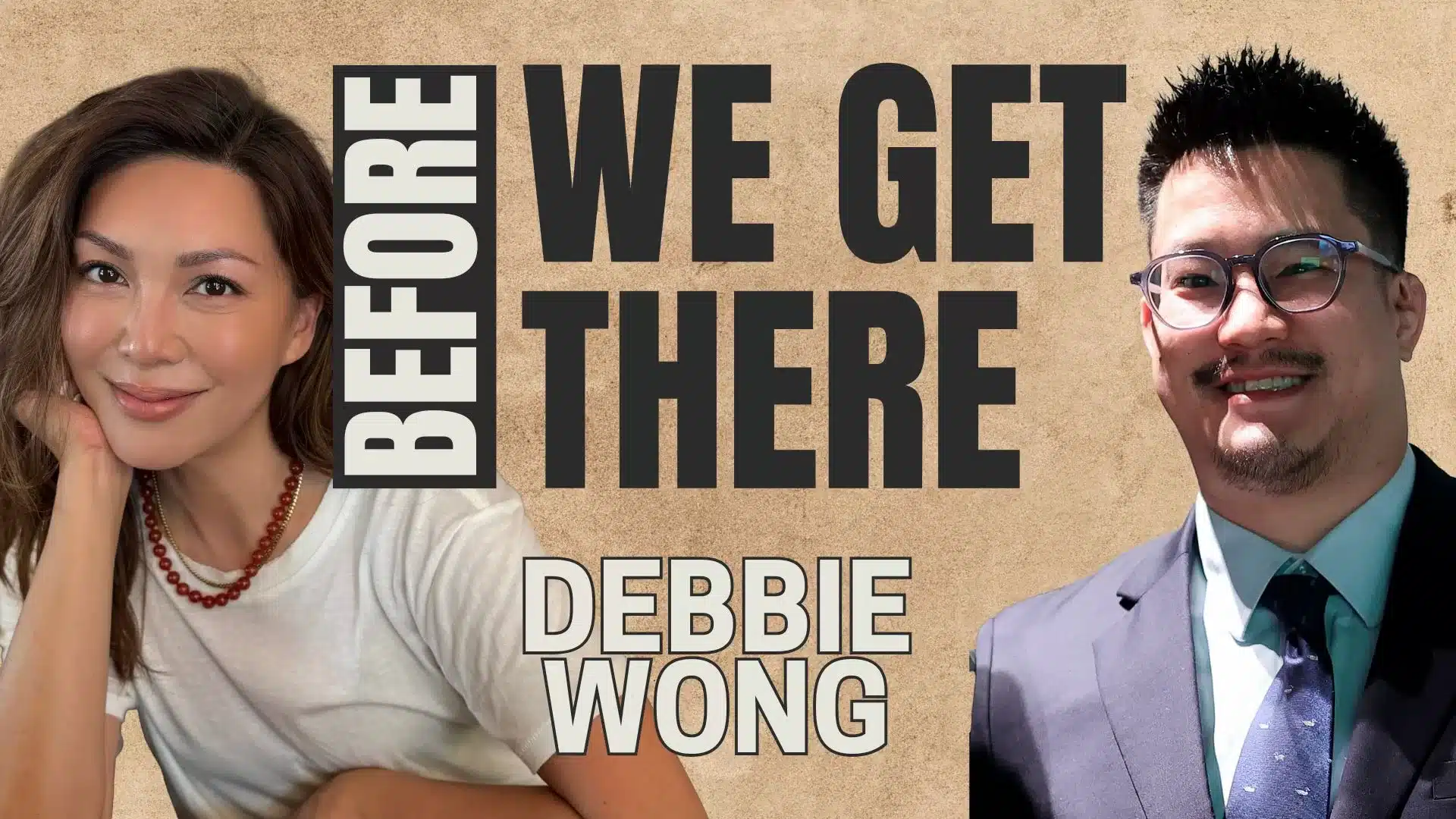
  • Debbie Wong on Belief, Identity, and Owning a Creative Life

    Debbie Wong on Belief, Identity, and Owning a Creative Life

    Intro

    Debbie Wong has spent most of her life doing creative work — acting, hosting, cooking, building things — without ever fully believing it counted as a “real job.”

    In this episode, Debbie reflects on growing up as an immigrant kid, learning to observe people quietly, and finding her voice through performance and food. We talk about her early YouTube days long before “creator” was a thing, how that body of work eventually led to Food Network Asia, and why success didn’t immediately bring confidence — only relief.

    She opens up about being an introvert in an extroverted industry, the fear of messing things up once things finally start working, and how self-limiting beliefs kept her from fully stepping into her power. This is a conversation about trusting your gut before you trust yourself — and learning, slowly, to do both.

    Story Highlights

    • Growing up between Hong Kong and Vancouver as an immigrant kid
    • Falling in love with food and people-watching at a young age
    • Studying performing arts as an introvert who wanted to communicate
    • Starting a food YouTube channel in the early 2010s before it was a “thing”
    • Teaching herself editing, filming, and production
    • Wanting creative control beyond acting in other people’s projects
    • Moving to Hong Kong and feeling an unexpected sense of belonging
    • Landing Food Network Asia through an unconventional audition
    • Feeling relief — not confidence — when success finally arrived
    • Realising she didn’t fully believe her creative work was a “real job”

    Quote

    “There was a part of me that felt like, I’m really lucky to be doing this. Like it’s not even a real job — that was still in the back of my mind.”


    About Debbie Wong

    Debbie Wong is a TV host, performer, and entrepreneur. She has appeared on Food Network Asia, built one of the early food-focused YouTube channels, and trained in performing arts in New York. Today, she co-runs Dressing The Woman, a personal style consultancy that helps people align how they show up externally with who they are internally.


    Why This Conversation Matters

    Many people assume confidence arrives once you “make it.” Debbie’s story complicates that idea. Even after landing major opportunities, she carried quiet doubts about worth, legitimacy, and whether she deserved to take up space.

    This episode is for anyone doing creative work while still questioning its validity — and for those who realise, often much later, that belief has to be learned, not earned.


    Turning Points

    After years of acting and hosting, Debbie realised how important ownership and authorship were to her — which led her to start her YouTube channel and create work on her own terms. Landing Food Network Asia felt like external validation, but it also surfaced deeper self-doubt about legitimacy and deservingness. During COVID, personal loss and reflection led her to co-found Dressing The Woman, a business rooted in authenticity, identity, and self-expression. Through that process, she began shedding the belief that she was just “lucky” — and started recognising the work she had put in all along.


    Key Lessons

    • Confidence doesn’t automatically follow success
    • Creative legitimacy is often internal, not external
    • Being introverted doesn’t mean you lack presence
    • Gut instinct can carry you before belief catches up
    • Ownership matters as much as opportunity
    • Identity is bigger than job titles
    • Stepping into your power often happens quietly, over time

    If You Enjoyed This Episode

    You might also like:

    Opera Tang on Creating Art, Being True To Yourself, and Honoring Heritage

    Joyce Harn on Pursuing Your Dream and Making It in the Film Industry,

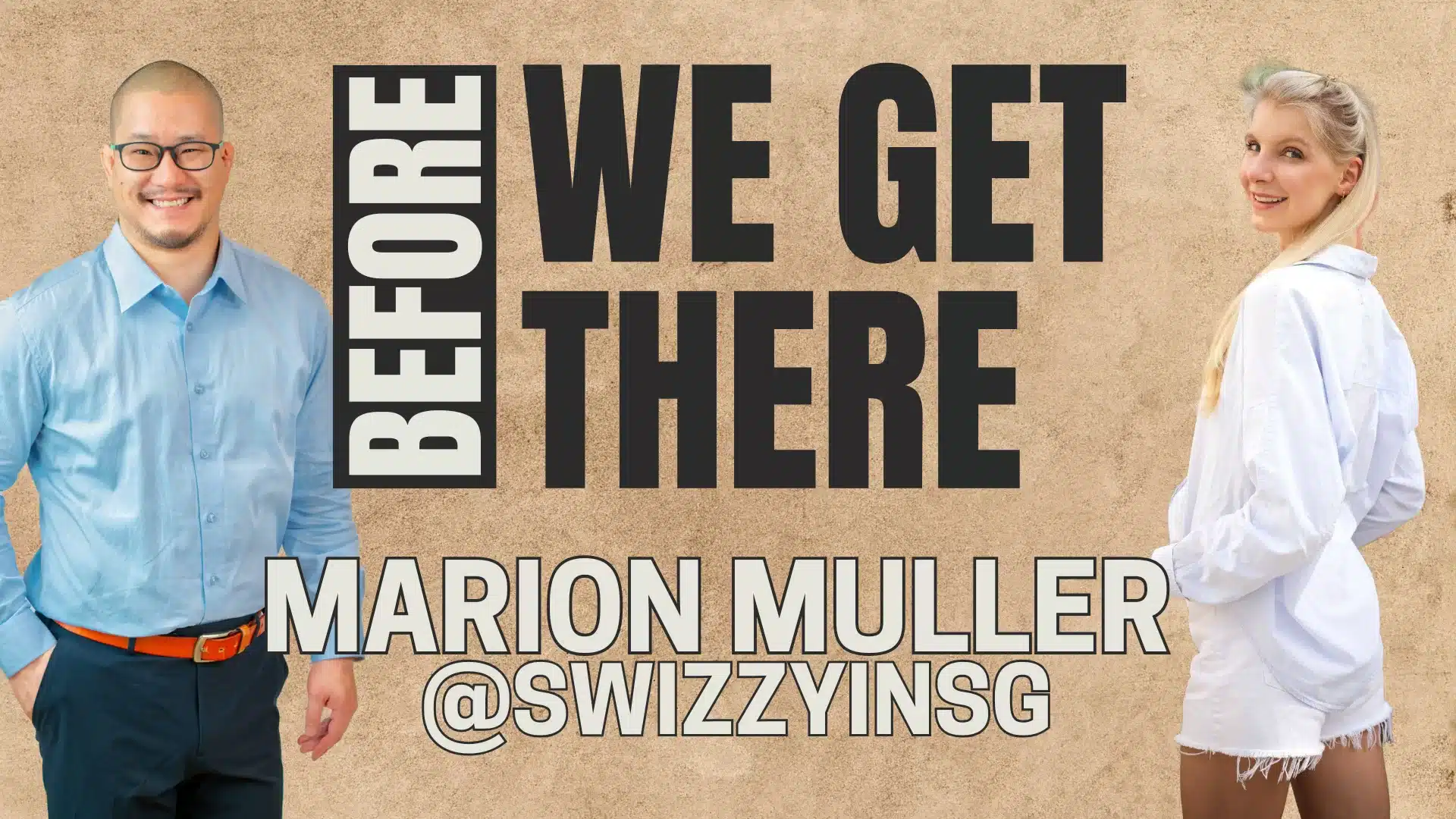
  • Marion Müller on Starting Over, Online Hate, and Choosing an Unscripted Path

    Marion Müller on Starting Over, Online Hate, and Choosing an Unscripted Path

    Intro

    Marion Müller didn’t set out to become a content creator. When her original plans fell through, she found herself in a position many people recognise but rarely talk about — no clear next step, no roadmap, and no certainty that what came next would work.

    In this episode, Marion shares how stumbling across a mentorship program became a turning point, pulling her into the world of content creation at a time when she felt she didn’t have many other options. We talk about what it’s like to build something publicly while still figuring things out privately, and the emotional whiplash of gaining visibility alongside criticism.

    She opens up about receiving direct messages telling her to kill herself, the mental toll of being your own boss with no off switch, and the quiet longing for structure, clarity, and rest. This is a conversation about being in-between — between careers, identities, and versions of yourself — and learning to keep going anyway.

    Story Highlights

    • Moving to Singapore and immediately feeling at home
    • Having original career plans fall through
    • Discovering a content creation mentorship program by chance
    • Choosing content creation when there didn’t feel like many other options
    • Navigating identity without a clear professional roadmap
    • Receiving hateful DMs telling her to kill herself
    • The emotional cost of being visible online
    • Wanting the simplicity of having a boss and fixed working hours
    • Learning what people don’t see behind online “success”
    • Continuing despite uncertainty and self-doubt

    Quote

    “Sometimes I honestly just wish I had a boss who tells me what to do, and then I go home by six and rest on the weekend.”


    About Marion Müller

    Marion Müller, also known as @swizzyinsg, is a content creator based in Singapore. After her initial plans didn’t work out, she pivoted into content creation through a mentorship program, building an online presence while navigating uncertainty, visibility, and criticism. Her story reflects the reality of modern work — where independence, exposure, and instability often coexist.


    Why This Conversation Matters

    A lot of career stories are told in hindsight, once things make sense. Marion’s story sits in the middle — where decisions are made without guarantees, and confidence comes after action, not before.

    This episode speaks to anyone who has had to pivot without feeling ready, who has questioned whether freedom is worth the mental load, or who has quietly wished for something simpler while pushing forward anyway.


    Turning Points

    When Marion’s original plans fell through, she found herself searching for direction without a clear alternative. Discovering a content creation mentorship program became an unexpected entry point into a new path. As her visibility grew, so did the pressure — including receiving deeply hurtful messages that forced her to confront the emotional risks of putting yourself online. At the same time, being fully self-directed made her realise how much she missed structure, boundaries, and rest. Rather than walking away, Marion chose to stay with the discomfort and continue building, even while questioning what sustainability really looks like.


    Key Lessons

    • Not all pivots are planned
    • Visibility comes with emotional risk
    • Freedom without structure can be exhausting
    • Online success hides invisible labor
    • Uncertainty doesn’t mean you’re doing it wrong
    • You can keep going while still questioning the path
    • Being in-between is a real phase, not a failure

    If You Enjoyed This Episode

    You might also like:

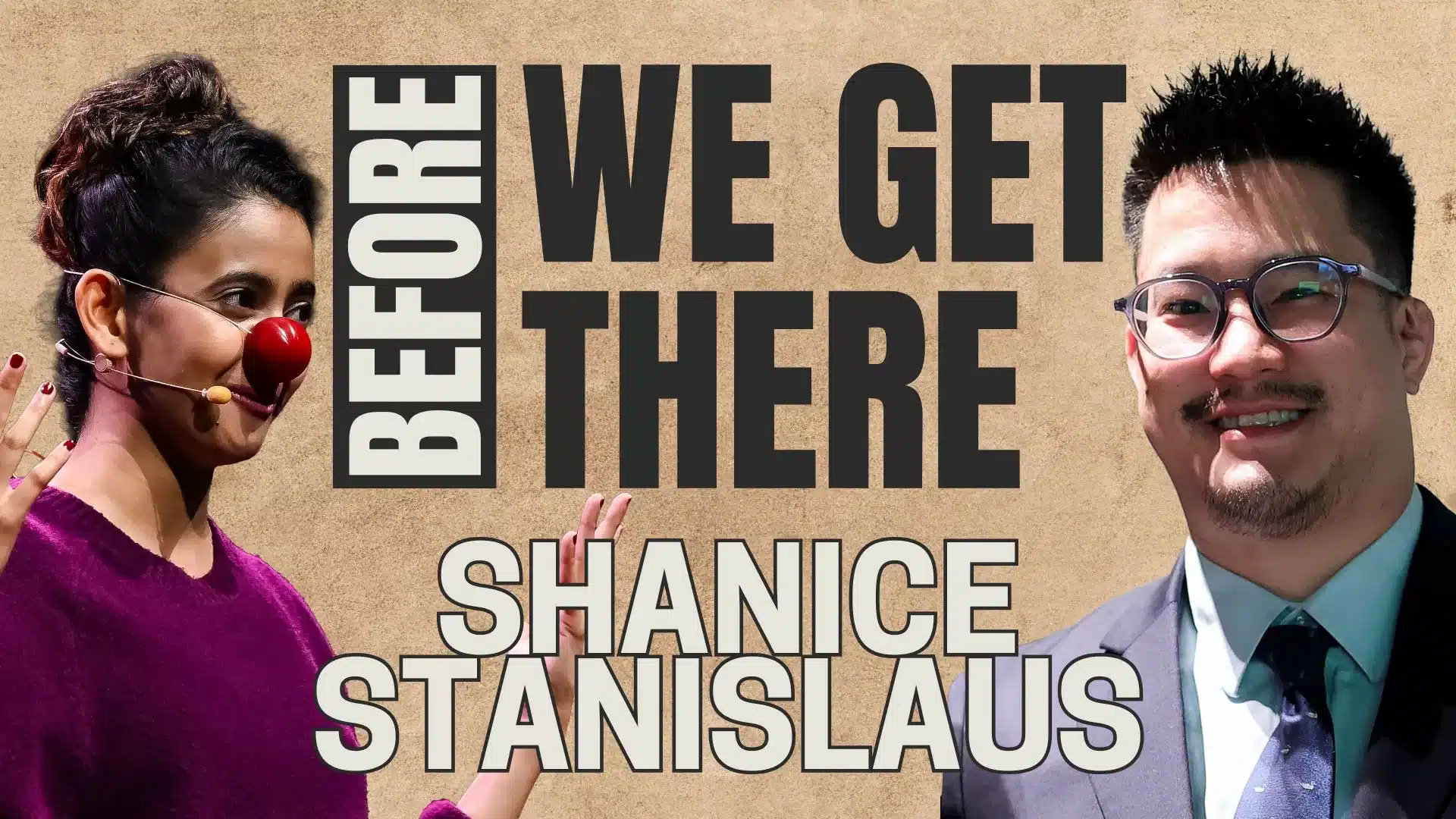
  • Shanice Stanislaus on Masks, Failure, and the Serious Work of Clowning

    Shanice Stanislaus on Masks, Failure, and the Serious Work of Clowning

    Intro

    Shanice Stanislaus is a Singaporean professional clown, performer, and educator whose work sits at the intersection of comedy, vulnerability, and social critique. In a country known for discipline, success, and emotional restraint, Shanice chose a path built on failure, play, and showing up exactly as you are.

    In this episode, we talk about how Shanice discovered clowning at NYU, why it shattered her ideas of what performance could be, and how learning to “take off the mask” became a personal and political act. She shares what it’s like to feel unseen in your own country, to be celebrated abroad but doubted at home, and to keep coming back anyway.

    From being kicked out of clown class in France, to winning international awards, to running workshops that help engineers, teachers, and students reconnect with joy, this is a conversation about identity, belonging, and the courage to look foolish in order to feel whole.

    Story Highlights

    • Growing up in Singapore feeling pressure to be serious and successful
    • Discovering clowning at NYU and realising failure could be a skill
    • Learning to remove emotional “masks” through play
    • Being rejected and doubted by arts institutions at home
    • Finding validation and confidence through international training and touring
    • Winning awards abroad before being recognised locally
    • Teaching clown workshops to adults who believe they “aren’t funny”
    • Using the red nose as a safe way to be vulnerable
    • Helping others reconnect with joy, play, and self-trust

    Quote

    “It almost felt like you always had to put a mask on. In Singapore, you need to be successful. Clown class was the first place where I learned how to take the mask off.”

    About Shanice Stanislaus

    Shanice Stanislaus is a Singaporean professional clown, performer, and educator who has trained internationally in France, the UK, and the US. Her award-winning shows have toured globally, earning recognition in Canada and beyond. Alongside performing, she runs clown workshops through Creatives in Spirit, working with students, professionals, and communities to help people reconnect with play, confidence, and emotional freedom. Her work challenges conventional ideas of success, seriousness, and what it means to be an artist in Singapore.

    Why This Conversation Matters

    Shanice’s story captures a tension many people feel but struggle to name: the gap between who we are expected to be and who we actually are. This episode goes beyond performance and art, touching on fear, identity, cultural pressure, and the cost of constantly wearing a mask. It is a reminder that joy, play, and failure are not distractions from real life — they are essential parts of it.

    Turning Points

    After discovering clowning at NYU, Shanice returned to Singapore and tried to balance creative ambition with stability through a corporate marketing job. Feeling increasingly disconnected, she took the risk to train in France and later the UK, where harsh feedback and rejection forced her to confront her own loss of playfulness. Despite international success and awards, returning home brought skepticism and doubt from institutions that didn’t know how to place her work. Rather than leaving for good, Shanice chose to stay engaged with Singapore — teaching, performing, and slowly building space for clowning to exist locally.

    Key Lessons

    • Failure can be learned and practiced
    • Play is not childish — it is essential
    • Being unseen does not mean you lack value
    • External validation is unreliable but revealing
    • Cultural pressure shapes identity more than we realise
    • Safety and vulnerability are deeply connected
    • Joy can be taught, modeled, and reclaimed

    If You Enjoyed This Episode

    You might also like:
    Neonomora on Identity, Motherhood, and Finding Her Own Sound
    Christel Goh on Leaving Corporate, Taking Risks, and Building a PR Business

  • Neonomora on Identity, Motherhood, and Finding Her Own Sound

    Neonomora on Identity, Motherhood, and Finding Her Own Sound

    Intro

    Neonomora is an award-winning indie musician from Jakarta whose work has always lived in the shadows — dark, emotional, and unapologetically intense. But behind the sound is a deeper story about not fitting neatly into any box, learning to trust her instincts, and slowly redefining herself through major life changes.

    In this episode, we talk about how Neonomora discovered music as a child, why she never felt fully represented by the artists she saw around her, and how that absence pushed her to create the artist she wished existed. We explore how synesthesia shapes the way she hears and sees music, how loss and a painful divorce marked the lowest point of her life, and how becoming a mother has quietly transformed her creative energy.

    From writing in darkness to experimenting with light, pop, and play, this conversation is about identity, reinvention, and learning to keep creating even when life pulls the ground out from under you.

    Story Highlights

    • Feeling unrepresented as a female artist and choosing to create her own space
    • Discovering synesthesia and how it shapes her songwriting and visuals
    • Navigating strict parental expectations and hiding her music career early on
    • Hitting the lowest point of her life after divorce and personal loss
    • Becoming a mother and how it reshaped her identity as an artist
    • Moving from dark, metaphor-heavy writing toward brighter, more direct expression
    • Learning to trust her instincts instead of seeking permission or validation

    Quote

    “ I didn’t see the kind of female artist I wanted to be. So I made myself one. ”

    About Neonomora

    Neonomora is an award-winning indie musician from Jakarta, Indonesia, known for her dark, cinematic sound and emotionally raw songwriting. She began performing at a young age and later discovered she experiences synesthesia, allowing her to see visuals and colors when she hears music. Over the years, she has built a distinct artistic identity shaped by personal loss, global experiences, and creative independence. Today, as a new mother, she is entering a new chapter — both personally and musically — exploring lighter sounds while staying true to her emotional core.

    Why This Conversation Matters

    Neonomora’s story speaks to anyone who has felt out of place — creatively, culturally, or emotionally. It captures the tension between who we are expected to be and who we slowly become through experience, pain, and responsibility. This is a conversation about identity that isn’t fixed, creativity that evolves, and how motherhood, loss, and self-acceptance can quietly reshape a life.

    Turning Points

    Early confidence on stage clashed with years of hiding her career from strict parents. As her music career grew, personal loss and the end of her marriage marked the lowest point of her life, leaving her questioning who she was and whether she could keep going. Becoming a mother became an unexpected catalyst — grounding her, softening her sound, and pushing her to experiment creatively. Instead of abandoning her past, she began integrating it.

    Key Lessons

    • Identity is something you build, not something you’re given
    • Creativity often comes from absence and longing
    • Loss can strip you down — and also clear space to rebuild
    • Motherhood doesn’t end creativity; it reshapes it
    • Trusting your instincts matters more than fitting expectations
    • Artistic evolution is a sign of honesty, not inconsistency

    If You Enjoyed This Episode

    You might also like:
    Christel Goh on Leaving Corporate, Taking Risks, and Building a PR Business
    Heema Izzati on Classical Perfection and Authentic Expression

  • Cassandra Ong on Layoffs, Confidence, and Building OtterHalf

    Cassandra Ong on Layoffs, Confidence, and Building OtterHalf

    Intro

    Cassandra Ong is a Singaporean marketer and founder who rebuilt her career after an unexpected layoff shook her confidence and sense of identity. From leading teams at FoodPanda, Chope, and TripAdvisor to launching her own agency, OtterHalf, her story is about starting again when you’re unsure, overwhelmed, and not convinced you’re ready.

    In this episode, we talk about what really happens after a layoff, how confidence breaks and slowly returns, and the long process of figuring out how to build something of your own. Cassandra shares how she used “grief in motion” to turn fear into forward momentum, why her first four months in business weren’t actually “real business” at all, and how a simple card game she created with her daughter opened unexpected doors.

    From retrenchment shock to her first non-friend sale, this is a conversation about rebuilding from the inside out — one small step at a time.

    Story Highlights

    • Discovering the emotional aftermath of a layoff and the identity shock that followed
    • Using grief as fuel to start OtterHalf
    • Realizing her early work was “social credit,” not real business traction
    • Losing money for consecutive months and having to rethink her business model
    • Pivoting toward retainers and more predictable income
    • Creating a marketing card game with her seven-year-old daughter
    • Learning sales for the first time after a decade in marketing
    • Balancing motherhood, ambition, and rebuilding self-belief

    Quote

    “Nothing prepares you for a layoff. Even when I expected it, when it finally happened I just thought… oh my God, why is it me?”

    About Cassandra Ong

    Cassandra Ong is the founder of OtterHalf, a fractional marketing agency supporting startups and SMEs in Singapore. Before starting her own business, she held marketing roles at FoodPanda, Chope, and TripAdvisor. After being laid off in 2023, she used the setback as a turning point, launching OtterHalf and later creating Ottie’s Fishy Business, a card game designed to make marketing fun and accessible. Today, she runs workshops for kids, students, and communities, blending creativity, education, and practical marketing know-how.

    Why This Conversation Matters

    Cassandra’s story is one many people recognise: the quiet pain of a layoff, the slow erosion of confidence, and the messy process of rebuilding a career when your belief in yourself feels shaky. This conversation dives into the emotional side of reinvention and the internal questions that surface when everything familiar falls away. It is about fear, identity, motherhood, and the small wins that eventually rebuild confidence. It is a reminder that progress is rarely clean, but it is always possible.

    Turning Points

    After her layoff, Cassandra faced a sudden shock to her identity and confidence. She tested three directions at once — job hunting, upskilling, and starting her own business — while realising her early clients were relying on social credit rather than true traction. Her first non-friend sale became the moment she finally felt real validation, but a year in she hit her lowest financial point, forcing a pivot toward a more sustainable retainer model. Around the same time, a small project with her daughter grew into Ottie’s Fishy Business, opening an unexpected creative path and giving new meaning to the work she was building.

    Key Lessons

    • Rebuilding confidence takes time and action, not just intention
    • Early wins do not always equal real traction
    • Fear and uncertainty are natural parts of reinvention
    • Career change is rarely linear
    • Self-belief grows through small steps and real-world feedback
    • Creativity can emerge from unexpected moments
    • You find out what works only by trying

    If You Enjoyed This Episode

    You might also like:

    Christel Goh on Leaving Corporate, Taking Risks, and Building a PR Business – A candid look at stepping away from stability, navigating uncertainty, and building something of her own from the ground up.

    JingJin Liu on Invisible Labor, Redefining Support, and the Modern Family – A conversation about identity, ambition, partnership, and the structural forces shaping how we live and work today.

  • Aisyah Rafaee on the Olympic Journey, Identity, and Life After Rowing

    Aisyah Rafaee on the Olympic Journey, Identity, and Life After Rowing

    Intro

    Aisyah Rafaee is Singapore’s first Olympic rower, representing the nation at both the Rio 2016 and Paris 2024 Olympic Games. From her early years in netball to becoming a SEA Games gold medalist and two-time Olympian, her story is one of resilience, courage, and reinvention.

    In this episode, we talk about the ten-year journey it took for Aisyah to qualify for her first Olympics, the emotional highs and lows of being a professional athlete, and how she’s learned to redefine her identity after sport. From burnout and tears in the boat to finding new meaning in coaching and entrepreneurship, Aisyah’s story shows what it really takes to rebuild after the finish line.

    Story Highlights

    • Discovering rowing by chance after playing netball
    • Taking ten years to qualify for her first Olympics
    • Training full-time in Australia after crowdfunding her way there
    • Dealing with burnout and identity loss after Rio
    • Returning to compete in the Paris 2024 Olympics with a new mindset

    Quote

    “All I remember was like a sense of relief. Oh my God, I did it, ’cause it took me almost ten years to try and qualify.”

    About Aisyah Rafaee

    Aisyah Rafaee is a Singaporean rower, two-time Olympian, and SEA Games gold medalist. She became the first Singaporean to qualify for the Olympics in rowing, competing at Rio 2016 and Paris 2024. After retiring from competitive sport, she founded 3HP Athlete, where she coaches athletes on mental performance and personal growth. Drawing from her own experiences of burnout, self-doubt, and recovery, Aisyah now helps others find clarity and resilience in both sport and life.

    Why This Conversation Matters

    Aisyah’s story goes beyond athletic achievement — it’s about the emotional journey of purpose, identity, and self-worth. Her reflections on burnout, transition, and rebuilding highlight what many high performers face once the spotlight fades. This episode reminds us that resilience isn’t just about pushing harder; sometimes, it’s about learning to stop, reflect, and start again.

    Turning Points

    After failing to qualify for the Olympics multiple times, Aisyah finally achieved her dream at the 2016 Rio Games — only to face burnout and identity loss soon after. The two years that followed were some of her hardest, filled with doubt, emotional exhaustion, and tears on the water. Eventually, she found grounding through mental coaching, travel, and meeting her husband in the US, where she began to rediscover who she was beyond rowing. When she returned for the Paris 2024 Olympics, it wasn’t out of pressure, but curiosity — to see how strong she could become again, on her own terms.

    Key Lessons

    • Success takes time. It took her nearly ten years to reach her Olympic dream.
    • Burnout is real. Rest is not weakness — it’s wisdom.
    • Identity evolves. You are more than your title or achievements.
    • Growth is cyclical. It’s okay to return to something with a different purpose.
    • Mindset matters. Mental strength is built through self-awareness and balance.

    If You Enjoyed This Episode

    You might also like:

  • Rohit Jha on Space, Startups, and Building the Future of Global Connectivity

    Rohit Jha on Space, Startups, and Building the Future of Global Connectivity

    Intro

    Rohit Jha is the co-founder and CEO of Transcelestial, a Singapore-based startup using laser technology to deliver ultra-fast internet from Earth to space. What began as an idea over two beers became one of Asia’s most ambitious deep-tech ventures, backed by global investors and already operating in markets across the US and Asia.

    In this episode, we talk about Rohit’s journey from a small industrial town in India to leading a company that’s literally beaming data through light. He shares the lessons he’s learned about ambition, failure, and building a company that could transform how the world connects — from neighborhoods without broadband to orbital networks circling the planet.

    Story Highlights

    • How growing up in a steel town shaped his fascination with technology and space
    • What inspired Transcelestial’s mission to build “a ring around the planet”
    • Turning science-fiction dreams into engineering reality
    • The challenges of fundraising and scaling deep-tech from Asia
    • Why storytelling is one of a founder’s most important skills

    Quote

    “The principles and the frameworks and the policies of the world that we live in are made by people like you and me. So that means people like you and me should be able to change it as well.”

    About Rohit Jha

    Rohit Jha is the co-founder and CEO of Transcelestial, a deep-tech startup developing laser-based wireless communication systems that aim to replace fiber optics with “wireless fiber.” The company has been recognized as one of Asia’s most promising space-tech ventures, building technology to expand global internet access and, eventually, enable interplanetary communication. Before Transcelestial, Rohit worked in high-frequency trading and holds a degree in Engineering from Nanyang Technological University (NTU) in Singapore.

    Why This Conversation Matters

    Rohit’s story blends vision and pragmatism. His journey from finance to space technology shows how ambition, curiosity, and persistence can drive innovation even in unlikely places. It’s a reminder that big ideas don’t start in Silicon Valley — they can start anywhere someone dares to ask “why not?”

    Turning Points

    After years in the finance world, Rohit realized that chasing money no longer fulfilled him. Inspired by SpaceX’s early successes, he quit his job and took a year off to travel and reflect. Searching for “where Paris is today” — the modern center of creativity and innovation — he found his answer in Singapore, where he launched Transcelestial in 2016. What began as an idea about “space lasers” is now a company installing high-speed laser links across Asia and testing systems for orbital communication.

    Key Lessons

    • Vision needs grounding. Big ideas must solve real problems today.
    • Storytelling is leadership. Founders have to inspire investors, employees, and the public.
    • Failure teaches direction. Mistakes are data for the next iteration.
    • Innovation isn’t location-bound. Great ideas can start anywhere with the right ecosystem.
    • Think in decades. Work backward from the future you want to create.

    If You Enjoyed This Episode

    You might also like:

  • Put Down Your Fork and Laugh with Jacky Ng; Singapore Comedy, Resilience & Authenticity

    Put Down Your Fork and Laugh with Jacky Ng; Singapore Comedy, Resilience & Authenticity

    Intro

    Jacky Ng has spent more than a decade sharpening his wit in Singapore’s rapidly evolving stand-up comedy scene. From his early days performing open mics at Blue Jazz to taking the stage at the Melbourne Comedy Festival, he’s built a career defined by consistency, courage, and connection. Along the way he’s faced silent rooms, restless crowds, and the quiet self-doubt that comes with turning laughter into a livelihood.

    In this conversation, Jacky reflects on what bombing taught him about humility, how the local scene has matured, and why Singaporean humor deserves a louder voice on the global stage. We also talk about what happens behind the curtain: the craft, the grind, and the unfiltered reality of making strangers laugh night after night.

    If you’ve ever wondered what it takes to keep showing up for your passion even when the crowd doesn’t respond, this episode is for you.

    Story Highlights

    • The lessons Jacky took from his worst bomb at the Perth Fringe Festival
    • How the local comedy scene has evolved—from one open mic a week to multiple shows nightly
    • Why Singaporeans “love coffee-shop humor,” and how that shapes his voice
    • The hidden grind behind performing for corporate crowds who just want to eat
    • Why he values real laughter over viral fame

    Featured Quotes

    “There’s always nervousness — if you stop feeling nervous, it means you don’t care anymore.”

    “I’d like to get to a point where people want to see me for twenty minutes—and they put down everything they’re doing and just watch.”

    About Jacky Ng

    Jacky Ng is a Singapore-based stand-up comedian who has performed at festivals and clubs throughout Southeast Asia, including the Melbourne Comedy Festival. Known for blending everyday Singaporean humor with sharp storytelling, Jacky also hosts regular shows under Jacky & Friends, where he spotlights rising local comics. Find his upcoming dates at jacky.sg or follow @jackyngcomedy.

    Why This Conversation Matters
    Jacky’s story captures what so many of us face – the balance between self-doubt and showing up anyway. His perspective on failure and belonging echoes what Before We Get There is all about: growth through doing. It’s not a polished highlight reel; it’s the messy middle where we find the real lessons.

    Key Lessons

    • Repetition builds resilience. Every comic bombs, it’s what you do after that defines you.
    • Authenticity connects. Embracing his Singaporean accent and humor made Jacky’s performances stronger, not smaller.
    • Success takes patience. From open mics to international festivals, the path isn’t linear, but every stage matters.
    • Craft over clicks. Social media can amplify your work, but it can’t replace the magic of a live audience.
    • Representation matters. Sharing Singaporean stories on global stages helps audiences see a different side of the country.

    Related Episodes

    If you enjoyed this episode, try: