I’m sure you’ve heard it as well, “Underpromise and over-deliver.” This phrase is commonly said to get you noticed by leadership, build your personal brand, pave the road to promotions, and make you the best teammate ever. But I think it’s bull. Sure, it sounds good when you first hear it, at a glance, you will be more successful and do better work than people expect, so you’ll look great. But if you really think about it, it’s not only unrealistic, but if you live by this motto you will frustrate your managers and are likely too egotistical to be a great teammate. Don’t follow this horrible career advice if you don’t want your career to go up in flames.
The first part of the saying “under promise” is a surefire way to ruin your reputation. Let’s say your boss asks you to complete a report in 5 days, you underpromise, telling him you need 7. Does that sound like a good way to do things? In other cases, it isn’t even possible to underpromise. If you are delivering an event and you play down the expectations for how great the content and decorations are going to be, what good does that do you? I think this phrase appeals to people with imposter syndrome, who aren’t confident in their skills, or want an out if things don’t go well. If you consistently tell your boss that you can only deliver a percentage of what they are asking you to, you aren’t going to have a great relationship with them.
The second part of the saying “over-deliver” sounds nice, and it would be great if you could always do that. But it just isn’t possible, realistic, or in some cases even wanted. Honestly, if every time you outperform what you said you can deliver, first of all, it becomes pretty obvious what you are doing, secondly it means your predictions are wildly off-base and you probably don’t have the expertise or handle on your time management that you should. For salespeople, they often need to set forecasts of how much in sales they expect to bring in the next quarter, if they consistently under-forecast, something is wrong and their boss will work with them to fix it. It is nice once in a while to have a good surprise, but consistently being wrong in your forecasts just shows you don’t know your business well enough.
In my opinion, much better career advice would be to “Manage expectations and deliver high-quality work.” But that’s not nearly as catchy. There are definitely times when you need to manage expectations when you know from your expertise that what you are being asked to deliver is unrealistic. It is an important skill to communicate that clearly and effectively while not sounding like you are making excuses or not willing to work hard. If you follow the second half and consistently deliver great work with measurable impact, you will be on track to outperform the vast majority of other workers.
So don’t underpromise and over-deliver in the hopes of making yourself look good. Look good by being good, and you’ll go far.
I used to hate doing things I was bad at. I’ve always had a lot of interests, in everything from sports like tennis and golf, to more intellectual pursuits like writing, chess, and learning languages. I used to think I was lucky to have some natural ability in some of those activities. I now believe it wasn’t lucky and has actually stunted my growth and development. You see when I started those things, I didn’t have to put in a lot of effort to impress people, so I never did put in the effort in those things and never became as good at them as I could have been. Sure, there have been a few things in my life that I have worked on improving, like cooking, that I didn’t start out great at. But I never looked at it in the way that I’ve learned now, first, that you can improve at anything if you keep trying. And second, that sometimes the most rewarding challenges to get better at are the ones that you are the worst at.
I’ve come to realize that if you never challenge yourself to push through things that you start out poor at, you will never learn the skill of perseverance, and perseverance will take you farther in life than any other one skill you might be good at. Even if you are naturally good at something, you will eventually hit a wall where you can’t progress any farther without really putting the work in. And that’s normally where I’d end up, halfway decent at something, but never great, because it had been easy for me at the beginning and I’d never learned how to push myself through the tough times. It’s easy to fall into this trap and have it start becoming a habit. It is natural to feel demoralized and insecure about not being good at something. But if it’s natural, if the thing is easy to be good at, is it really that impressive?
I finally learned this lesson by practicing jiujitsu. I’d done some martial arts when I was in my late teens but had stopped for many years. Unfortunately, I didn’t wrestle in high school, but grappling had interested me since I saw how effective it was in mixed martial arts. I finally reached a point where I was ready to give it a try when I was 33 years old and had just lost around 15kg. I knew I needed to find a physical hobby that would keep me active if I didn’t want my weight to start creeping up again. So I finally gave jiujitsu a try. And I was horrible. For the first six months, I happened to be traveling a lot for work, and I was still working on losing more weight, so I wasn’t training consistently. But every time I went I got mauled. One of the best things about jiujitsu is that you can start sparring at full force pretty early without the risk of getting badly injured in the form of a concussion or other serious damage. This makes the art more tested, but it is also demoralizing because you can see and feel how much better other people are. But I got hooked, even though I could never beat anyone, it was like a mystical power that I had to learn for myself.
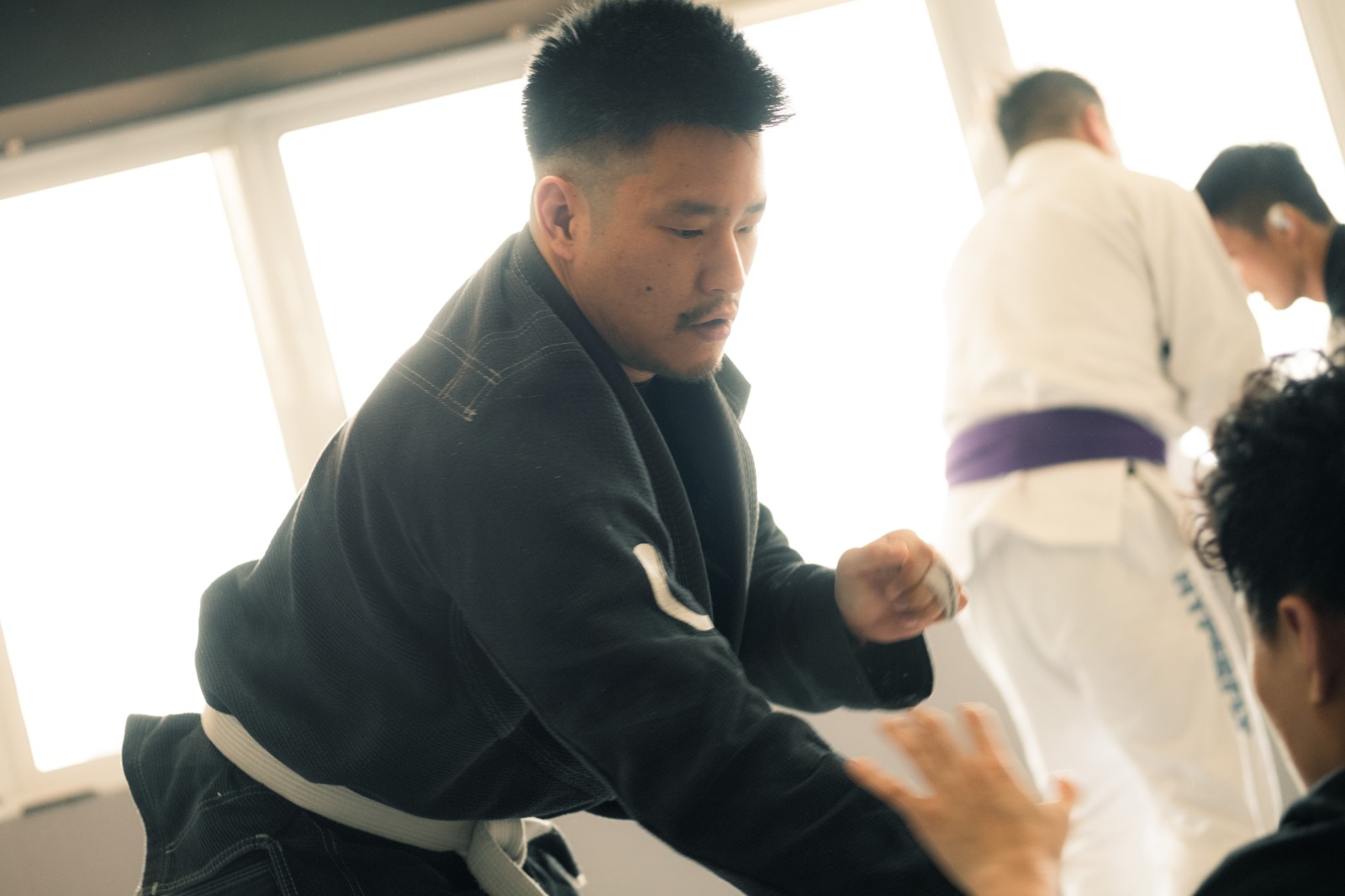
Photo of the author in a jiujitsu competition
I’ve kept training for the past 5 and a half years and never taken longer than a 2-week break. In fact, I still suck. I’m not athletically gifted and new people come in and give me a hard time often. I can’t see my progress day-to-day, there’s no time to beat or a higher number of points to score. I just keep showing up. I keep training, putting in the reps, and challenging myself. And once in a while, on a good day, I do something that makes me realize I am getting better and have come a long way since I started. I think too often these days we are looking for instant gratification, for a hack that is going to make us rich, find the perfect partner, or make our lives so much easier. But jiujitsu has taught me that isn’t the case. If something is worth learning to do well, you have to put in the work. And learning to continue to pursue something you suck at makes you stronger, more mentally able to take on challenges, and know you can get through them
I now look forward to continuing to pursue improving things I suck at. In fact, it is far more rewarding to look back at a tough journey and see how far you’ve come than it is to be proud of what came easy to you. It’s worth doing things you suck at because you’ll value your achievements so much more highly, and you’ll learn about yourself along the way. The journey is your reward.
Jiujitsu is often translated from Japanese as “the gentle art”, but the day-to-day reality doesn’t feel gentle at all. It feels more like a fight for your life, with bigger, stronger, faster opponents trying their damndest to twist your limbs in directions they aren’t supposed to go, or wrap their arms or even clothes tightly around your neck and cut off your air supply or the flow of blood to your neck until you are incapacitated. You spend hours trapped under your opponent with the wind being driven from your lungs, fighting desperately to survive, while another human drips sweat into your eyes while wrenching your body in contortions that leave you feeling like you’ve been hit by a truck. And I love it.
I’ve been practicing jiujitsu, Brazilian Jiu Jitsu more specifically, for around 5 and a half years. I’m not good by any means, I’m not gifted athletically, I’m stiff and slow, and I care more about my safety than “winning”. But I’ve improved by miles, and now finally feel comfortable handling most people who haven’t trained before, even if they are big, fast, and strong. There’s nothing easy about this sport. A famous jiujitsu saying is “there can only be one person comfortable at a time, and you want to make sure you’re that person”. I train at least 4 days a week, and after every session, no matter how tough it is, feel better for having gone through it. I have learned a lot from BJJ, and I’m sure I’ll write a lot more about it. But right now, as I go through a tough period in my life, I’d like to share specifically how training has made the rest of my life easier.
A Jiujitsu training session is almost always the most difficult thing I’ll do that day Jiujitsu training is tough, not only do you need to use the mental focus and physical exertion to execute the moves, but when you are live sparring there is also an opponent whose sole focus is to stop you from doing what you want to do. There’s hardly any other moment in your average day when another person’s goal is the exact opposite of yours, but we do it to ourselves, and each other each time we train. Even on a day of difficult work, unpleasant chores or errands, or other challenges, jiujitsu will be the hardest thing I do that day, and knowing that makes everything else easier. This was especially true when I used to train first thing in the mornings, but even now that I usually train at night, the rest of my days are easier since I’m used to doing such a challenging activity day in and day out.
Being in the moment I’ve never been able to meditate consistently, it’s something I’d like to work on, but I haven’t learned to just sit there and focus. But with jiujitsu, no matter what is going on in my life, in the middle of a hard roll, there are no other thoughts than the present. What my opponent is trying to do, what I need to do, where to put my body, concentrating on where their weight is, timing a critical moment where I can come up with an advantage. The outside world disappears, and all that matters is what’s right in front of me at that second. That is a great thing to have every day, at least 30 minutes to an hour of not thinking about work, life problems, or anything else, and it has definitely helped me be calmer off the mats.
Pushing through adversity on the mat is a transferrable skill Jiujitsu forces you to learn to endure pressure and be calm under stressful situations. If you panic or overreact, you will just make your position worse and go through a snowball effect of suffering. This is true off the mat as well, remaining calm and collected makes everything easier and allows you to get through tough situations. It’s a natural reaction to react negatively to pressure or being uncomfortable, but when you practice jiujitsu you get exposure to it every day and it helps you deal with it better in other areas of life. When you are training jiujitsu, not only do you have to deal with the physical pressure and stress of someone fighting you, but you also have to overcome the mental challenges of not giving up, pushing your body to keep going when you are tired or in a tough spot, and the knowledge that every time you show up there will be someone better/faster/stronger than you that you will have to deal with. All of these add up to a lot of exposure to stress that makes daily problems like a flat tire or an incompetent co-worker much easier to deal with.
Overcoming pain and fear builds your tolerance to it Some people say that in jiujitsu your white belt (the rank you start at) is the hardest one to earn, because most people never start training, even if they want to they are too afraid to start. Even for those who overcome that hurdle, many people quit after a short time because of how hard it is to get beat up by everyone at the gym who has been training longer and is better than you. Many people get nervous or anxious before a training session, I think it is because getting physically dominated by someone is a scary thing, and it hits your ego very hard. You have to learn how to push past that fear to continue training and get better. Ideally, you won’t be in physical pain to the point of injury during your training, but the reality is that jiujitsu is a combat sport and everyone I train with has dealt with injuries to some extent. Even when you are not injured, you still get put in painful positions, like when a heavier guy is putting all their weight on you while trying to strangle you or wrench your arm behind your back. The more I’ve trained the more I’ve been able to push past my limits and get over the fear of being crushed by someone better. This has translated to other areas of my life when I am afraid or anxious about doing something, but am able to push myself to just do it.
I’ve learned to measure progress in inches On average it takes 10 years of training consistently to earn a black belt in BJJ, by some estimates that’s only 0.1% of the people who start training. It is a long and slow journey, as you get better your rate of improvement slows and you can’t see yourself getting better day by day or even month by month. The progress also isn’t linear, it is very common to hear people talk about how they feel they have plateaued for months before making a small leap in improvement. Once you learn the basic moves, refining them takes years, one small adjustment with a grip, a faster reaction time to someone you’ve seen your opponents do hundreds of times, or adding on a new step in a series of techniques are what it takes to get better. It is also even harder to see your improvement because the people you are training with are getting better too. All of this means you need to keep consistent and keep training even when you feel like you are stuck. I think this is a hugely important lesson in today’s world of instant gratification and “hacks” when we want to see results immediately with our attention spans and dopamine addled from social media and sound bites. It has been super helpful to remember that progress takes time in other areas of my life. I also have learned to like the fact that improvement is slow and hard because if it were easy, it wouldn’t mean as much.
I now value discipline over motivation This one is taken from ex-Navy SEAL commander, BJJ black belt, and leadership coach Jocko Willink. But it has rung so true for me and helped me get off my ass and to the gym on many days. Often when we start a new hobby or even job, we are gung ho and super motivated, but after a while or when things get tough, that motivation evaporates, and if you don’t use discipline to keep going you will give up. So it is an important lesson to have the discipline to do the things you need to do, and not rely on motivation to keep you going. Of course, you should be balanced, get enough rest, and take care of your other responsibilities, but there will be plenty of days where staying home and watching Netflix sounds better than rolling around on the ground with a bunch of other sweaty people. And if you don’t enforce discipline on yourself to go and train, you won’t end up going and eventually quit. I’ve seen a lot of people start jiujitsu and be super into it for 5 or 6 months, and then after they realize that they aren’t going to become a world champion, they start coming less and less until eventually, they disappear. Using discipline instead of motivation has helped me in many areas of my life like diet, finances, work, and more.
I’m so grateful for starting jiujitsu and the lessons it has taught me, because those lessons have helped make other parts of my life easier in many ways. I hope to be practicing this art until I’m at least 60 and I’m sure it will continue to benefit the rest of my life the whole time. If you haven’t tried jiujitsu, I highly suggest you give it a shot and see how it helps your life in other ways!
I’ve been an avid podcast listener since about 2016, over the years I’ve listened to many thousands of hours of podcasts across a variety of topics and styles, and today I would like to share some of my favorites with you. The reason I love podcasts so much is because of the long-form content, in general, I also prefer the more conversational style over scripted or highly produced content. Podcasts are my go-to when working out, hiking, commuting, or traveling. I love audiobooks as well, but podcasts are generally 30-minutes to 2 hours long, so you can consume them more easily and the content is more current. There are a lot of options for how you can listen to podcast like Apple, Google, and Stitcher, but I generally just stick with Spotify as it is what I’m used to. Podcasts have been all the rage, especially since the pandemic, but I’ve found myself consistently listening to these shows, and they put out regular content, so there’s always something new to listen to! This is a top 10 list, but I am not ranking them for 1-10 because it really depends on what mood I’m in, what type of podcast I feel like listening to, what topic I want to hear about etc. So the order is more from how long I’ve been listening to these podcasts and the total number of hours I’ve listened to each and I’ve also included “when you should listen” for each show!
The Tim Ferriss Show Tim Ferriss is one of the OG productivity and life-hack influencers. He first became famous for his New York Times best-seller “The 4-hour Work Week”. But I think he really came into his own once he started doing podcasts. He really excels at interviews, and because of this network, reputation, and interests gets a lot of really amazing guests on the show like Mark Zuckerberg, Neil Gaiman, David Blaine, Jamie Foxx, Kelly Slater, Chuck Palahniuk, and many many more. Tim is excellent at asking deep questions and trying to understand his interviewees, what makes them tick, how they’ve become successful, and their philosophies on life. He really goes into details that he is interested in that most interviewess wouldn’t ask, like their morning routine. I think this makes his shows really unique and insightful. When you should listen: When you want deep but interesting conversations with successful people.
The Joe Rogan Experience Yes, Rogan has gotten into trouble for some of his views and the things he says, especially about vaccines and Trump. But overall I think he still has one of the best shows around and the quality and quantity of his guests is unparalleled. If you choose which shows to listen to based on your interests, and keep a skeptical mindset while you listen, you can still get a lot of value. My favorite episodes are when he has on his comedian friends or really unusual people with specialized expertise. If you like combat sports and MMA, he also has had a ton of fighters on. I definitely prefer his pre-pandemic/Spotify deal content, as recently he has kind of been stuck in a rut and a bit full of himself, but there are still gems to be found if you choose your episodes wisely. When you should listen: When you’re in the mood for an easy listen, with the conversation flowing like hanging out with a bunch of bros.
Jocko Podcast Jocko Willink is an ex-Navy SEAL team commander with experience in the Iraq war, long-time BJJ practitioner, and now executive and business coach. You’ll see his quotes and speeches about leadership, discipline, and hard work all over the internet, but there’s a lot more to him than that. The podcast focuses on combat, leadership, and self-improvement, but it is all backed up with real-world experiences and examples. Most of his episodes are either going through books or interviews with combat veterans and other related people, but he also does Q&As and other topics. Some of the content is very dark and heavy, especially when he talks about losing a member of his team or war atrocities. But these are all topics that need to be discussed and Jocko is someone who brings the level of gravitas and experience needed. His sidekick Echo who is hilarious and the opposite of Jocko in many ways is a bonus. When you should listen: When you want to listen to in-depth discussions about military history and leadership and don’t mind hearing some somber topics.
Dan Carlin’s Hardcore History Dan Carlin is an amateur historian who puts out some of the most in-depth and insightful historical content out there. His series on topics like Rome, WW2, and the Vikings are often 4-5 hours an episode and span over 3-7 episodes per topic. His story-telling skills make the hours fly by, and his honesty about his biases and curiosity about other perspectives is very refreshing. He always claims how little he knows, but he does months of research for each topic, and his ability to explain the history in context makes him fascinating to listen to. His radio-worthy voice doesn’t hurt either. The only negative to this podcast is that it takes him months to put out new episodes, so you’ll have plenty of time to catch up if you haven’t listened before. When you should listen: When you want a university course-level look at historical topics and have 25 hours to spare.
The Dave Chang Show Korean-American restauranteur David Chang rose to fame after opening Momofuku Noodle Bar in New York City. He now has restaurants across the world, has published books, and lucky for us, hosts this podcast. Being a chef, this show centers around food, but there are plenty of other topics sprinkled in like politics, being a dad, race, and mental health. Dave’s takes are usually irreverent and often not what you’d expect from someone of his stature, he mixes the goofy and absurd with the serious and important, often within the same episode. I especially like when he shares how he would order at a specific restaurant, his eating adventures, what it’s like working being the line, and his perspectives on being an Asian-American. When you should listen: When you are in the mood to hear about societal topics without having them being shouted at you from a pedestal.
Recipe Club Another treasure from the Dave Chang crew, this podcast started during the pandemic when everyone was stuck at home and they had the crazy idea to try 3 versions of a dish and compare which is the best. Now that they are back working on other projects, the show’s format has changed to be more manageable, but it is still a super fun listen if you are a foodie. Their rotating cast of guests are all a riot, and the whole show is a ton of fun. There’s lots of poking fun at each other, cooking disasters, commentary on crazy family recipes, and fantastic recipe advice as well. I was so glad when they brought this show back and I hope they keep it going! When you should listen: While you are cooking your own meal or when you want some food content that isn’t overly pretentious.
BJJ Mental Models This is by far the best jiujitsu podcast out there. Canadian brothers Steve and Matt Kwan bring in the leading minds in the jiujitsu world to help you improve your game through systems and concepts. These guys are really fun to listen to, in addition to having extremely educational shows. There are a lot of BJJ podcasts that talk more about gym culture, training habits, competition news, etc. But this one will actually help you get better just from listening. I can definitely say that you can listen to every episode more than once and continue to get new insights from it. When you should listen: When you want to improve your jiujitsu without watching videos.
The Memory Palace This beautifully written and performed podcast is of short (10-20 minute) historical anecdotes and stories. They are often on topics you will never have heard of, or from surprising perspectives, and I feel really capture the moment in time like no other podcast does. I think of it kind of like a “Humans of New York” for history. Each episode is self-contained and is very easy to listen to when you are short on time, or you may end up being sucked in and binging many of these wonderful stories in a row. You’ll meet lots of interesting characters and hear about touching and important moments of every day life in this podcast. When you should listen: When you want to be brought back to a moment in time through hearing beautiful historical short stories.
Jungle Prince This is a 3-part story produced by The New York Times in 2019 about a journalist’s encounter with a lost royal family in India. It is beautifully written and an utterly fascinating tale. From an ruined castle in the jungle in Delhi, to a cottage in England, this writer takes us on a journey of time, place, lost identity, and family stories. The series is only about an hour and a half long, but it is riveting throughout. When you should listen: When you want to hear an amazing story you’ve never heard before. I recommend listening to all 3 episodes in one go.
Today, Explained This is the only news podcast on my list, and I don’t listen to every episode, but when there is something in the news I want to understand better, this is my go-to. I think Vox does a great job of getting episodes out quickly talking about big events, explaining the background, and getting expert opinions. I like that episodes are around 30 minutes long, so there is time to get much more in-depth rather than a series of sound bites. Their coverage of the pandemic and Ukraine war were especially good. I don’t watch traditional news anymore, partly because this podcast is so good at covering things in a comprehensive way. When should you listen: When there is a big news event happening and you want to understand the background and not just the headlines.
I hope you enjoyed this list! I believe there’s something for everyone in the world of podcasts. There are plenty of other shows I listen to often, but these I would recommend unequivocally to everyone. I’d love to know what your favorite podcasts are!