Intro
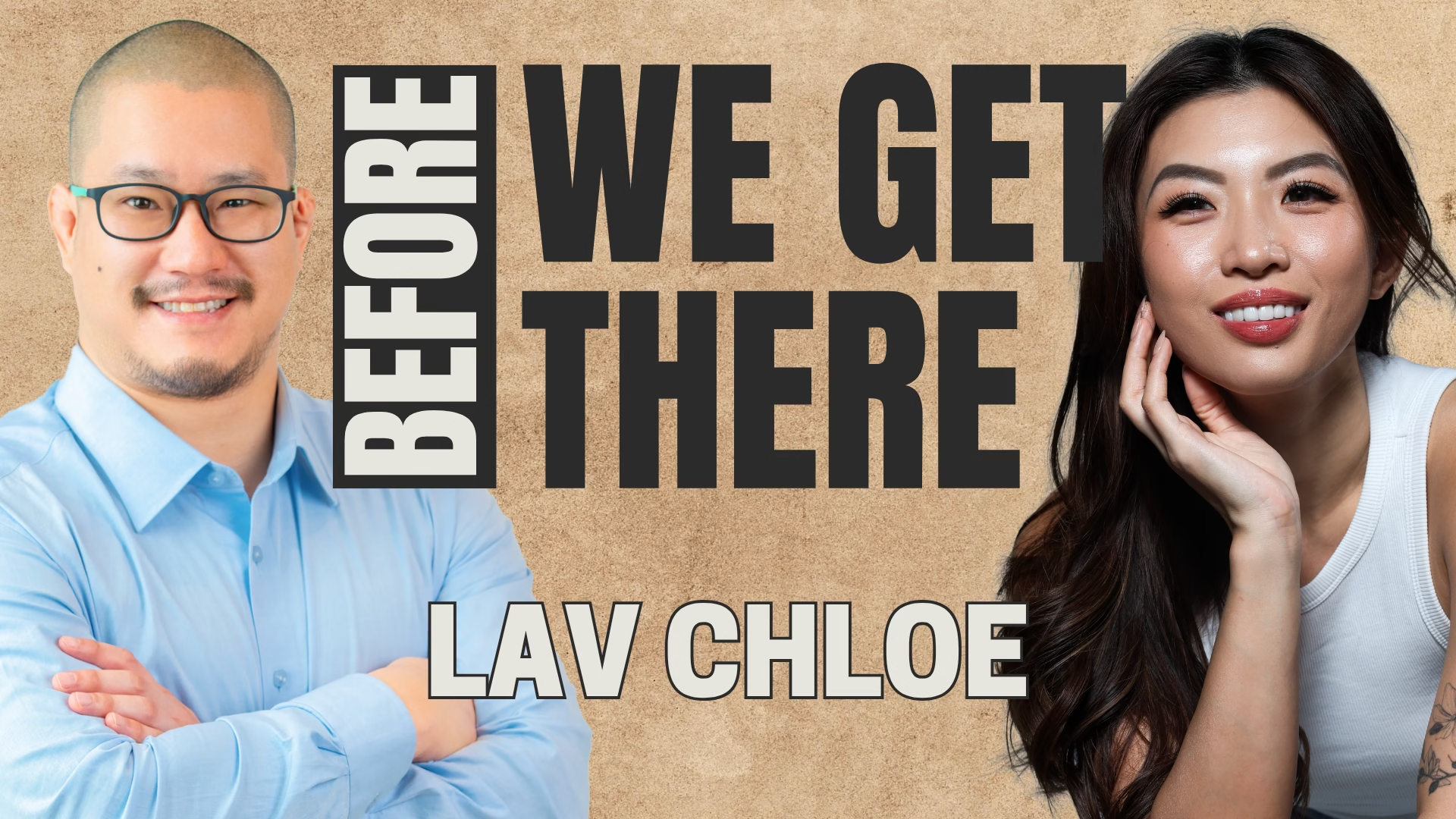
Lav Chloe did impressions for years before anyone was watching. In private, for her friends. Late last year she recorded one, a single take she planned to delete, and posted it so a few people close to her could see it. She woke up to a million views, then millions more, and the private thing she did to make her friends laugh became her whole career.
In this episode we get into what she found out about herself along the way. That the same wiring behind the accents, the ease of slipping into someone else’s voice, is the ADHD she was diagnosed with at 30, years after leaving medical school. How the relief of finally understanding herself arrived alongside anger at how long it took. The line she walks doing accents without mocking anyone, and why she ends up defending people in her own comments. And where she thinks the humor comes from in the first place. She is not chasing the next viral hit. She is figuring out what to do with the one she did not plan for.
Story Highlights
- Doing impressions privately for her friends for years, then recording one take she meant to delete, posting it, and waking up to a million views.
- Her first viral video being completely unpolished, and that being the whole point.
- Coming to see intention and perception as two different things, and making sure her intention is clear in everything she puts out.
- The care underneath the comedy: underdoing an accent rather than exaggerating it, so it reads as homage and not mockery, especially for accents that already face scrutiny.
- The haters who accused her of insulting cultures, and the advice she took to heart, that silence is the best response to trolls.
- Why she still steps into her own comments, not to defend herself, but to defend the people her impressions are about when others use them as cover to mock.
- The irony she noticed, that the harshest commenters tend to come from multiracial countries, while people from more homogenous places have been more respectful.
- Suspecting she had ADHD at 27, getting formally diagnosed and medicated at 30, and being in medical school before she ever had a name for it.
- How the ease of mimicry and code-switching that makes her good at accents is the same ADHD wiring, to the point that a week around someone is enough to pick up how they sound.
- The grief inside the diagnosis, relief that her life finally made sense, and anger that she could have had the tools years earlier.
- Turning her hobbies into work and burning out on them, from a dance crew to a food page, and learning to keep some things back just for herself.
- Why she resists being called an influencer and prefers creator, and her view that cringe is the price you pay for freedom.
- Where she thinks Malaysian humor comes from, generations of hardship turned into a way of laughing at pain.
Quote
“I think it explains a lot of who I am, and thank God for that. Otherwise, I would always think to myself, what’s wrong with me?”
About Lav Chloe
Lav Chloe is a Malaysian content creator based in Kuala Lumpur, known for her accents and impressions. She went viral in late 2025 from a video she first made for her friends, and has built a following for her comedy since. She studied medicine before content creation, and is open about living with ADHD, which she was diagnosed with at 30. Find her at @sorude_ on Instagram and TikTok.
Why This Conversation Matters
Most people meet Lav through the clips. The accents, the impressions, the videos that ran into the millions. This conversation is the person behind them. She talks about the wiring that makes her good at what she does being the same thing she spent most of her life thinking was wrong with her, about the care she puts into not mocking the people she imitates, and about finding out at 30 what had been going on the whole time. It is not a viral-success story. It is someone discovering that the thing that made her feel broken is the thing she is best at, and working out what to do with it.
Turning Points
- Recording an impression she meant to delete, posting it for her friends, and waking up to a million views that turned into a career.
- Getting formally diagnosed with ADHD at 30, and the anger that came before the relief.
- Realizing the mimicry behind her accents is the same wiring behind the diagnosis, and that the talent and the thing she thought was wrong with her are one and the same.
- Deciding to stop performing a version of herself she thought people wanted, and posting through the cringe instead.
Key Lessons
- The thing you think is wrong with you can be the thing you are best at. The ADHD she spent years wishing away is the same wiring that lets her slip into any voice.
- Respect is the line between an impression and mockery. She underdoes the accent and treats it as homage, which is why the work reads as funny instead of cruel.
- Silence is usually the right answer to trolls, until it isn’t. She lets the hate roll off, except when commenters use her impressions as cover to mock the people behind them, and then she speaks up.
- A late diagnosis brings relief and grief together. Finally understanding herself made sense of her whole life, and also made her angry about the years she spent without the help.
- The funniest people are often working through something heavy. Her read on Malaysian humor is that it comes from generations of hardship, turned into a way of laughing at pain.
If You Enjoyed This Episode
You might also like: