
Intro
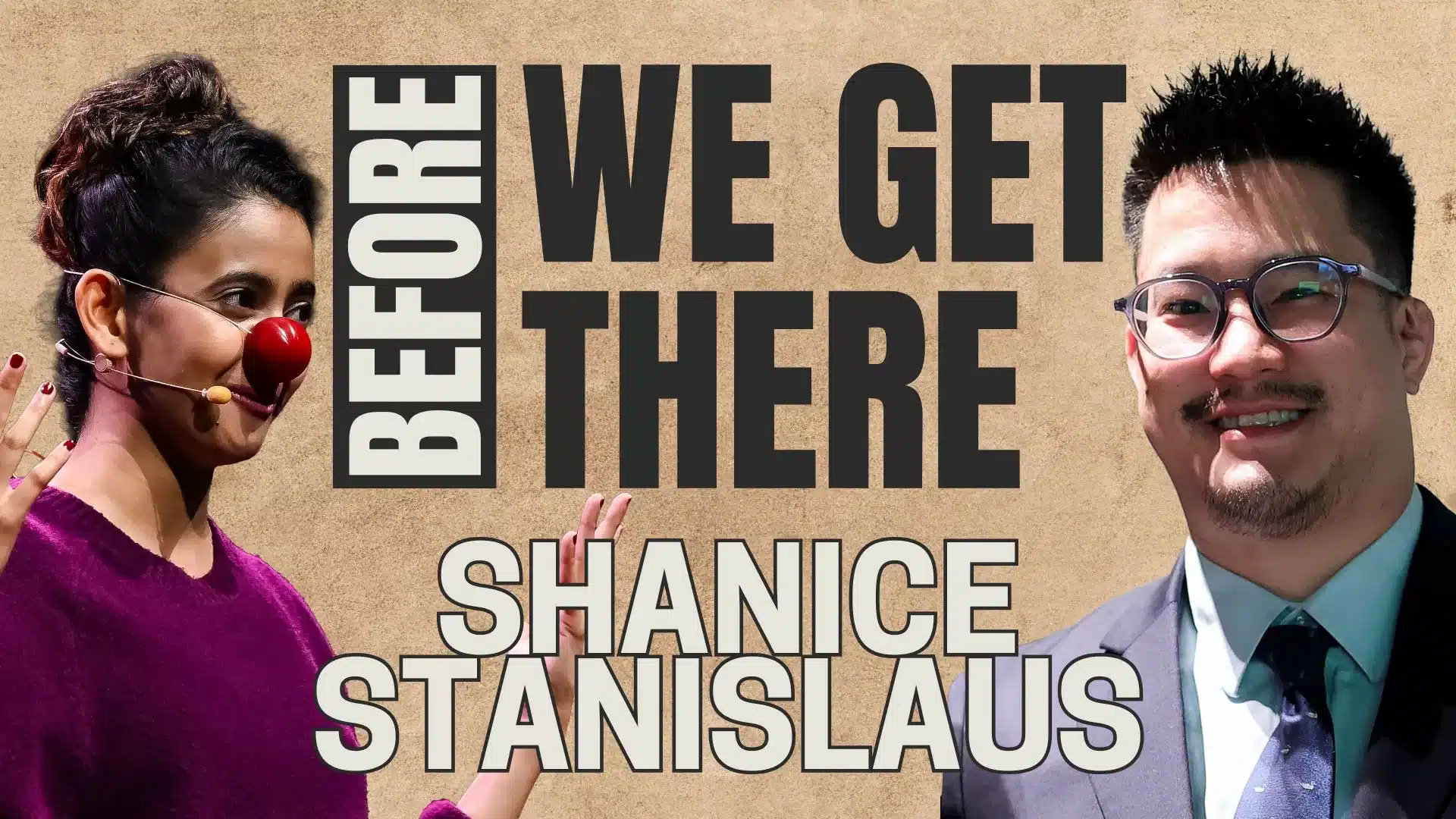
Shanice Stanislaus is a Singaporean professional clown, performer, and educator whose work sits at the intersection of comedy, vulnerability, and social critique. In a country known for discipline, success, and emotional restraint, Shanice chose a path built on failure, play, and showing up exactly as you are.
In this episode, we talk about how Shanice discovered clowning at NYU, why it shattered her ideas of what performance could be, and how learning to “take off the mask” became a personal and political act. She shares what it’s like to feel unseen in your own country, to be celebrated abroad but doubted at home, and to keep coming back anyway.
From being kicked out of clown class in France, to winning international awards, to running workshops that help engineers, teachers, and students reconnect with joy, this is a conversation about identity, belonging, and the courage to look foolish in order to feel whole.
Story Highlights
- Growing up in Singapore feeling pressure to be serious and successful
- Discovering clowning at NYU and realising failure could be a skill
- Learning to remove emotional “masks” through play
- Being rejected and doubted by arts institutions at home
- Finding validation and confidence through international training and touring
- Winning awards abroad before being recognised locally
- Teaching clown workshops to adults who believe they “aren’t funny”
- Using the red nose as a safe way to be vulnerable
- Helping others reconnect with joy, play, and self-trust
Quote
“It almost felt like you always had to put a mask on. In Singapore, you need to be successful. Clown class was the first place where I learned how to take the mask off.”
About Shanice Stanislaus
Shanice Stanislaus is a Singaporean professional clown, performer, and educator who has trained internationally in France, the UK, and the US. Her award-winning shows have toured globally, earning recognition in Canada and beyond. Alongside performing, she runs clown workshops through Creatives in Spirit, working with students, professionals, and communities to help people reconnect with play, confidence, and emotional freedom. Her work challenges conventional ideas of success, seriousness, and what it means to be an artist in Singapore.
Why This Conversation Matters
Shanice’s story captures a tension many people feel but struggle to name: the gap between who we are expected to be and who we actually are. This episode goes beyond performance and art, touching on fear, identity, cultural pressure, and the cost of constantly wearing a mask. It is a reminder that joy, play, and failure are not distractions from real life — they are essential parts of it.
Turning Points
After discovering clowning at NYU, Shanice returned to Singapore and tried to balance creative ambition with stability through a corporate marketing job. Feeling increasingly disconnected, she took the risk to train in France and later the UK, where harsh feedback and rejection forced her to confront her own loss of playfulness. Despite international success and awards, returning home brought skepticism and doubt from institutions that didn’t know how to place her work. Rather than leaving for good, Shanice chose to stay engaged with Singapore — teaching, performing, and slowly building space for clowning to exist locally.
Key Lessons
- Failure can be learned and practiced
- Play is not childish — it is essential
- Being unseen does not mean you lack value
- External validation is unreliable but revealing
- Cultural pressure shapes identity more than we realise
- Safety and vulnerability are deeply connected
- Joy can be taught, modeled, and reclaimed
If You Enjoyed This Episode
You might also like:
Neonomora on Identity, Motherhood, and Finding Her Own Sound
Christel Goh on Leaving Corporate, Taking Risks, and Building a PR Business