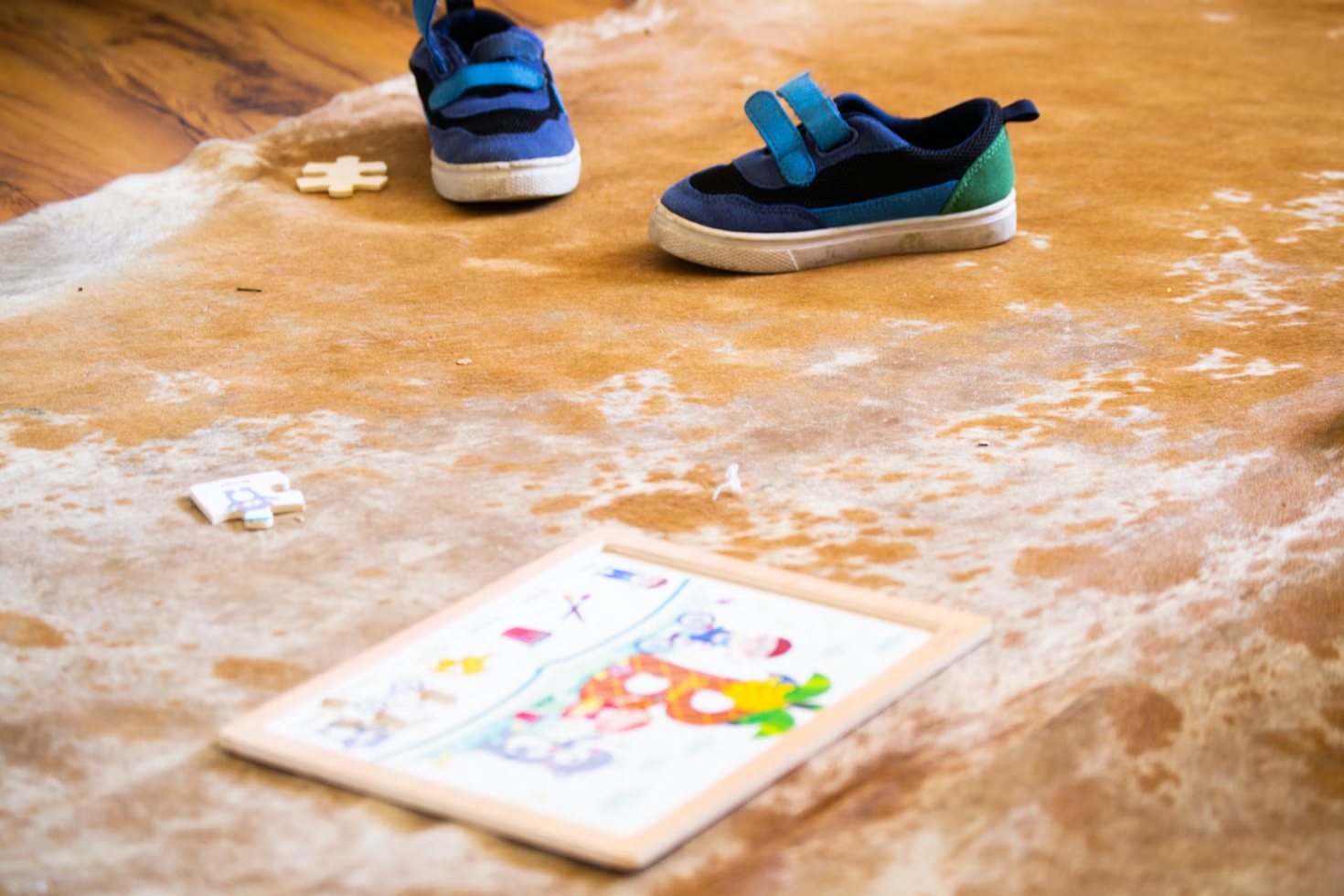
A couple of months ago, I was with my daughter on the train, heading back home. We’d had a nice morning at my gym, where I took a jiujitsu class and had some rolls, and she colored and jumped around on the mats. We were sitting there minding our own business when an older man, probably in his late sixties or early seventies, started talking to my daughter. At first, I encouraged her to say hello to him, but quite quickly, I started getting a weird vibe. He was a bit too friendly and wanted to shake her hand more than once. But I pushed that strange feeling to the back of my head and continued to act normal. Then he said to my 3-year-old in Chinese, “Do you have a boyfriend? I can be your boyfriend.” I immediately pulled her closer to me and said, “What kind of question is that? Why would you say that?” He said oh sorry, it was just a joke. I quickly moved seats after that. But I thought about it intensely for days afterwards, and it still pops into my head now. I kept replaying the scene in my mind and wished I acted differently, told him off more strongly, or at least let him know it was inappropriate.
While replaying that event in my mind, I realized that this feeling of regret and not doing enough is something I’ve experienced before. The situations are different, but I recognize the feeling. Growing up as an Asian in the US, I’ve dealt with my share of racism. Much of it was when I was young and could be written off as kids not knowing any better. But one incident in particular reminded me of this. I was working late at night at a diner, and a woman started calling towards me, “Hey Chinaman, Chinaman!” I didn’t know how to react, and ended up ignoring her and pretending I couldn’t hear her. The thing is, I didn’t even tell my manager or anyone else until later, after they’d left. They were supportive and told me they would have kicked her out, but the thing is, I didn’t feel confident enough when it was happening that I would be supported, so I kept quiet. Even though I was hurt and offended, it was easier to just push my emotions down than reach out to someone for help.
There’s something about those moments that short-circuits the response you think you’d have. Psychologists call it the “freeze” response, part of the same fight-or-flight system that’s supposed to protect us. Research shows that when we’re caught off guard by a social transgression, our brains often default to inaction, especially when the situation is ambiguous or when confrontation carries social risk. In my head, after the fact, the right words are always there. The anger is clear, the boundary is firm, and the action is obvious. But in the moment, something else takes over. Maybe it’s the shock of it happening at all, or the social pressure not to make a scene, or some deeper instinct to avoid conflict. Whatever it is, it creates a gap between how I’d like to respond and what I actually do. And that gap is where the regret lives.
I want to raise a strong, confident woman who can stand up for herself. But I never imagined anything like this could start when she’s just a toddler. And now I’m worried that if I couldn’t even stand up for her after such an inappropriate comment, how am I going to teach her enough? Because I believe I am strong and confident. And yet, in both situations, even where there was no physical danger, I stayed quiet.