Tag: Cooking

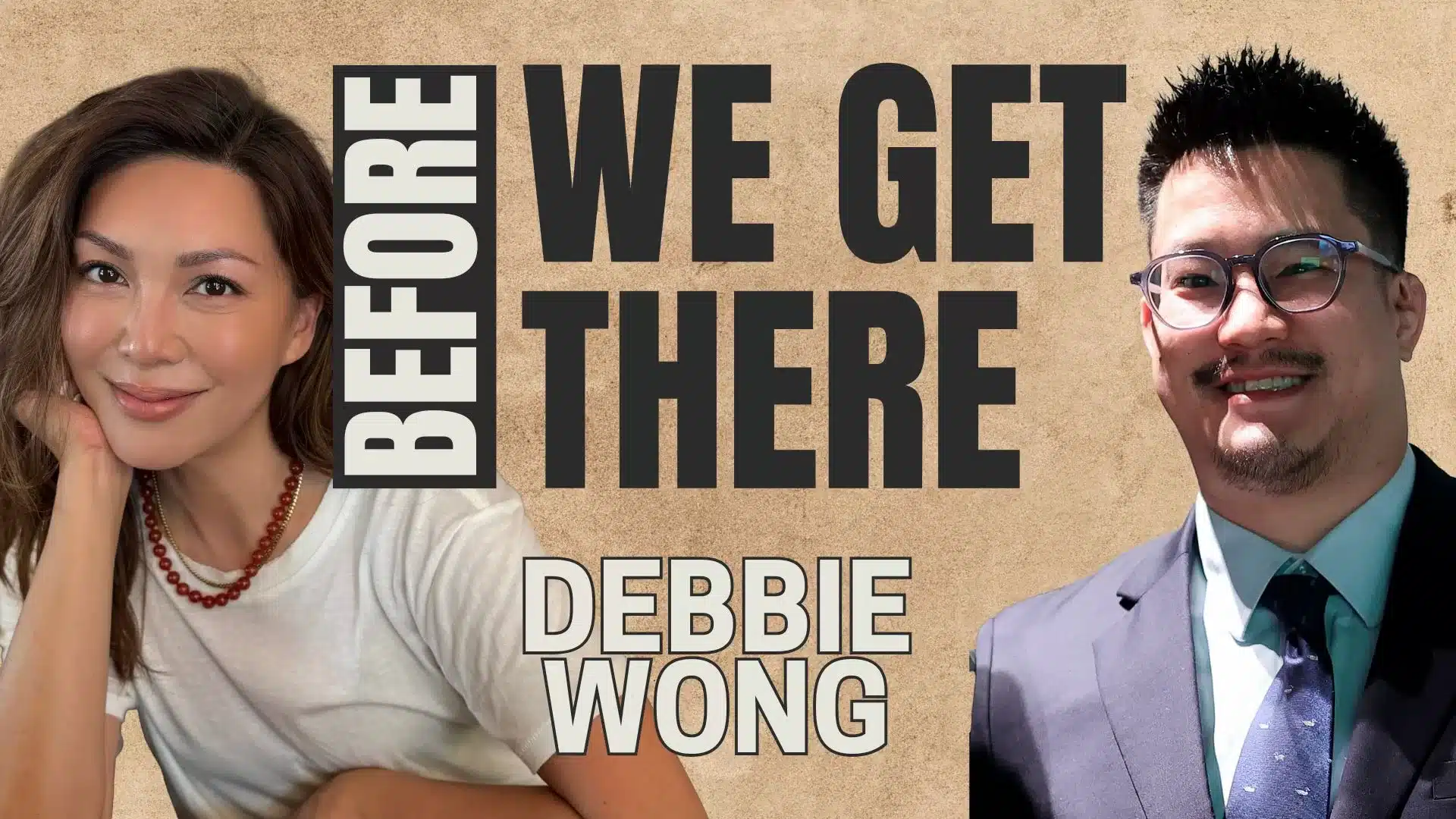
  • Debbie Wong on Belief, Identity, and Owning a Creative Life

    Debbie Wong on Belief, Identity, and Owning a Creative Life

    Intro

    Debbie Wong has spent most of her life doing creative work — acting, hosting, cooking, building things — without ever fully believing it counted as a “real job.”

    In this episode, Debbie reflects on growing up as an immigrant kid, learning to observe people quietly, and finding her voice through performance and food. We talk about her early YouTube days long before “creator” was a thing, how that body of work eventually led to Food Network Asia, and why success didn’t immediately bring confidence — only relief.

    She opens up about being an introvert in an extroverted industry, the fear of messing things up once things finally start working, and how self-limiting beliefs kept her from fully stepping into her power. This is a conversation about trusting your gut before you trust yourself — and learning, slowly, to do both.

    Story Highlights

    • Growing up between Hong Kong and Vancouver as an immigrant kid
    • Falling in love with food and people-watching at a young age
    • Studying performing arts as an introvert who wanted to communicate
    • Starting a food YouTube channel in the early 2010s before it was a “thing”
    • Teaching herself editing, filming, and production
    • Wanting creative control beyond acting in other people’s projects
    • Moving to Hong Kong and feeling an unexpected sense of belonging
    • Landing Food Network Asia through an unconventional audition
    • Feeling relief — not confidence — when success finally arrived
    • Realising she didn’t fully believe her creative work was a “real job”

    Quote

    “There was a part of me that felt like, I’m really lucky to be doing this. Like it’s not even a real job — that was still in the back of my mind.”


    About Debbie Wong

    Debbie Wong is a TV host, performer, and entrepreneur. She has appeared on Food Network Asia, built one of the early food-focused YouTube channels, and trained in performing arts in New York. Today, she co-runs Dressing The Woman, a personal style consultancy that helps people align how they show up externally with who they are internally.


    Why This Conversation Matters

    Many people assume confidence arrives once you “make it.” Debbie’s story complicates that idea. Even after landing major opportunities, she carried quiet doubts about worth, legitimacy, and whether she deserved to take up space.

    This episode is for anyone doing creative work while still questioning its validity — and for those who realise, often much later, that belief has to be learned, not earned.


    Turning Points

    After years of acting and hosting, Debbie realised how important ownership and authorship were to her — which led her to start her YouTube channel and create work on her own terms. Landing Food Network Asia felt like external validation, but it also surfaced deeper self-doubt about legitimacy and deservingness. During COVID, personal loss and reflection led her to co-found Dressing The Woman, a business rooted in authenticity, identity, and self-expression. Through that process, she began shedding the belief that she was just “lucky” — and started recognising the work she had put in all along.


    Key Lessons

    • Confidence doesn’t automatically follow success
    • Creative legitimacy is often internal, not external
    • Being introverted doesn’t mean you lack presence
    • Gut instinct can carry you before belief catches up
    • Ownership matters as much as opportunity
    • Identity is bigger than job titles
    • Stepping into your power often happens quietly, over time

    If You Enjoyed This Episode

    You might also like:

    Opera Tang on Creating Art, Being True To Yourself, and Honoring Heritage

    Joyce Harn on Pursuing Your Dream and Making It in the Film Industry,
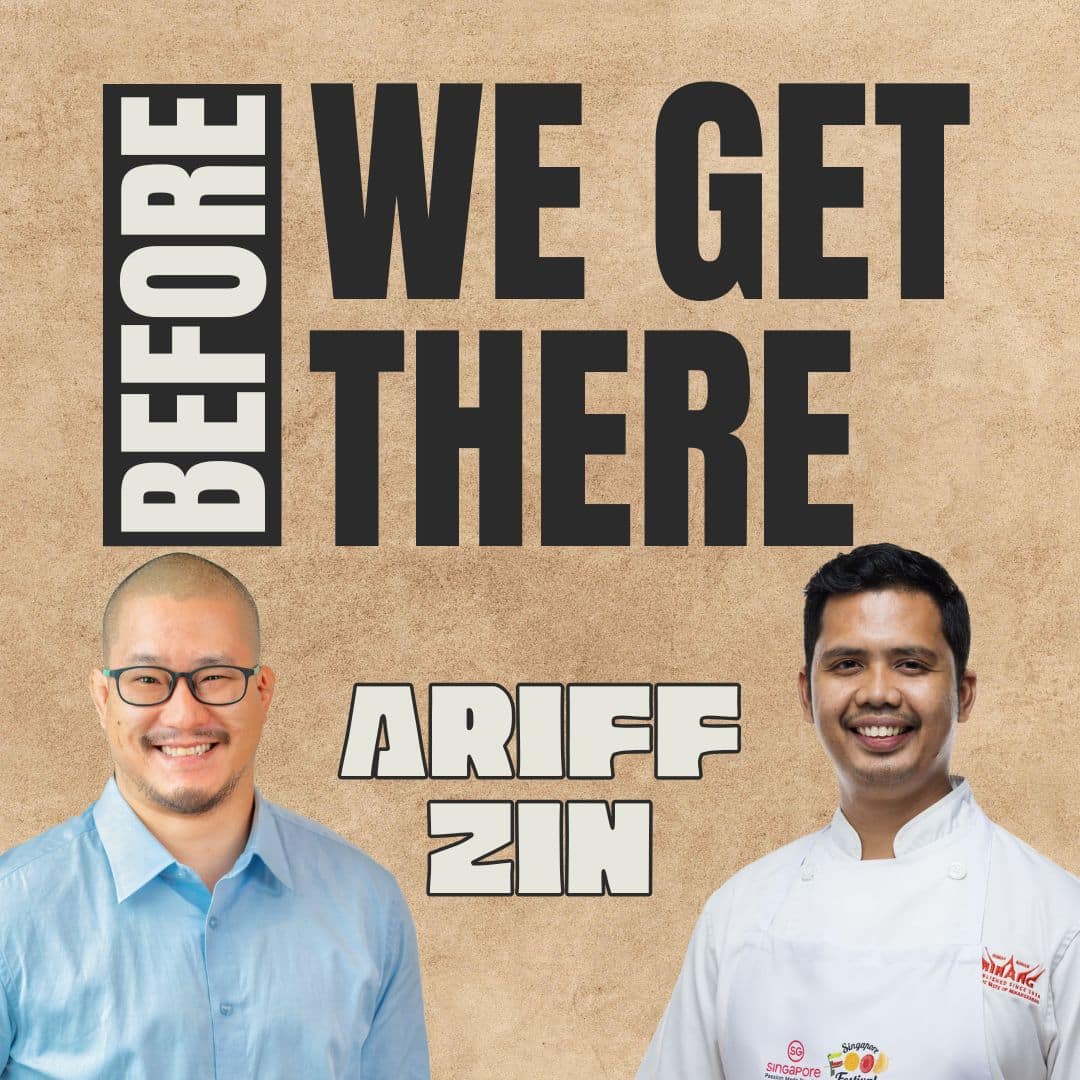
  • Ariff Zin on Heritage, Reinvention, and the Future of Nasi Padang

    Ariff Zin on Heritage, Reinvention, and the Future of Nasi Padang

    Intro

    Ariff Zin is the executive chef and third-generation owner of Rumah Makan Minang, one of Singapore’s most iconic nasi padang restaurants. What began as his grandmother’s humble eatery on Kandahar Street has grown into a brand that’s lasted more than 70 years — now with new outlets and a loyal following across generations.

    In this episode, Ariff shares what it means to grow up in a restaurant family, how studying at the Culinary Institute of America changed his view of food, and why preserving heritage cuisine requires constant adaptation. We talk about waking up at 3 a.m. to cook 40 dishes, introducing modern systems into a family business, and why he believes traditional foods deserve the same respect as fine dining.

    Story Highlights

    • Growing up in his family’s nasi padang restaurant on Kandahar Street
    • Studying at the Culinary Institute of America and interning in New York
    • Learning from Michelin-starred kitchens and adapting lessons back home
    • Modernizing tradition through technology and discipline
    • Why he believes home-based businesses are Singapore’s new hawkers

    Quote

    “To be honest, if I travel, I miss my food. But if I’m still in Singapore, I don’t eat as much as people thought, because every day I have to do food tasting in the restaurants. So sometimes I just feel like eating another cuisine rather than nasi padang — but it’s comfort food. I love rice so much.”

    About Ariff Zin

    Ariff Zin is a Singaporean chef and restaurateur, best known as the executive chef and third-generation owner of Rumah Makan Minang, a heritage nasi padang brand established in 1954. A graduate of the Culinary Institute of America, Ariff worked in New York’s catering scene before returning to Singapore to modernize his family’s business. He has since expanded Minang’s reach through innovations such as vacuum-packed meals, centralized kitchens, and digital ordering — all while keeping its traditional recipes intact.

    Why This Conversation Matters

    Ariff’s story embodies what heritage cuisine can become when tradition meets innovation. His journey from engineering student to chef reveals the resilience behind Singapore’s food culture. Through family, faith, and experimentation, he’s redefining what it means to honor the past while cooking for the future.

    Turning Points

    From carrying plates as a child to leading one of Singapore’s most recognized Malay restaurants, Ariff’s career has been shaped by reinvention. His time in the U.S. taught him about hierarchy, workflow, and precision — lessons he brought home to transform his family business. Introducing systems and new technology wasn’t easy, but over time his team embraced change. During COVID-19, his earlier decision to vacuum-pack dishes kept the restaurant thriving. For Ariff, adaptation is about respect: respecting the craft enough to help it survive another generation.

    Key Lessons

    • Heritage evolves. Tradition only stays alive when it adapts.
    • Discipline matters. Kitchens run on structure, not ego.
    • Innovation protects legacy. Technology can preserve, not replace, authenticity.
    • Respect the craft. True nasi padang takes hours — and generations — to perfect.
    • Community defines success. Feeding people well is both purpose and pride.

    If You Enjoyed This Episode

    You might also like:

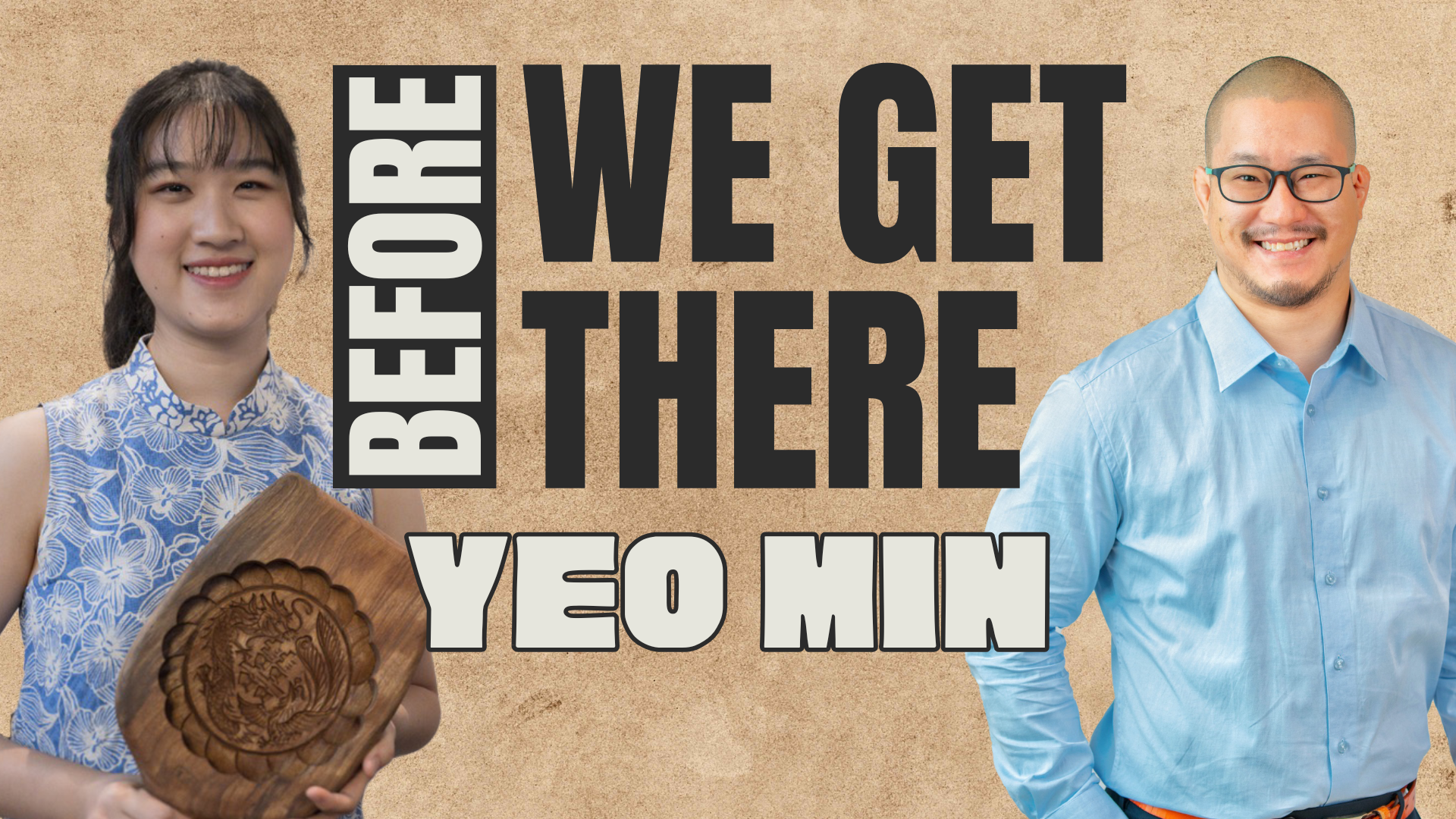
  • Yeo Min on Food Heritage, Creativity, and Preserving Tradition Through Pastry

    Yeo Min on Food Heritage, Creativity, and Preserving Tradition Through Pastry

    Intro

    Yeo Min is the author of Chinese Pastry School, founder of Pastories Bakery, and co-founder of the Museum of Food Singapore, a nonprofit dedicated to preserving and educating the public about local food heritage.

    In this conversation, we explore how Yeo Min left her career in social work to study pastry, what drew her to traditional Chinese pastries, and how she’s balancing creativity, entrepreneurship, and cultural preservation. From her “cool aunt” sneaking her to McDonald’s as a kid to writing one of the first English-language cookbooks on Chinese pastries, Yeo Min’s story is both deeply personal and profoundly local — a look at how food can connect past, present, and identity.

    Story Highlights

    • The accidental journey from social worker to pastry chef
    • How she met her mentor, Chef Pang, and fell in love with heritage baking
    • Why she wrote Chinese Pastry School to document disappearing crafts
    • The challenge of pricing and sustaining heritage food businesses
    • Building the Museum of Food Singapore to preserve culinary memory

    Quote

    “I feel like we need to be more proud of our food heritage, like our food heritage, and just, just sell it. Don’t be shy about it and just be proud of it like any other person.”

    About Yeo Min

    Yeo Min is a Singapore-based pastry chef, author, and food heritage advocate. After working in social services, she pursued pastry school and discovered her calling in traditional Chinese pastries. She later founded Pastories Bakery, co-founded the Museum of Food Singapore, and published Chinese Pastry School — a first-of-its-kind guide to the craft, science, and stories behind Asian pastries. Her work bridges research, education, and entrepreneurship, bringing forgotten food traditions to a new generation.

    Why This Conversation Matters

    Yeo Min’s story captures what it means to redefine heritage in modern Singapore. Her reflections on craft, pricing, and pride shed light on how traditions survive only when they adapt. In a city obsessed with innovation, she reminds us that preservation is also progress — that being proud of where our food comes from is the first step toward keeping it alive.

    Turning Points

    From making dumplings in a London dorm room to studying pastry in Singapore, Yeo Min’s evolution was sparked by curiosity. Meeting Chef Pang shifted her direction from Western-style baking to heritage pastries, and the closure of old pastry shops deepened her resolve to document traditional techniques. Writing Chinese Pastry School became both a research mission and a love letter to her culture. Through the Museum of Food, she’s extending that mission — teaching children, families, and visitors that food is not just flavor but history.

    Key Lessons

    • Heritage evolves. Tradition survives through adaptation, not imitation.
    • Pride is preservation. Value comes from seeing local food as craft, not commodity.
    • Education drives change. When people know the story, they’re willing to pay for it.
    • Mentorship matters. Knowledge must be passed down to stay alive.
    • Creativity can serve culture. Innovation and respect can coexist in the kitchen.

    If You Enjoyed This Episode

    You might also like:

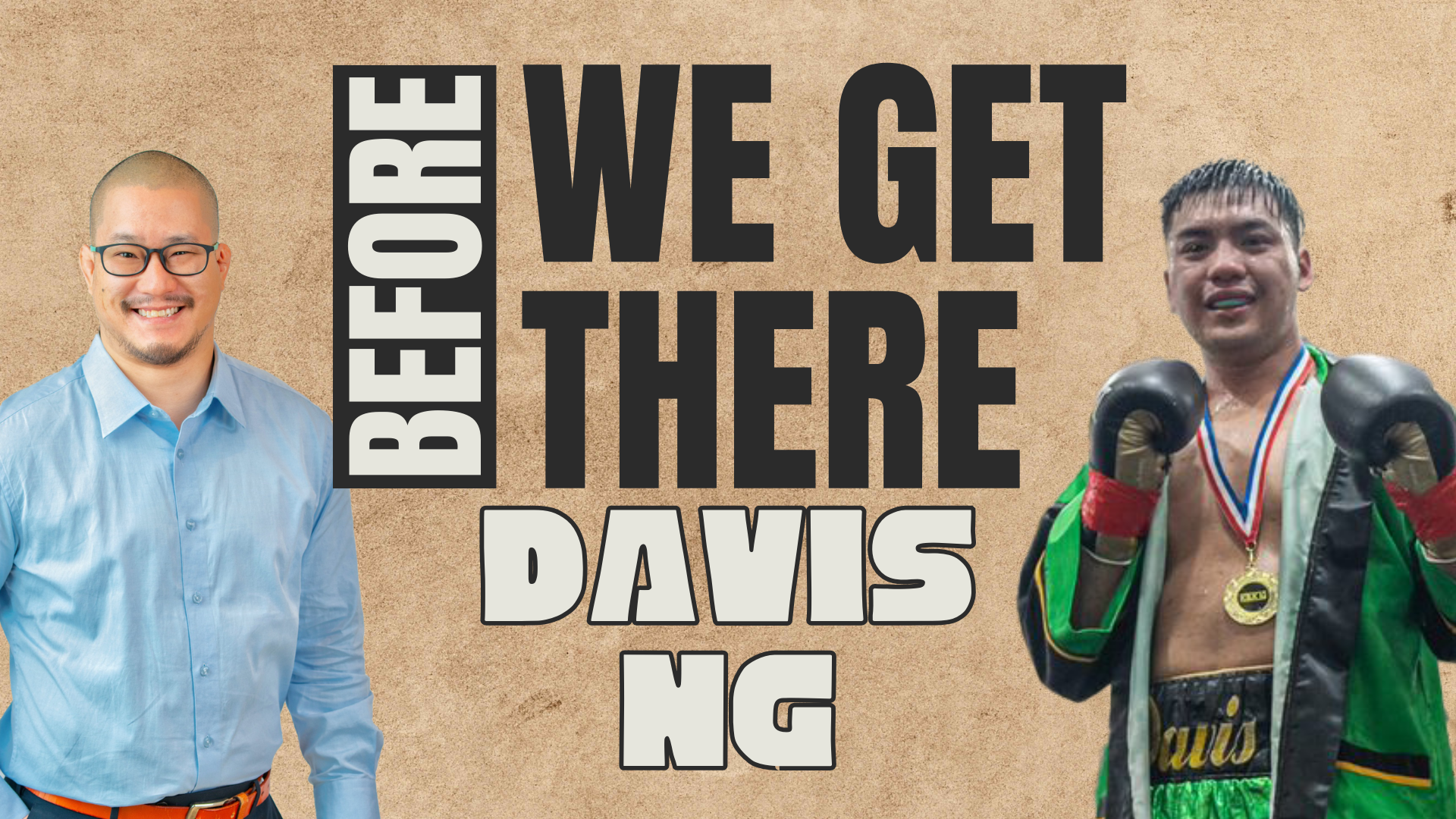
  • Davis Ng on Boxing, Barbecue, and Building Singapore’s First Texan-Japanese Smokehouse

    Davis Ng on Boxing, Barbecue, and Building Singapore’s First Texan-Japanese Smokehouse

    Intro

    Davis Ng is a professional boxer, chef, and founder of Kumari BBQ and BaconKing.sg, Singapore’s first fusion of Texan-style barbecue and Japanese flavors. He’s also the WBC Asia Silver Middleweight Champion, a title earned after more than a decade of balancing two worlds — the intensity of professional fighting and the discipline of culinary craftsmanship.

    In this episode, we talk about Davis’s journey from culinary school to the boxing ring, how a backyard bacon experiment became a thriving business, and the lessons he’s learned from pressure, loss, and persistence. From cooking brisket for 12 hours to cutting weight for a fight, Davis’s story is about grit, focus, and staying true to your craft.

    Story Highlights

    • Starting boxing at 15 and training under the same coach for 11 years
    • Winning the WBC Asia Silver Middleweight Championship
    • How a class on curing meats led to his first business, BaconKing.sg
    • Turning a backyard hobby into a full-fledged smokehouse
    • Balancing entrepreneurship, family, and competition

    Quote

    “Things like that in professional boxing happen. Yeah, so you just gotta take it and move on and be stronger.”

    About Davis Ng

    Davis Ng is a Singaporean professional boxer and chef, best known as the founder of Kumari BBQ and BaconKing.sg, which combine Texas-style barbecue with Japanese flavors. A graduate of the Culinary Institute of America (Singapore), Davis trained at LeRoy and Lewis Barbecue in Austin, Texas, before returning home to start his own concept. Alongside his culinary career, he has competed in over 40 boxing matches, earning the WBC Asia Silver Middleweight title.

    Why This Conversation Matters

    Davis’s story captures what it means to balance extremes — sport and business, intensity and patience, risk and reward. His evolution from student to champion and from chef to entrepreneur shows that mastery often comes through trial and error. It’s about staying adaptable while pursuing excellence in any craft.

    Turning Points

    What began as a culinary school experiment with bacon turned into a home business that grew faster than expected. As orders piled up, Davis turned his passion into a brand — BaconKing.sg — and later expanded into Kumari BBQ, a dine-in smokehouse fusing Texas techniques with Japanese ingredients. At the same time, he continued to train and compete, juggling long nights at the smoker with early morning sparring sessions. Winning the WBC Asia Silver Middleweight Championship marked not just a personal milestone but proof of his philosophy: keep showing up, no matter how hard it gets.

    Key Lessons

    • Discipline is universal. The same focus that wins fights can build businesses.
    • Failure teaches faster than success. Every loss becomes data for the next round.
    • Authenticity connects. Craftsmanship and heart always show through.
    • Support systems matter. Family and friends make big dreams possible.
    • Adaptation keeps you alive. Whether in sport or business, you evolve or you stall.

    If You Enjoyed This Episode

    You might also like: