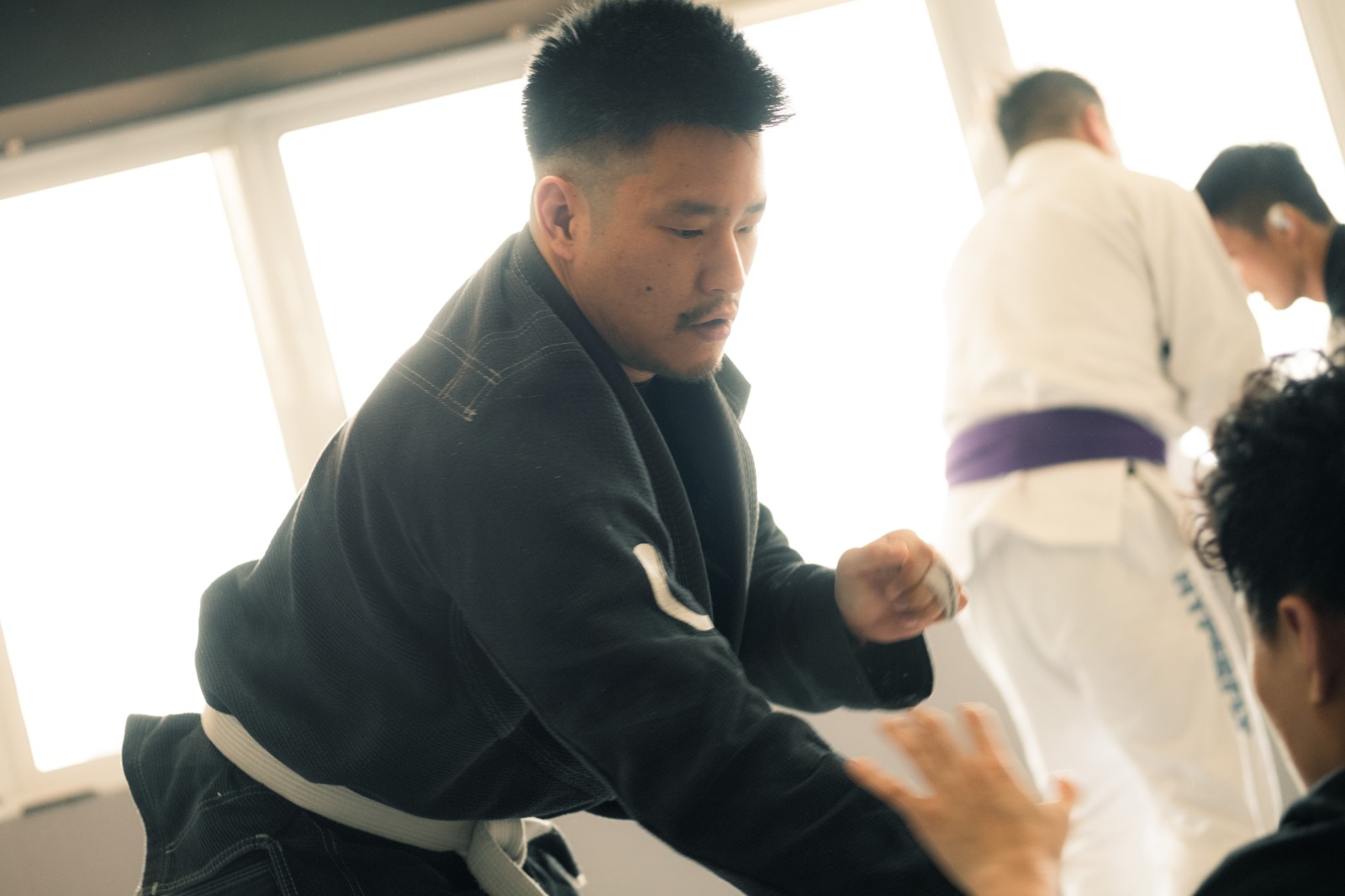
I’ve realised over the years how easily adulthood squeezes the play out of us. What I didn’t expect was how much play affects the way we handle change. Jiujitsu brought that part back into my life, and with it came more looseness, creativity, and adaptability than I had before.
One of the most important things I learned from jiujitsu is how beneficial it is for adults to continue to engage in play, and how much it is lacking from our modern lives. Last week, I tried a new sweep and got immediately countered. My training partner laughed, I laughed, and we reset. Those thirty seconds reminded me why I keep showing up. I had no idea I was missing this element of life before I took up jiujitsu, but once I got in the gym, I realized how much freedom there is in the kind of play that grappling is. And soon I realized the freedom of playing more in the gym was showing up outside of it as well. It was easier to tap into my creative side, I was more relaxed and playful, and I felt more connected to the people around me.
If you haven’t tried it before, you might think jiujitsu is all about fighting, or aggressive cuddling as we jokingly call it. But after you’ve practiced it for a while, you realize that you aren’t really fighting most of the time. Often, you are sparring with people smaller, less skilled, or just a friend that you’ve trained with a hundred times before, and you aren’t going 100% and trying to crush them. That’s where the play comes in. An upper belt rolling with me might let me get to the same position five times in a roll, just because they want to practice from that position, that’s play. When I try new things that I don’t know how to do at a high level yet, and get shut down, that’s play. If there’s a new person who I’ve never trained with before and we slap hands and start grappling, that’s an intense form of play that engages all your senses. When you are having a good training session, the play is built in; you’re automatically engaging in creativity, imagination, and connectedness.
This wasn’t just my experience; it turns out there’s science behind why play matters. Research shows that play is not childish. It is a biological need. Stuart Brown, who has spent decades studying play, found that adults who make space for unstructured play are more adaptable, more resilient, and less rigid under stress. Other studies go further. Playfulness is linked to cognitive flexibility, the ability to shift strategies quickly when things change, and to higher creativity because the stakes are low enough for experimentation to happen. Play also improves social connection and reduces stress hormones. In other words, the things most of us say we want, such as clarity, resilience, and creativity, do not come from trying harder. They come from giving ourselves permission to play.
There’s a common phrase that jiujitsu is for everyone, and while I think that’s true, I’m not saying everyone needs to try it. But we all could use more play in our lives. More impromptu moments, more trying something without knowing the outcome, more taking the ball from a partner and going with the flow, more using our creativity in an unstructured way. We spend hours studying how to be more organized and efficient, when sometimes what we need is exactly the opposite. Play is not a break from real life. It is what keeps real life from hardening into something we can’t grow in.
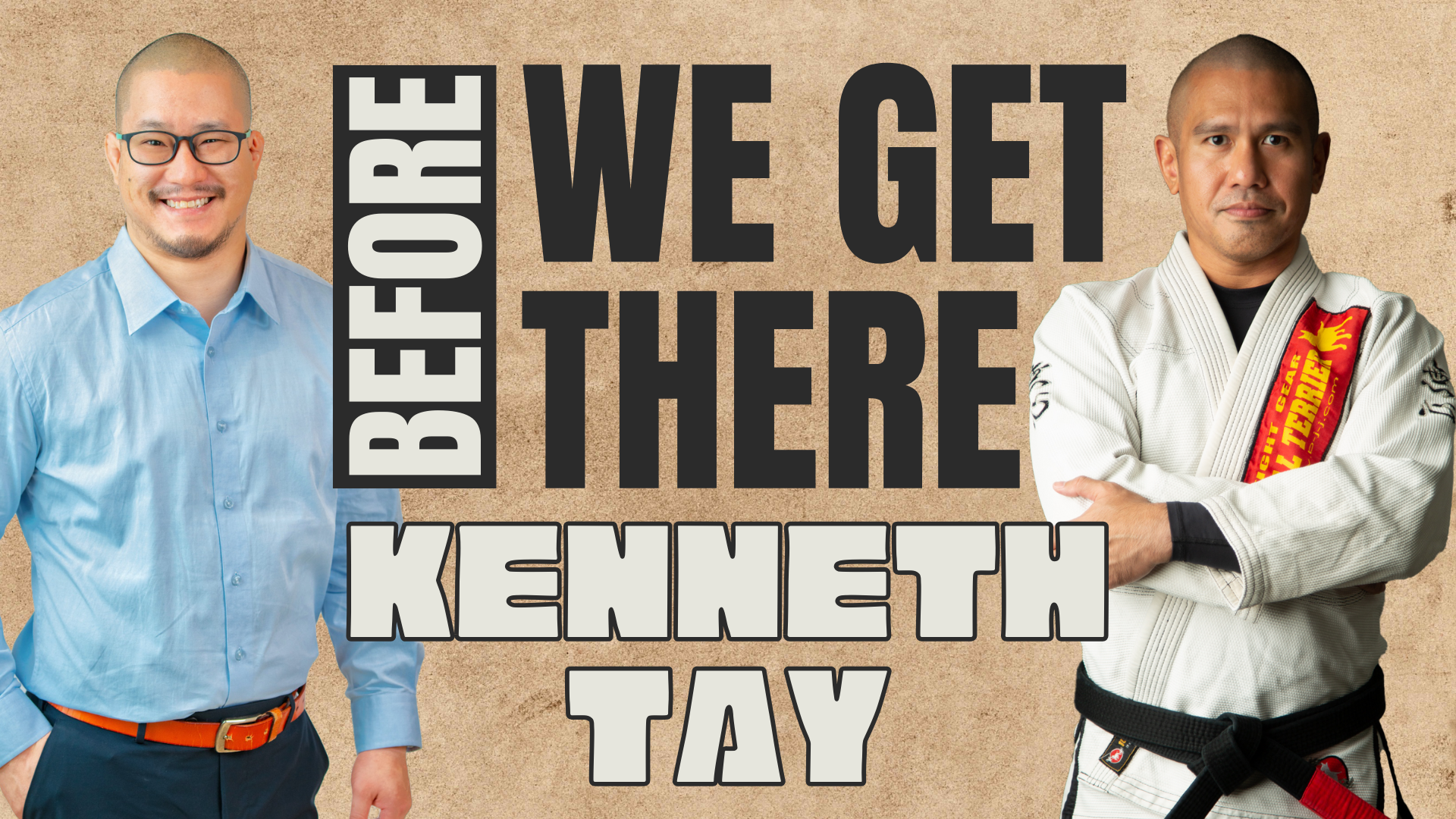
Kenneth Tay is a Brazilian Jiu-Jitsu black belt, coach, and co-founder of Trinity Combat Sports in Suzhou, China. He’s spent the past fifteen years teaching, training, and building communities through martial arts across Asia — from Australia to Shanghai and now Singapore.
In this conversation, we talk about how Kenneth rebuilt his life through sport, the lessons he’s learned from depression and discipline, and what it means to start over when things fall apart. He shares the story of founding Suzhou’s first Jiu-Jitsu gym, why he once worked for free to learn from mentors, and how martial arts taught him that growth is about showing up even when you don’t feel like it.
Story Highlights
Growing up between Singapore, China, and Australia
How depression led him back to sport and structure
Starting Suzhou’s first Jiu-Jitsu gym with a handful of friends and no mats
What running a business in China taught him about loyalty and trust
The decision to coach full-time in Singapore after the pandemic
Quote
“When I was back in Singapore, I happened to be lucky to go to a high school in Singapore which was very strong on sports. And I was always into sports. I was never particularly good at it, but I enjoyed the grind of training and playing sports. And it always kept me grounded and disciplined.”
About Kenneth Tay
Kenneth Tay is a Singaporean martial artist, BJJ black belt, and co-founder of Trinity Combat Sports in Suzhou, China. After years of training and coaching across Asia, he now teaches at Field Assembly in Singapore. Kenneth’s journey from depression to discipline through martial arts has inspired students across two countries. He continues to promote community, mental health, and resilience through Jiu-Jitsu.
Why This Conversation Matters
Kenneth’s story is about more than sport — it’s about rebuilding confidence, structure, and identity through challenge. His journey shows that discipline isn’t punishment, it’s a form of self-respect. From living abroad to starting over, he reminds us that growth comes from the mats, but it applies everywhere else too.
Turning Points
Kenneth’s time in Australia began as freedom but spiraled into burnout and self-doubt. Rediscovering sport became his way out. Starting Muay Thai led him to Jiu-Jitsu — a discipline that became therapy, teacher, and anchor. When he moved to China, he co-founded Suzhou’s first BJJ club, training in borrowed dance studios before building it into a full academy. Later, COVID brought him back to Singapore, where he transitioned into full-time coaching. Through it all, his focus stayed the same: use sport to grow stronger — mentally, physically, and emotionally.
Key Lessons
Discipline heals. Structure provides stability when everything else is uncertain.
Build from the ground up. Great things often start small — even on borrowed mats.
Community sustains growth. Shared purpose turns struggle into support.
Adaptation matters. Every move, every country, every failure refines your focus.
Stay humble. True progress comes from consistency, not titles.
What does a fighter’s grit in the cage have to do with your daily hustle? More than you think. A recent conversation with an amateur MMA fighter and strength coach uncovered lessons that don’t just build champions—they shape better humans. These lessons go beyond the gym and apply to life’s most significant battles, offering a blueprint for growth, resilience, and success. Let’s dive deeper into these transformative insights:
1. The Art of Balancing Chaos
Combat sports demand a careful juggling act. My guest described how he balances striking, grappling, and strength training each week. The secret isn’t just equal time—it’s understanding the nuances of each discipline and how they interact. For example, a grappling-heavy week might require lighter strength conditioning to avoid overtaxing the body.
Outside the gym, this principle holds true. Life is a blend of work, relationships, and personal growth. Striking a balance doesn’t mean giving equal attention to everything all the time. Instead, it’s about knowing what’s most important in the moment and aligning your efforts accordingly. Whether it’s prioritizing family after a busy work season or carving out time for self-care during stressful periods, balance is about adaptability.
2. How to Master the Fine Line Between Hustle and Burnout
Overtraining is a pitfall even the best athletes face. My guest shared how he listens to his body—tracking morning heart rates, recognizing soreness, and paying attention to motivation levels. He’s learned that taking a day off or switching to a lighter workout can be just as important as pushing through an intense session.
The takeaway? Whether in fitness or life, pushing too hard can backfire. Learning to step back, recharge, and reassess isn’t a sign of weakness—it’s a strategy for longevity and peak performance. This lesson applies universally: the entrepreneur burning the midnight oil or the parent juggling multiple responsibilities both need moments of rest to stay effective.
3. Resilience is Built in the Trenches
One of the most vivid stories my guest shared was about a grueling MMA fight. Physically battered and mentally drained, he considered giving up but chose to push through. The experience taught him that resilience is a muscle—one that grows stronger every time you face adversity.
Resilience isn’t just about enduring hardship; it’s about learning from it. My guest emphasized that setbacks are opportunities to reflect, adapt, and come back stronger. Whether it’s a failed project at work or a personal disappointment, the ability to bounce back defines long-term success. Think of every challenge as a training ground, sharpening your skills and fortifying your resolve.
4. Redefining Success: Impact Over Income
Success means different things to different people. For my guest, it’s not about earning big bucks or climbing the corporate ladder. Instead, it’s about making a positive impact on his clients’ lives—whether by helping them achieve fitness goals or fostering confidence and self-belief. One memorable example he shared was working with a client who overcame self-doubt to complete a fitness milestone, a moment that brought both of them immense satisfaction.
This shift in perspective is a powerful reminder: true fulfillment often comes not from personal achievements but from lifting others as you climb. Whether you’re mentoring a colleague, supporting a friend, or teaching someone a new skill, success lies in the positive ripples you create. The joy of seeing others succeed because of your efforts can often outweigh traditional markers of success like titles or salaries.
5. Discipline: The Bridge Between Goals and Achievement
My guest emphasized that discipline is what separates those who dream from those who achieve. Whether it’s committing to a grueling training schedule or staying consistent with long-term goals, discipline is the foundation of success. It’s not about waiting for motivation but about showing up every day, even when it’s hard.
He explained that discipline is cultivated through habits. For example, dedicating a specific time each day to training or focusing on a single goal at a time prevents burnout and ensures steady progress. This lesson is vital for anyone striving toward success—commitment and consistency will get you through when excitement fades. Focus on building strong habits, and the results will follow.
Final Thoughts
Talking with my guest left me inspired by his discipline, perspective, and unwavering commitment to his craft. His story is a testament to the power of persistence, balance, and self-awareness. These lessons aren’t just for athletes—they’re for anyone looking to improve, overcome challenges, and live a more fulfilling life.
What makes these insights even more compelling is how actionable they are. Each lesson offers a tangible way to improve your own life, whether it’s being mindful of balance, embracing setbacks as opportunities, or redefining what success means to you. These principles are universal and timeless.
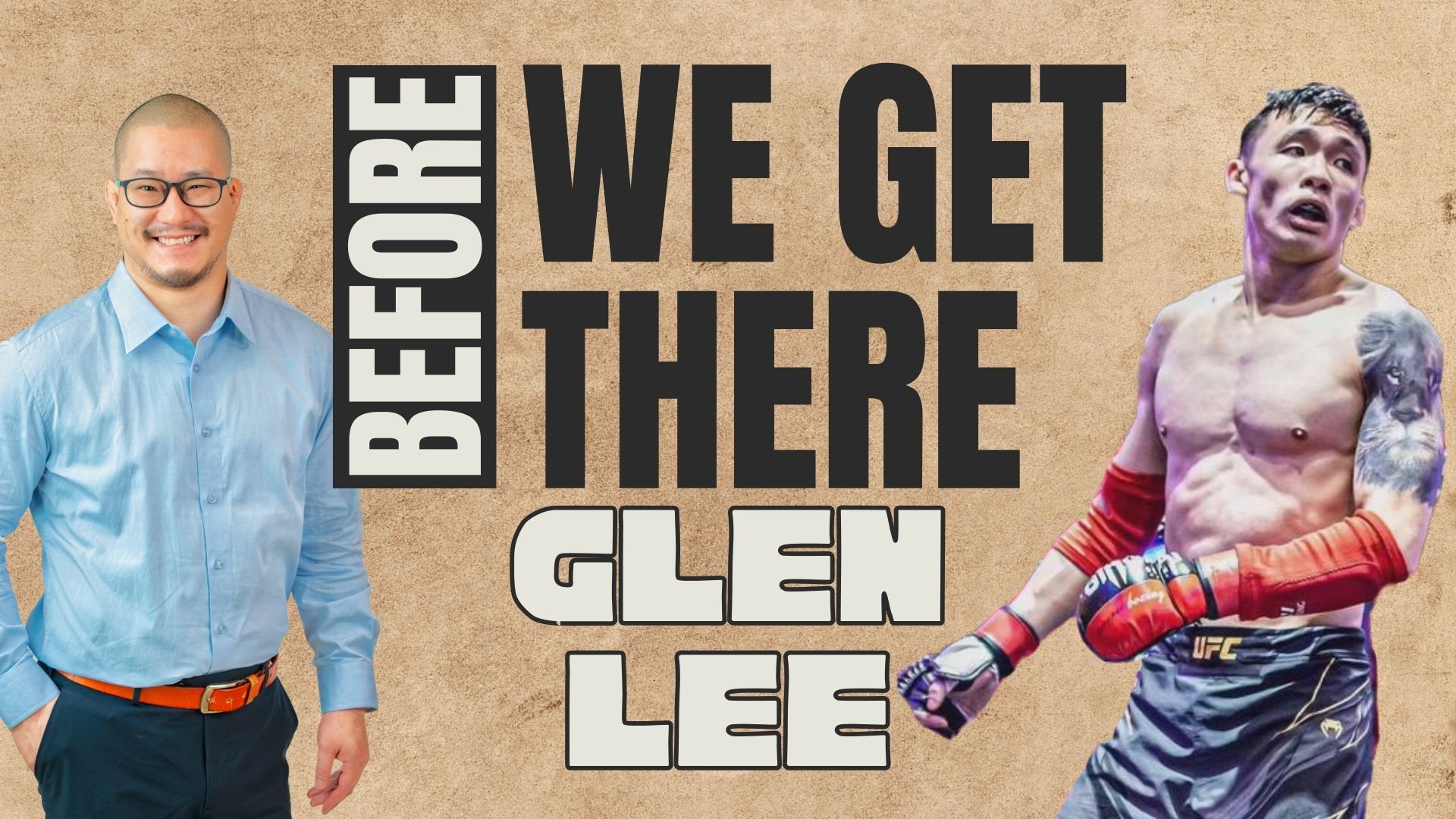
Glen Lee is an amateur MMA fighter, Brazilian Jiu-Jitsu and Muay Thai coach, and strength and conditioning trainer at Field Assembly and The Physio Circle in Singapore. With a record of five wins and one loss, Glen represents a new generation of hybrid martial artists — balancing full-time coaching with competitive fighting.
In this episode, we talk about Glen’s path from student athlete to coach, what drives him to keep competing, and how he balances ambition with responsibility. He opens up about the physical and mental demands of training, the lessons he’s learned from losing, and why his definition of success has shifted from chasing titles to making an impact.
Story Highlights
How he started training Muay Thai at 14 and evolved into MMA
The challenge of balancing work, coaching, and competition
What overtraining taught him about discipline and recovery
How COVID-19 shaped his career path and mindset
Why he now defines success as helping others grow
Quote
“I just want to be able to still do it when I’m young and not wait ten years down the road and then not be able to compete. If I have any kind of regret, I hate it.”
About Glen Lee
Glen Lee is a Singapore-based MMA fighter and coach specializing in Brazilian Jiu-Jitsu, Muay Thai, and strength and conditioning. He teaches at Field Assembly and The Physio Circle, where he works with both competitive athletes and everyday clients. A graduate of Nanyang Technological University with a degree in Sports Science and Management, Glen combines academic understanding with practical experience. His coaching philosophy centers on consistency, discipline, and helping people achieve lasting change.
Why This Conversation Matters
Glen’s journey captures what it means to balance passion and purpose. From fighting in local promotions to mentoring beginners, his story shows that success isn’t only measured in wins but in the lives you influence. His reflections on overtraining, mindset, and motivation offer valuable lessons for anyone trying to sustain performance over time.
Turning Points
After switching from business studies to sports science, Glen faced uncertainty during the pandemic when gyms closed and job prospects disappeared. A friend’s invitation to join a new fitness startup changed everything, leading him into coaching full-time. Along the way, he learned to merge his competitive drive with empathy — recognizing that every student, whether an athlete or hobbyist, deserves personalized guidance. Today, Glen’s goals have evolved from chasing victories to mentoring others and building community through sport.
Key Lessons
Discipline is balance. Knowing when to push and when to rest sustains progress.
Purpose matters more than titles. Impact outlasts individual achievement.
Adaptation fuels growth. Career pivots can become lifelong callings.
Coaching is service. Helping others succeed sharpens your own craft.
Stay curious. Learning never stops, whether in sport or life.
Michael Thompson is a UX and game designer turned educator who has worked on some of the world’s biggest titles, including FIFA, NBA Live, and Need for Speed. After nearly two decades in the video game industry, he transitioned into teaching, helping the next generation of designers learn how to create meaningful, immersive experiences.
In this conversation, Michael shares how he went from growing up on Vancouver Island to working at Electronic Arts and Ubisoft, the creative highs and burnout that come with game development, and how Brazilian Jiu-Jitsu became his lifelong anchor. We talk about creativity, perseverance, and what both games and martial arts can teach us about learning, ego, and endurance.
Story Highlights
Moving from Vancouver Island to Singapore to join Electronic Arts
The reality behind “dream jobs” in the gaming industry
Working on major franchises like FIFA, NBA Live, and Need for Speed
The challenges of creative burnout and career transition
What 20 years of Jiu-Jitsu taught him about persistence and humility
Quote
“If anything, Jiu-Jitsu has taught me it’s just perseverance. You keep going in any endeavor, whether it’s a career-based endeavor or something in your life. Most people, most of the time, will quit. If you just keep going, you’re going to be the successful one at the end.”
About Michael Thompson
Michael Thompson is a Canadian UX and game designer, educator, and Brazilian Jiu-Jitsu black belt based in Singapore. Over his career, he has held senior roles at Electronic Arts and Ubisoft, contributing to global franchises such as FIFA Online, NBA Live, and Ghost Recon Phantoms. Today, he teaches at DigiPen Institute of Technology in Singapore, where he trains aspiring designers to combine technical skill with creative empathy. Outside the classroom, he continues to train and teach Brazilian Jiu-Jitsu at FAMA and SG Grappling.
Why This Conversation Matters
Michael’s story bridges two worlds — the creativity of game design and the discipline of martial arts. His reflections on failure, teaching, and consistency reveal how mastery is built over time, not through talent alone. Whether in art, sport, or life, his message is simple: stay curious, keep showing up, and never stop learning.
Turning Points
After more than 15 years in the games industry, Michael hit a wall. The long hours, intense deadlines, and constant creative churn had taken their toll. He decided to pivot to teaching, first at Singapore Polytechnic and later at DigiPen. In parallel, he deepened his commitment to Jiu-Jitsu — a practice that taught him patience, humility, and resilience. His journey from “dream job” to meaningful work reflects how success can evolve from ambition to impact.
Key Lessons
Dream jobs have trade-offs. Passion doesn’t erase pressure.
Persistence beats talent. Keep showing up — that’s how you get better.
Creativity is discipline. The best ideas come from consistency, not chaos.
Teaching gives perspective. Sharing knowledge sharpens your own craft.
Movement is meditation. Physical practice grounds the mind.
In this latest episode of Before We Get There, my guest shared valuable insights from decades of experience in both the gaming industry and Brazilian Jiujitsu. With a career spanning game development and teaching, alongside years of disciplined training in martial arts, his journey provided profound lessons on perseverance, adapting to challenges, and the pursuit of personal growth. Here are the top five takeaways from our conversation:
1. The Reality Behind Dream Careers
Many aspiring professionals see the gaming industry as a dream job filled with fun and creativity. However, my guest emphasized that game development is far from just playing games or having Nerf gun battles in the office. It’s a demanding field, akin to any major software development project, with tight deadlines, budget constraints, and immense pressure to deliver. The lesson? Passion for the product must be paired with a love for the process, or the reality might fall short of expectations.
2. Perseverance Outlasts Talent
One of the most resonant themes was the importance of perseverance. In Brazilian Jiujitsu (BJJ), my guest described how he spent years returning to training despite repeatedly feeling defeated and questioning his progress. He highlighted that while natural talent is impressive, it’s often those who simply keep showing up—no matter how tough it gets—who see the most success over time. This applies broadly: resilience and the willingness to endure challenges often outweigh initial skill or talent.
After a successful run in game development, my guest shifted to teaching game design. This transition was driven by burnout from the high-pressure industry and a desire for a change of pace. Teaching brought its own set of challenges, including working with younger students who lacked professional experience. However, he adapted by recognizing the importance of nurturing enthusiasm and professionalism in his students, understanding that not everyone enters with the same motivation.
4. Progress Requires Ownership and Active Learning
In both game design and BJJ, growth doesn’t happen passively. My guest’s approach to continuous improvement involved taking ownership of his learning process—setting specific goals, practicing new techniques, and studying extensively on his own time. In game design, this meant meticulous testing and iteration. In BJJ, it involved trying new moves repeatedly, regardless of immediate success. The takeaway? True progress requires an intentional, proactive mindset.
5. Discipline is the Foundation for Longevity
Staying active and capable over the years comes down to discipline. Whether maintaining a clean diet to support training or knowing when to modify intensity to avoid injury, my guest’s routine highlighted that self-regulation is key. Discipline isn’t just about strictness; it’s about making choices that align with long-term goals over immediate gratification. This approach has allowed him to continue training intensively even into his late 40s.
These lessons from our conversation underscore that resilience, continuous learning, and self-discipline are what truly sustain growth and fulfillment, whether in high-stakes careers or personal passions. Embracing these values can help anyone navigate their journey, no matter the field.
Jiujitsu is often translated from Japanese as “the gentle art”, but the day-to-day reality doesn’t feel gentle at all. It feels more like a fight for your life, with bigger, stronger, faster opponents trying their damndest to twist your limbs in directions they aren’t supposed to go, or wrap their arms or even clothes tightly around your neck and cut off your air supply or the flow of blood to your neck until you are incapacitated. You spend hours trapped under your opponent with the wind being driven from your lungs, fighting desperately to survive, while another human drips sweat into your eyes while wrenching your body in contortions that leave you feeling like you’ve been hit by a truck. And I love it.
I’ve been practicing jiujitsu, Brazilian Jiu Jitsu more specifically, for around 5 and a half years. I’m not good by any means, I’m not gifted athletically, I’m stiff and slow, and I care more about my safety than “winning”. But I’ve improved by miles, and now finally feel comfortable handling most people who haven’t trained before, even if they are big, fast, and strong. There’s nothing easy about this sport. A famous jiujitsu saying is “there can only be one person comfortable at a time, and you want to make sure you’re that person”. I train at least 4 days a week, and after every session, no matter how tough it is, feel better for having gone through it. I have learned a lot from BJJ, and I’m sure I’ll write a lot more about it. But right now, as I go through a tough period in my life, I’d like to share specifically how training has made the rest of my life easier.
A Jiujitsu training session is almost always the most difficult thing I’ll do that day Jiujitsu training is tough, not only do you need to use the mental focus and physical exertion to execute the moves, but when you are live sparring there is also an opponent whose sole focus is to stop you from doing what you want to do. There’s hardly any other moment in your average day when another person’s goal is the exact opposite of yours, but we do it to ourselves, and each other each time we train. Even on a day of difficult work, unpleasant chores or errands, or other challenges, jiujitsu will be the hardest thing I do that day, and knowing that makes everything else easier. This was especially true when I used to train first thing in the mornings, but even now that I usually train at night, the rest of my days are easier since I’m used to doing such a challenging activity day in and day out.
Being in the moment I’ve never been able to meditate consistently, it’s something I’d like to work on, but I haven’t learned to just sit there and focus. But with jiujitsu, no matter what is going on in my life, in the middle of a hard roll, there are no other thoughts than the present. What my opponent is trying to do, what I need to do, where to put my body, concentrating on where their weight is, timing a critical moment where I can come up with an advantage. The outside world disappears, and all that matters is what’s right in front of me at that second. That is a great thing to have every day, at least 30 minutes to an hour of not thinking about work, life problems, or anything else, and it has definitely helped me be calmer off the mats.
Pushing through adversity on the mat is a transferrable skill Jiujitsu forces you to learn to endure pressure and be calm under stressful situations. If you panic or overreact, you will just make your position worse and go through a snowball effect of suffering. This is true off the mat as well, remaining calm and collected makes everything easier and allows you to get through tough situations. It’s a natural reaction to react negatively to pressure or being uncomfortable, but when you practice jiujitsu you get exposure to it every day and it helps you deal with it better in other areas of life. When you are training jiujitsu, not only do you have to deal with the physical pressure and stress of someone fighting you, but you also have to overcome the mental challenges of not giving up, pushing your body to keep going when you are tired or in a tough spot, and the knowledge that every time you show up there will be someone better/faster/stronger than you that you will have to deal with. All of these add up to a lot of exposure to stress that makes daily problems like a flat tire or an incompetent co-worker much easier to deal with.
Overcoming pain and fear builds your tolerance to it Some people say that in jiujitsu your white belt (the rank you start at) is the hardest one to earn, because most people never start training, even if they want to they are too afraid to start. Even for those who overcome that hurdle, many people quit after a short time because of how hard it is to get beat up by everyone at the gym who has been training longer and is better than you. Many people get nervous or anxious before a training session, I think it is because getting physically dominated by someone is a scary thing, and it hits your ego very hard. You have to learn how to push past that fear to continue training and get better. Ideally, you won’t be in physical pain to the point of injury during your training, but the reality is that jiujitsu is a combat sport and everyone I train with has dealt with injuries to some extent. Even when you are not injured, you still get put in painful positions, like when a heavier guy is putting all their weight on you while trying to strangle you or wrench your arm behind your back. The more I’ve trained the more I’ve been able to push past my limits and get over the fear of being crushed by someone better. This has translated to other areas of my life when I am afraid or anxious about doing something, but am able to push myself to just do it.
I’ve learned to measure progress in inches On average it takes 10 years of training consistently to earn a black belt in BJJ, by some estimates that’s only 0.1% of the people who start training. It is a long and slow journey, as you get better your rate of improvement slows and you can’t see yourself getting better day by day or even month by month. The progress also isn’t linear, it is very common to hear people talk about how they feel they have plateaued for months before making a small leap in improvement. Once you learn the basic moves, refining them takes years, one small adjustment with a grip, a faster reaction time to someone you’ve seen your opponents do hundreds of times, or adding on a new step in a series of techniques are what it takes to get better. It is also even harder to see your improvement because the people you are training with are getting better too. All of this means you need to keep consistent and keep training even when you feel like you are stuck. I think this is a hugely important lesson in today’s world of instant gratification and “hacks” when we want to see results immediately with our attention spans and dopamine addled from social media and sound bites. It has been super helpful to remember that progress takes time in other areas of my life. I also have learned to like the fact that improvement is slow and hard because if it were easy, it wouldn’t mean as much.
I now value discipline over motivation This one is taken from ex-Navy SEAL commander, BJJ black belt, and leadership coach Jocko Willink. But it has rung so true for me and helped me get off my ass and to the gym on many days. Often when we start a new hobby or even job, we are gung ho and super motivated, but after a while or when things get tough, that motivation evaporates, and if you don’t use discipline to keep going you will give up. So it is an important lesson to have the discipline to do the things you need to do, and not rely on motivation to keep you going. Of course, you should be balanced, get enough rest, and take care of your other responsibilities, but there will be plenty of days where staying home and watching Netflix sounds better than rolling around on the ground with a bunch of other sweaty people. And if you don’t enforce discipline on yourself to go and train, you won’t end up going and eventually quit. I’ve seen a lot of people start jiujitsu and be super into it for 5 or 6 months, and then after they realize that they aren’t going to become a world champion, they start coming less and less until eventually, they disappear. Using discipline instead of motivation has helped me in many areas of my life like diet, finances, work, and more.
I’m so grateful for starting jiujitsu and the lessons it has taught me, because those lessons have helped make other parts of my life easier in many ways. I hope to be practicing this art until I’m at least 60 and I’m sure it will continue to benefit the rest of my life the whole time. If you haven’t tried jiujitsu, I highly suggest you give it a shot and see how it helps your life in other ways!
In 2019 I spent a week on the politest street in the world. No, it isn’t some small-town culdesac, it is called Soi Ta-iad, a street in Thailand that is home to some of the biggest fight gyms in the world. While calling it the safest street in the world may be a little bit of hyperbole, I don’t think it is that much of a stretch considering how nice and respectful everyone was to each other. You might ask, how can it be so safe if everyone there knows how to fight? Well, that’s exactly why, alongside the tourists and hobbyists like myself, there are professional fighters from all over the world who have wins in the UFC, ONE Fighting Championship, and a host of other fighting organizations. If you’ve ever watched any combat sports, you know that the biggest, baddest-looking people aren’t necessarily the best, and so does everyone on the street, and that’s why everyone is so polite.
This post isn’t going to be an in-depth review of all the gyms I visited or a guide of exactly how to prepare for a trip there, but more of a memoir of what it was like visiting there from my personal experience, and why it was one of the best training experiences I’ve had. Of course, there are plenty of places to train Muay Thai across Thailand, and many of the best gyms are in other parts of the country. But what makes Soi Ta-iad so unique is the concentration of gyms in one small area, and the whole economy and services that have grown up around it. For some background, I have been training Brazilian JiuJitsu consistently for over 5 years, and kickboxing off and on since I was 18, but with a total training time of only about 3 years. I’m not that good at either, but I love visiting gyms when I travel, and this was my first trip solely dedicated to training.
Soi Ta-iad is about 20 minutes from the main tourist spots in Phuket, it is inland, away from the beaches, and has all the amenities you need for a great training experience. The entire street is only about two kilometers long, but as you walk down the dusty road, you’ll find all kinds of shops you won’t find anywhere else in Thailand. There are supplement stores selling big tubs of protein powder, sports massages, salad bars, keto restaurants, and even cryotherapy. There are only one or two bars, and you definitely feel you are in a healthy paradise that is another world compared to most other places in Thailand where foreigners gather. Not only are there fight gyms, but there are also CrossFit gyms, regular gyms with lifting and cardio equipment, and even fitness camps with everything from spin to yoga. The restaurants in the area are of full of options like grilled chicken salads, poke bowls, protein pancakes, egg-white omelettes, and acai bowls; completely different than the standard tourist grub. I even tried my first cauliflower crust keto pizza there!
I arrived at Soi Ta-iad in the late afternoon and just had time to check into my hotel before taking my first walk down the street to a BJJ session at Phuket Top Team. As I took in my surroundings I was amazed that every shop I passed was fitness or health related. Not only that, but virtually every person I saw, eating in restaurants, riding by on scooters, or walking along the road like me, was obviously fit and there to participate in some form of training. As I neared Phuket Top Team I started hearing the unmistakable thwack of hard shins hitting heavy bags and grunts of exertion as the fighters put every ounce of effort they could into their strikes. The check-in process was easy, as all the gyms there are used to drop-ins, and soon I was stretching on the mats of a padded room waiting for the session to start. It was a pretty big space, with tall ceilings and the flags of Brazil and Thailand hanging on the walls, the stink of old sweat was heavy, as is the case in most good gyms. Soon the room started filling up with people of all sizes and nationalities, with many walking around and shaking everyone’s hands before they started their own stretching routine.
The class was great, and I was feeling exhilarated and looking forward to the week of hard training as I started heading back to my hotel. It was a Friday night, and as I walked back there were groups of people at various restaurants along the street. I decided to grab a kebab, and when I went inside to order I first noticed this environment of utmost politeness. There were a few groups of big guys sitting around the tables, talking loudly and eating their dinners. While I waited for my food I noticed there was none of the posturing or sizing up that happens in many places, especially with large groups of guys on a Friday night. Instead, when new people walked through the door, most guys ignored it, or casually looked up and then went back to their conversations. I realized that everyone knew that any one of these guys, no matter what they looked like, could be a professional fighter. And in addition to that, all the aggression and competitiveness was used up on the mats or in the ring, so there was no reason for anyone to be anything but polite outside of the gym.
I ended up training at 4 gyms during my week there, and it was the same story at each one, everyone was polite and friendly to a fault. Whenever I happened to meet someone’s eye in a restaurant or walking down the street, there was nothing but a slight smile or respectful nod. It really showed me that not only were most of the people confident in their abilities, they were also in control of their ego and understood that there is always someone better, and you never know who that could be. Maybe if more people in the world trained martial arts, everyone would be more polite wherever they went instead of just this special street in Thailand.